Carron Michele, Baratto Fabio, Zarantonello Francesco, Ori Carlo
Department of Medicine, Anesthesiology and Intensive Care, University of Padova, Padova, Italy.
Clinicoecon Outcomes Res. 2016 Feb 18;8:43-52. doi: 10.2147/CEOR.S100921. eCollection 2016.
The aim of the study is to evaluate the clinical and economic impact of introducing a rocuronium-neostigmine-sugammadex strategy into a cisatracurium-neostigmine regimen for neuromuscular block (NMB) management.
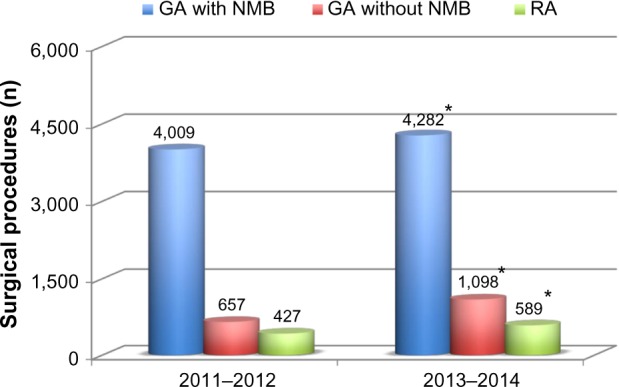
We conducted a retrospective analysis of clinical outcomes and cost-effectiveness in five operating rooms at University Hospital of Padova. A clinical outcome evaluation after sugammadex administration as first-choice reversal drug in selected patients (rocuronium-sugammadex) and as rescue therapy after neostigmine reversal (rocuronium-neostigmine-sugammadex) compared to control was performed. A cost-analysis of NMB management accompanying the introduction of a rocuronium-neostigmine-sugammadex strategy into a cisatracurium-neostigmine regimen was carried out. To such purpose, two periods were compared: 2011-2012, without sugammadex available; 2013-2014, with sugammadex available. A subsequent analysis was performed to evaluate if sugammadex replacing neostigmine as first choice reversal drug is cost-effective.
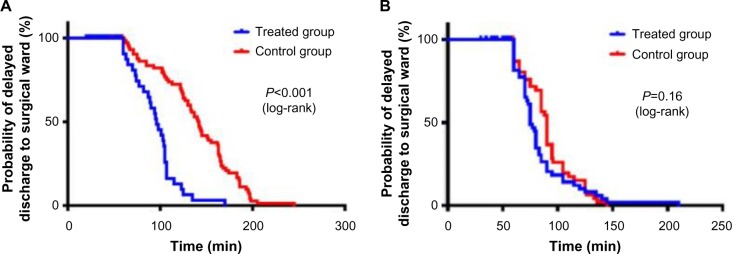
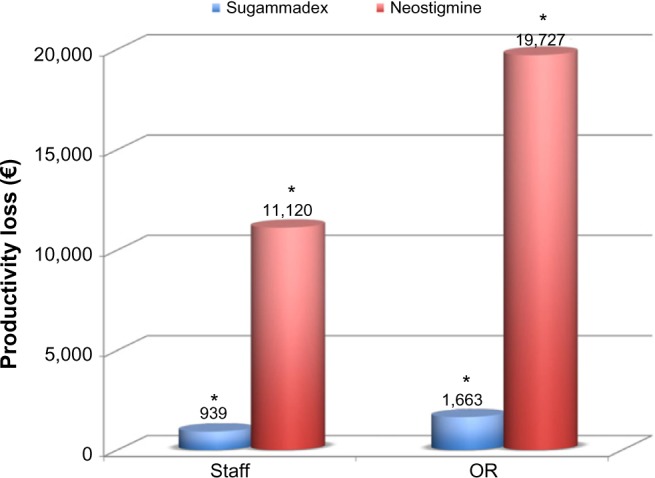
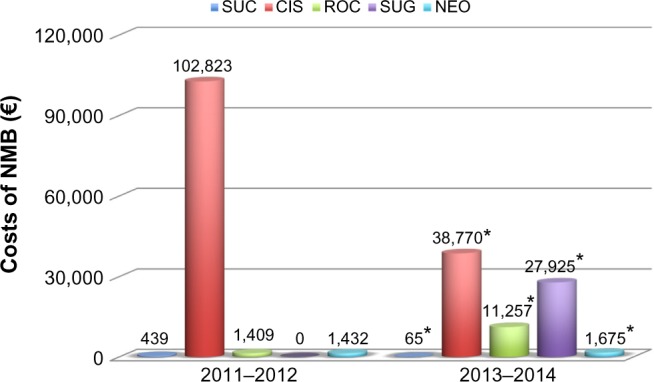
The introduction of a rocuronium-neostigmine-sugammadex strategy into a cisatracurium-neostigmine regimen reduced the average cost of NMB management by 36%, from €20.8/case to €13.3/case. Patients receiving sugammadex as a first-choice reversal drug (3%) exhibited significantly better train-of-four ratios at extubation (P<0.001) and were discharged to the surgical ward (P<0.001) more rapidly than controls. The cost-saving of sugammadex as first-choice reversal drug has been estimated to be €2.9/case. Patients receiving sugammadex as rescue therapy after neostigmine reversal (3.2%) showed no difference in time to discharge to the surgical ward (P=0.44) compared to controls. No unplanned intensive care unit (ICU) admissions with rocuronium-neostigmine-sugammadex strategy were observed. The potential economic benefit in avoiding postoperative residual curarization (PORC)-related ICU admission in the 2013-2014 period was estimated at an average value of €13,548 (€9,316-€23,845).
Sugammadex eliminated PORC and associated morbidities. In our center, sugammadex reduced the costs of NMB management and promoted rapid turnover of patients in operating rooms, with total cost-effectiveness that counteracts the disadvantages of its high cost.
本研究旨在评估将罗库溴铵-新斯的明-舒更葡糖策略引入顺式阿曲库铵-新斯的明方案用于神经肌肉阻滞(NMB)管理的临床和经济影响。
我们对帕多瓦大学医院五个手术室的临床结果和成本效益进行了回顾性分析。将舒更葡糖作为首选逆转药物用于选定患者(罗库溴铵-舒更葡糖)以及在新斯的明逆转后作为挽救治疗(罗库溴铵-新斯的明-舒更葡糖)后的临床结果评估与对照组进行比较。对将罗库溴铵-新斯的明-舒更葡糖策略引入顺式阿曲库铵-新斯的明方案伴随的NMB管理进行成本分析。为此,比较了两个时期:2011 - 2012年,无舒更葡糖可用;2013 - 2014年,有舒更葡糖可用。随后进行分析以评估舒更葡糖替代新斯的明作为首选逆转药物是否具有成本效益。
将罗库溴铵-新斯的明-舒更葡糖策略引入顺式阿曲库铵-新斯的明方案使NMB管理的平均成本降低了36%,从每例20.8欧元降至每例13.3欧元。作为首选逆转药物接受舒更葡糖的患者(3%)在拔管时的四个成串刺激比值显著更好(P<0.001),并且比对照组更快地被送回外科病房(P<0.001)。舒更葡糖作为首选逆转药物的成本节约估计为每例2.9欧元。在新斯的明逆转后作为挽救治疗接受舒更葡糖(3.2%)的患者与对照组相比,送回外科病房的时间没有差异(P = 0.44)。未观察到采用罗库溴铵-新斯的明-舒更葡糖策略导致计划外的重症监护病房(ICU)收治情况。2013 - 2014年期间避免术后残余肌松(PORC)相关ICU收治的潜在经济效益估计平均值为13,548欧元(9,316欧元 - 23,845欧元)。
舒更葡糖消除了PORC及其相关并发症。在我们中心,舒更葡糖降低了NMB管理成本并促进了手术室患者的快速周转,其总体成本效益抵消了其高成本的缺点。