Lötsch Jörn, Ultsch Alfred, Eckhardt Maren, Huart Caroline, Rombaux Philippe, Hummel Thomas
Institute of Clinical Pharmacology, Goethe - University, Theodor-Stern-Kai 7, 60590 Frankfurt am Main, Germany; Fraunhofer Project Group Translational Medicine and Pharmacology (IME-TMP), Theodor-Stern-Kai 7, 60590 Frankfurt am Main, Germany.
DataBionics Research Group, University of Marburg, Hans-Meerwein-Straße, 35032 Marburg, Germany.
Neuroimage Clin. 2016 Jan 21;11:99-105. doi: 10.1016/j.nicl.2016.01.011. eCollection 2016.
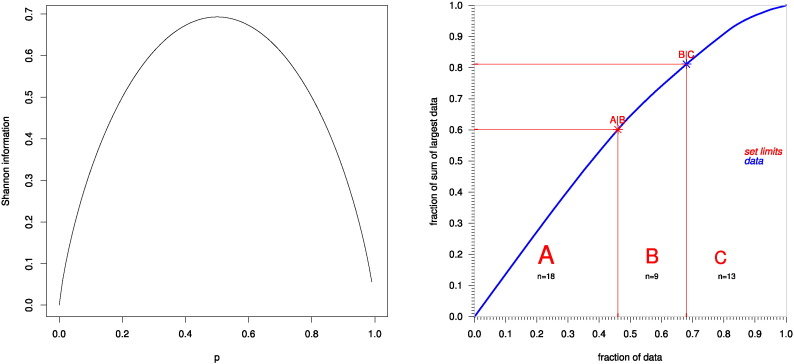
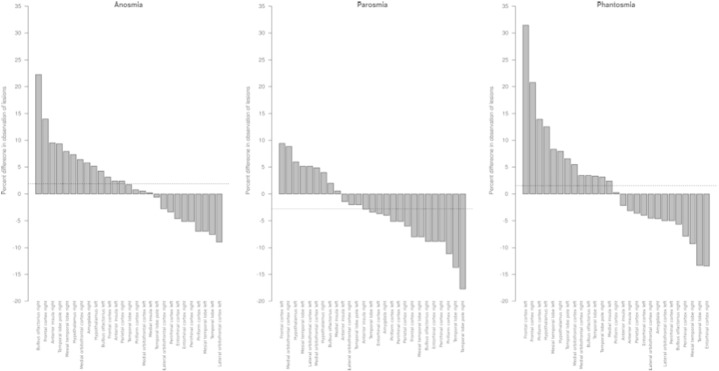
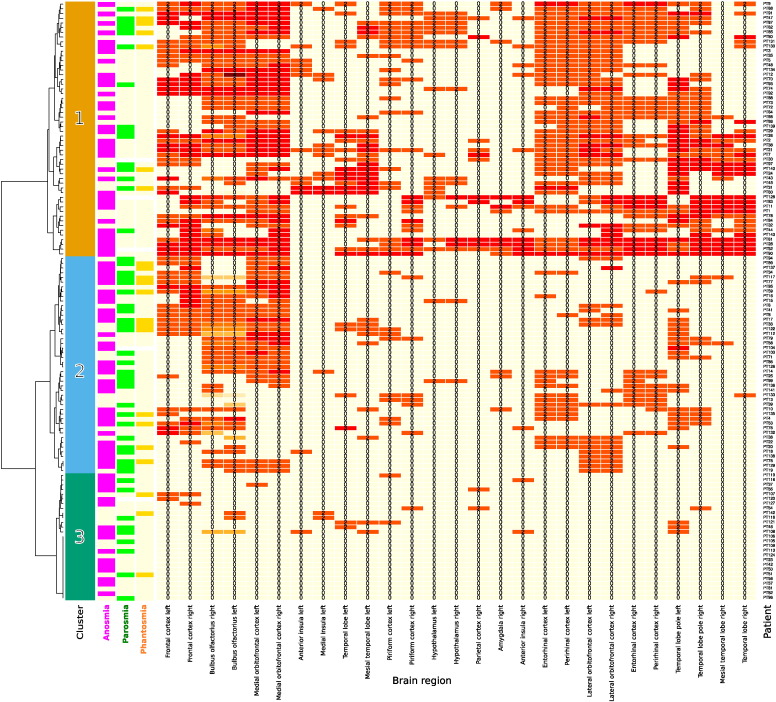
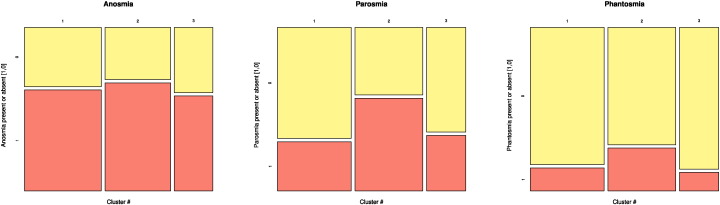
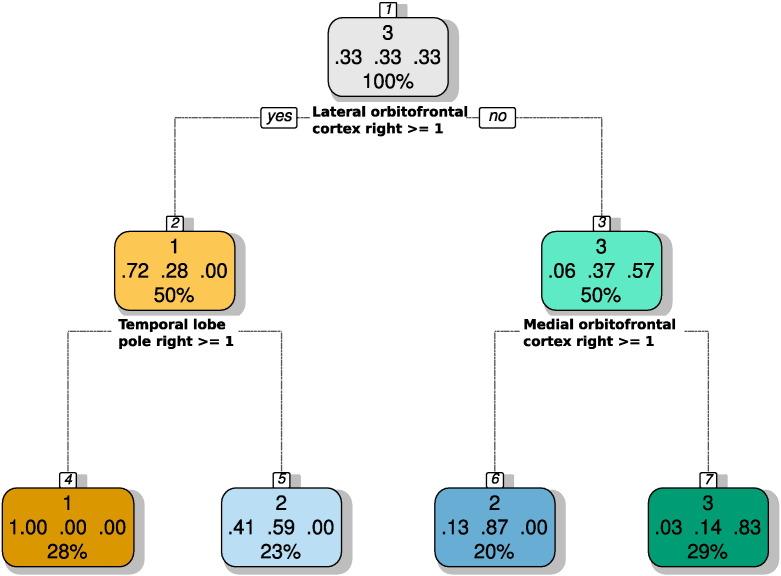
The presence of cerebral lesions in patients with neurosensory alterations provides a unique window into brain function. Using a fuzzy logic based combination of morphological information about 27 olfactory-eloquent brain regions acquired with four different brain imaging techniques, patterns of brain damage were analyzed in 127 patients who displayed anosmia, i.e., complete loss of the sense of smell (n = 81), or other and mechanistically still incompletely understood olfactory dysfunctions including parosmia, i.e., distorted perceptions of olfactory stimuli (n = 50), or phantosmia, i.e., olfactory hallucinations (n = 22). A higher prevalence of parosmia, and as a tendency also phantosmia, was observed in subjects with medium overall brain damage. Further analysis showed a lower frequency of lesions in the right temporal lobe in patients with parosmia than in patients without parosmia. This negative direction of the differences was unique for parosmia. In anosmia, and also in phantosmia, lesions were more frequent in patients displaying the respective symptoms than in those without these dysfunctions. In anosmic patients, lesions in the right olfactory bulb region were much more frequent than in patients with preserved sense of smell, whereas a higher frequency of carriers of lesions in the left frontal lobe was observed for phantosmia. We conclude that anosmia, and phantosmia, are the result of lost function in relevant brain areas whereas parosmia is more complex, requiring damaged and intact brain regions at the same time.
神经感觉改变患者脑部病变的存在为了解脑功能提供了一个独特的窗口。利用基于模糊逻辑的、通过四种不同脑成像技术获取的27个嗅觉相关脑区的形态学信息组合,对127例嗅觉障碍患者的脑损伤模式进行了分析,这些患者表现为嗅觉丧失,即嗅觉完全丧失(n = 81),或其他机制尚不完全清楚的嗅觉功能障碍,包括嗅觉倒错,即嗅觉刺激的扭曲感知(n = 50),或嗅觉幻觉(n = 22)。在总体脑损伤中等的受试者中,嗅觉倒错的患病率较高,嗅觉幻觉也有增加的趋势。进一步分析表明,嗅觉倒错患者右侧颞叶病变的频率低于无嗅觉倒错的患者。这种差异的负向趋势是嗅觉倒错所特有的。在嗅觉丧失和嗅觉幻觉患者中,出现相应症状的患者比没有这些功能障碍的患者病变更频繁。在嗅觉丧失患者中,右侧嗅球区域的病变比嗅觉正常的患者更频繁,而在嗅觉幻觉患者中,左侧额叶病变携带者的频率更高。我们得出结论,嗅觉丧失和嗅觉幻觉是相关脑区功能丧失的结果,而嗅觉倒错则更为复杂,需要同时存在受损脑区和完整脑区。