Su Nan, Yue Yan, Xiong Sidong
Jiangsu Key Laboratory of Infection and Immunity, Institutes of Biology and Medical Sciences, Soochow University, Suzhou, P.R. China.
Sci Rep. 2016 Mar 4;6:22658. doi: 10.1038/srep22658.
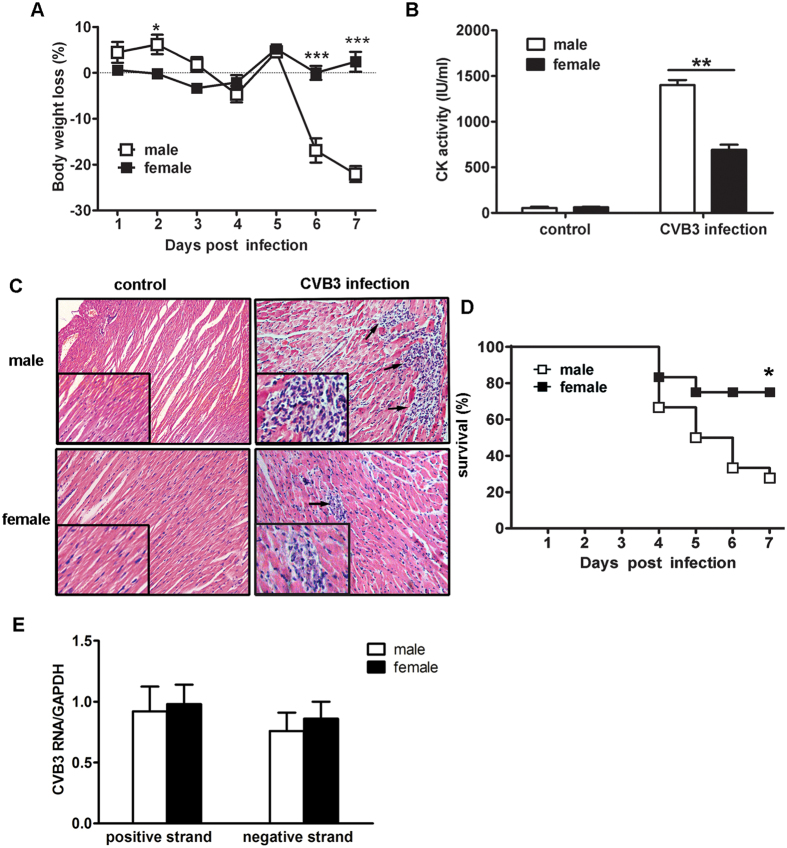
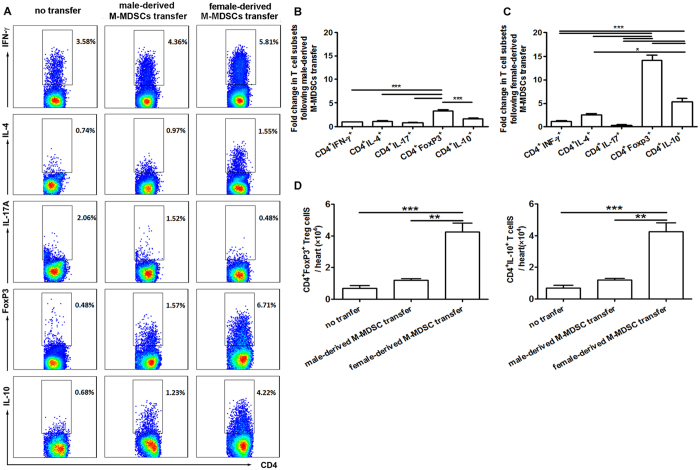
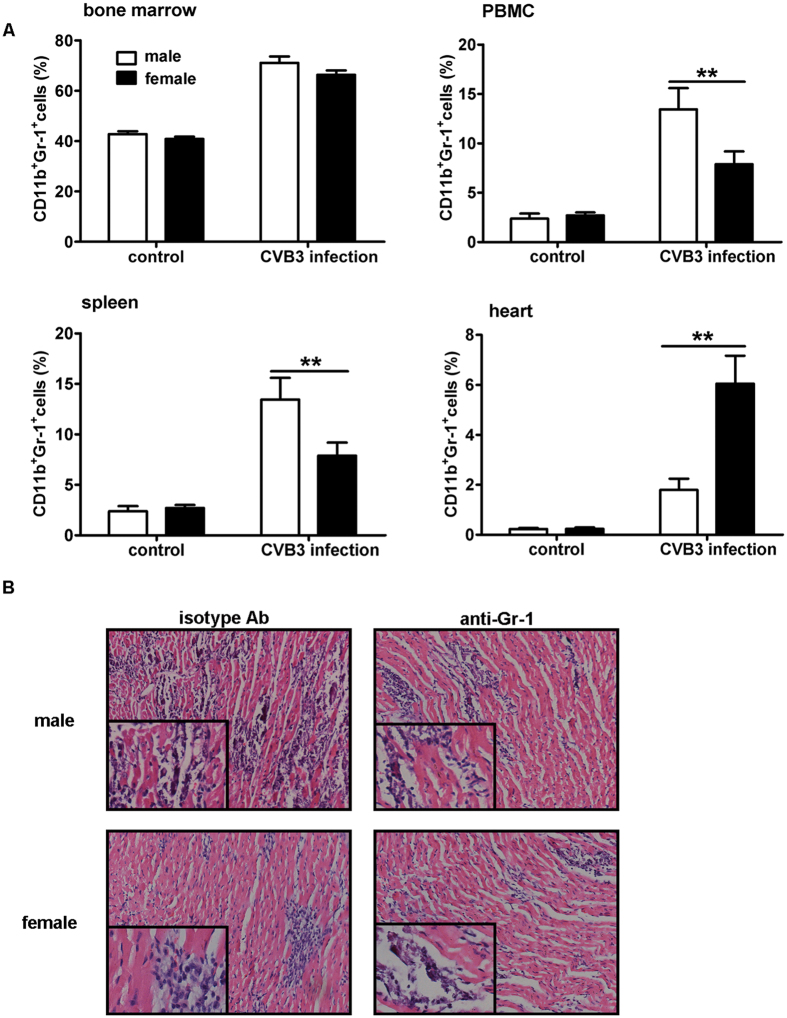
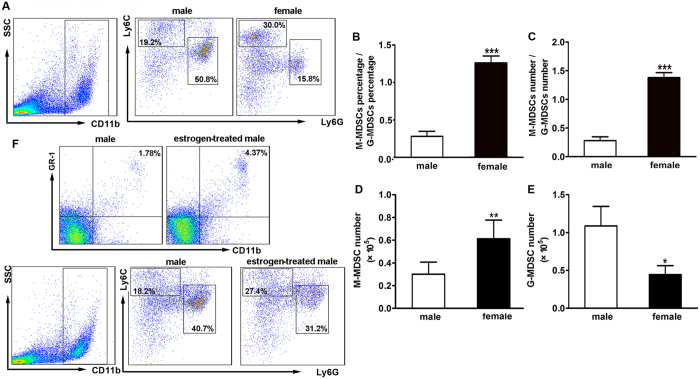
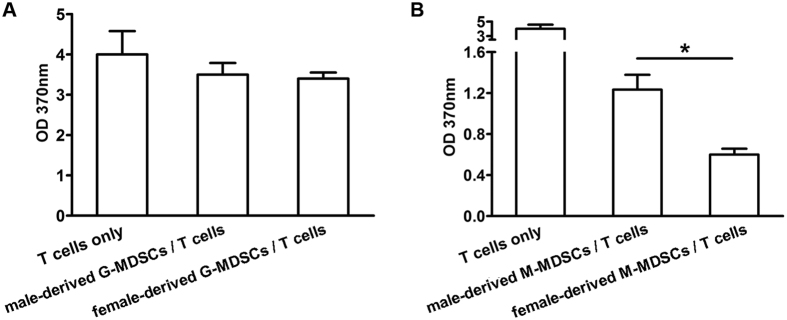
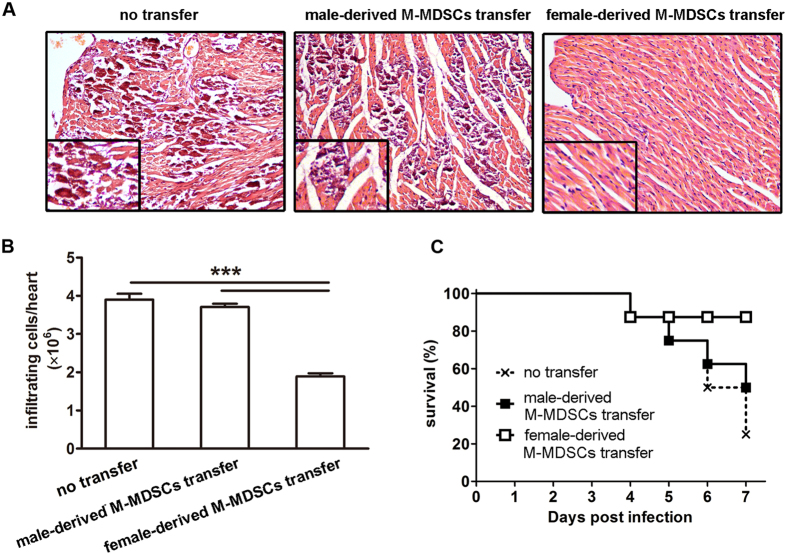
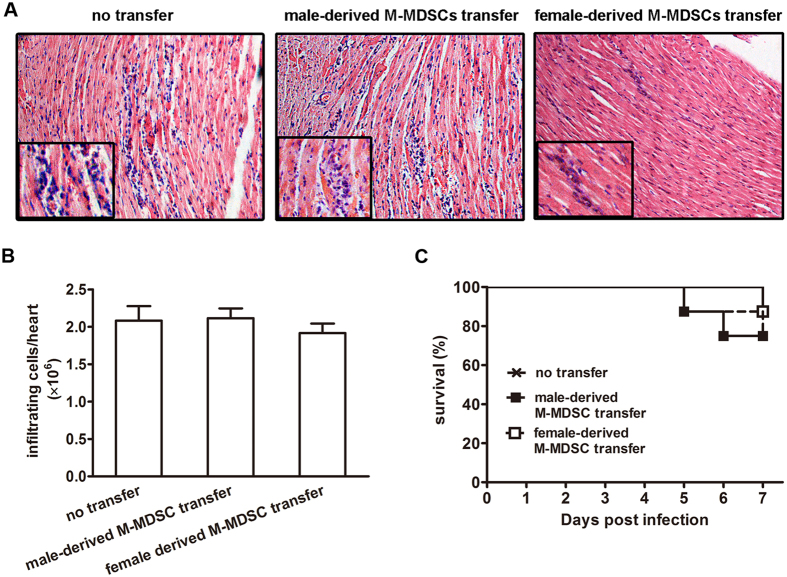
Coxsackievirus group B type 3 (CVB3) is a common etiologic agent of viral myocarditis and often causes sexually dimorphic myocarditis with increased incidence and mortality in male. So far, the underlying mechanism for the high male prevalence is not well elucidated. In this study, we deciphered the role of myeloid-derived suppressor cells (MDSCs) in the gender bias in murine CVB3-induced myocarditis by comparing their frequencies, subsets as well as immune suppressive functions. We found that much more myocardial MDSCs were enriched in infected females than males, with dramatically higher percentage ratio of CD11b(+)Ly6G-Ly6C(high) monocytic subset (M-MDSCs) to CD11b(+)Ly6G(+)Ly6C(low) granulocytic subset (G-MDSCs). Interestingly, more potent suppression on T cell proliferation was also evidenced in female-derived M-MDSCs. Consistently, adoptive transfer of female- but not male-derived M-MDSCs efficiently alleviated CVB3-induced myocarditis in male recipient mice, and this protection could be ascribed to the increased induction of regulatory and CD4(+)IL-10(+) T cells. Our study suggested that myocardial MDSCs were distinctively induced not only in quantities but also in phenotypes and immune suppressive functions in CVB3-infected males and females; and female-derived more suppressive M-MDSCs contributed to their insensitivity to CVB3-induced myocarditis.
柯萨奇B3型病毒(CVB3)是病毒性心肌炎的常见病原体,常导致性别差异明显的心肌炎,男性发病率和死亡率更高。迄今为止,男性患病率高的潜在机制尚未完全阐明。在本研究中,我们通过比较骨髓来源的抑制性细胞(MDSCs)的频率、亚群及其免疫抑制功能,来解读其在小鼠CVB3诱导的心肌炎性别差异中的作用。我们发现,受感染雌性小鼠心肌中的MDSCs比雄性小鼠富集得多,CD11b(+)Ly6G-Ly6C(高)单核细胞亚群(M-MDSCs)与CD11b(+)Ly6G(+)Ly6C(低)粒细胞亚群(G-MDSCs)的百分比显著更高。有趣的是,雌性来源的M-MDSCs对T细胞增殖的抑制作用也更强。同样,过继转移雌性而非雄性来源的M-MDSCs可有效减轻雄性受体小鼠CVB3诱导的心肌炎,这种保护作用可归因于调节性和CD4(+)IL-10(+) T细胞诱导增加。我们的研究表明,在CVB3感染的雄性和雌性小鼠中,心肌MDSCs不仅在数量上,而且在表型和免疫抑制功能上都有明显差异;雌性来源的更具抑制性的M-MDSCs导致它们对CVB3诱导的心肌炎不敏感。