Parker Nicole R, Hudson Amanda L, Khong Peter, Parkinson Jonathon F, Dwight Trisha, Ikin Rowan J, Zhu Ying, Cheng Zhangkai Jason, Vafaee Fatemeh, Chen Jason, Wheeler Helen R, Howell Viive M
Sydney Neuro-Oncology Group, Bill Walsh Translational Cancer Research Laboratory, Kolling Institute, St Leonards, NSW, Australia, 2065.
Northern Sydney Local Health District, St Leonards, NSW, Australia, 2065.
Sci Rep. 2016 Mar 4;6:22477. doi: 10.1038/srep22477.
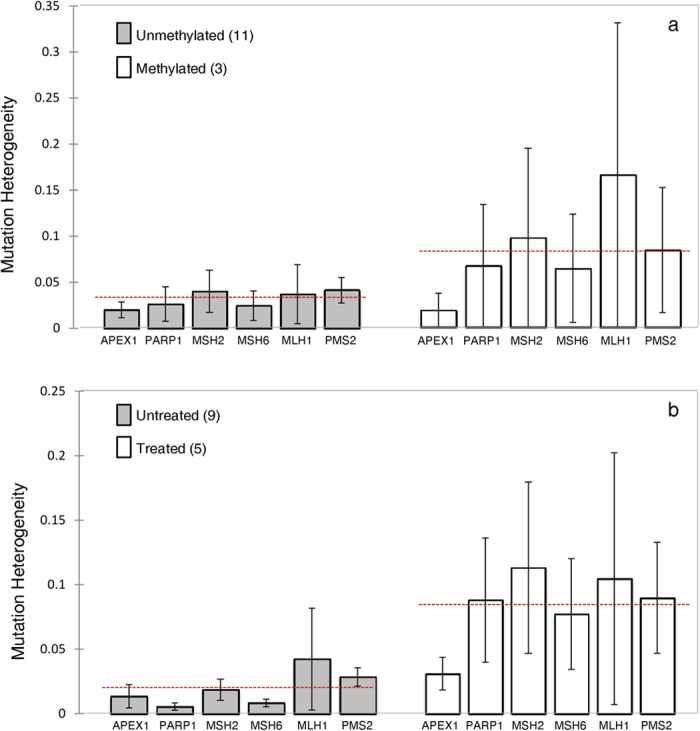
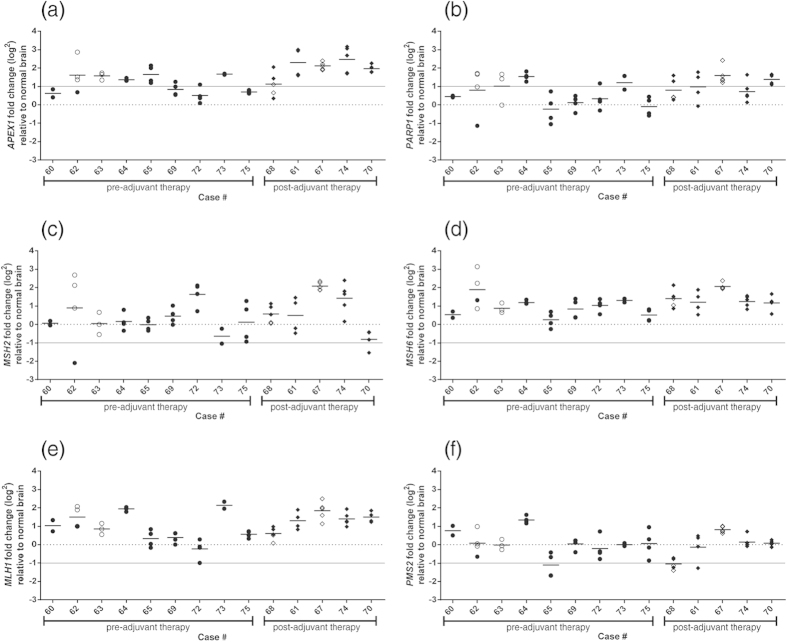
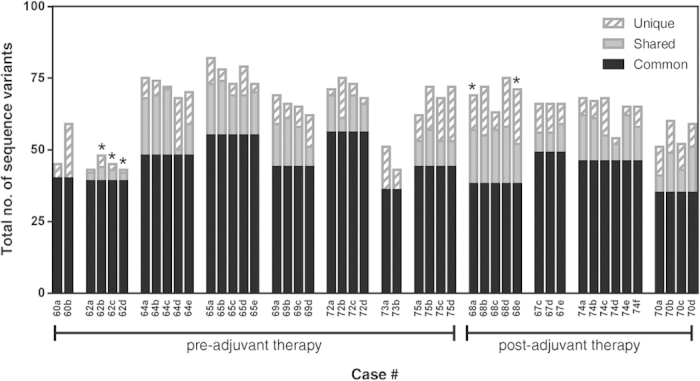
Heterogeneity is a hallmark of glioblastoma with intratumoral heterogeneity contributing to variability in responses and resistance to standard treatments. Promoter methylation status of the DNA repair enzyme O(6)-methylguanine DNA methyltransferase (MGMT) is the most important clinical biomarker in glioblastoma, predicting for therapeutic response. However, it does not always correlate with response. This may be due to intratumoral heterogeneity, with a single biopsy unlikely to represent the entire lesion. Aberrations in other DNA repair mechanisms may also contribute. This study investigated intratumoral heterogeneity in multiple glioblastoma tumors with a particular focus on the DNA repair pathways. Transcriptional intratumoral heterogeneity was identified in 40% of cases with variability in MGMT methylation status found in 14% of cases. As well as identifying intratumoral heterogeneity at the transcriptional and epigenetic levels, targeted next generation sequencing identified between 1 and 37 unique sequence variants per specimen. In-silico tools were then able to identify deleterious variants in both the base excision repair and the mismatch repair pathways that may contribute to therapeutic response. As these pathways have roles in temozolomide response, these findings may confound patient management and highlight the importance of assessing multiple tumor biopsies.
异质性是胶质母细胞瘤的一个标志,肿瘤内异质性导致对标准治疗的反应和耐药性存在差异。DNA修复酶O(6)-甲基鸟嘌呤DNA甲基转移酶(MGMT)的启动子甲基化状态是胶质母细胞瘤中最重要的临床生物标志物,可预测治疗反应。然而,它并不总是与反应相关。这可能是由于肿瘤内异质性,单次活检不太可能代表整个病变。其他DNA修复机制的异常也可能起作用。本研究调查了多个胶质母细胞瘤肿瘤中的肿瘤内异质性,特别关注DNA修复途径。在40%的病例中发现了转录性肿瘤内异质性,在14%的病例中发现了MGMT甲基化状态的变异性。除了在转录和表观遗传水平上识别肿瘤内异质性外,靶向新一代测序在每个样本中鉴定出1至37个独特的序列变异。然后,计算机工具能够在碱基切除修复和错配修复途径中识别可能影响治疗反应的有害变异。由于这些途径在替莫唑胺反应中起作用,这些发现可能会混淆患者管理,并突出评估多个肿瘤活检的重要性。