Kristensen Lasse S, Michaelsen Signe R, Dyrbye Henrik, Aslan Derya, Grunnet Kirsten, Christensen Ib J, Poulsen Hans S, Grønbæk Kirsten, Broholm Helle
From the Department of Hematology (LSK, DA, KG); Department of Radiation Biology (SRM, KG, IJC, HSP); and Department of Pathology, Rigshospitalet, Copenhagen Ø, Denmark (HD, HB).
J Neuropathol Exp Neurol. 2016 Mar;75(3):246-55. doi: 10.1093/jnen/nlv024. Epub 2016 Feb 16.
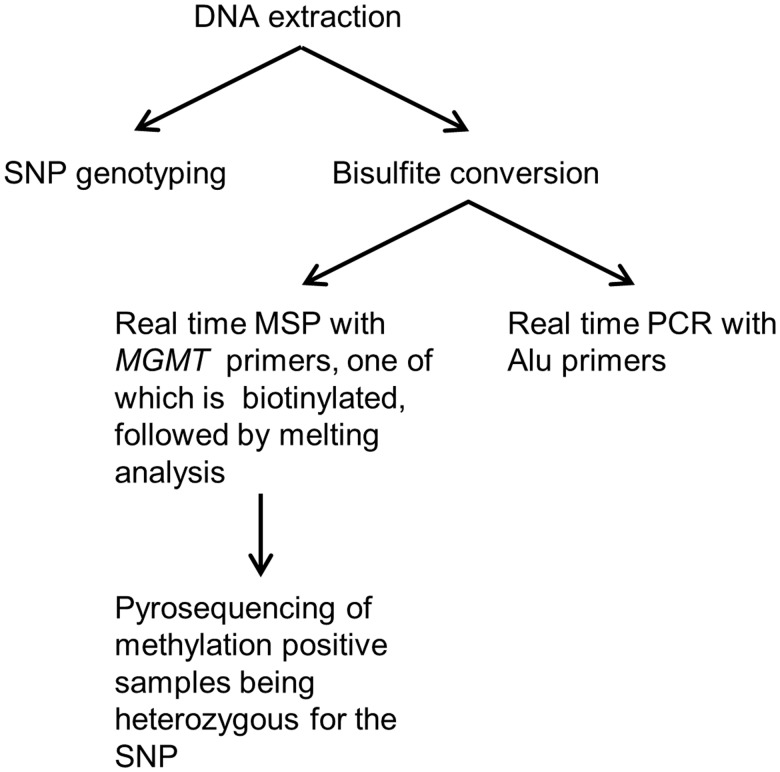
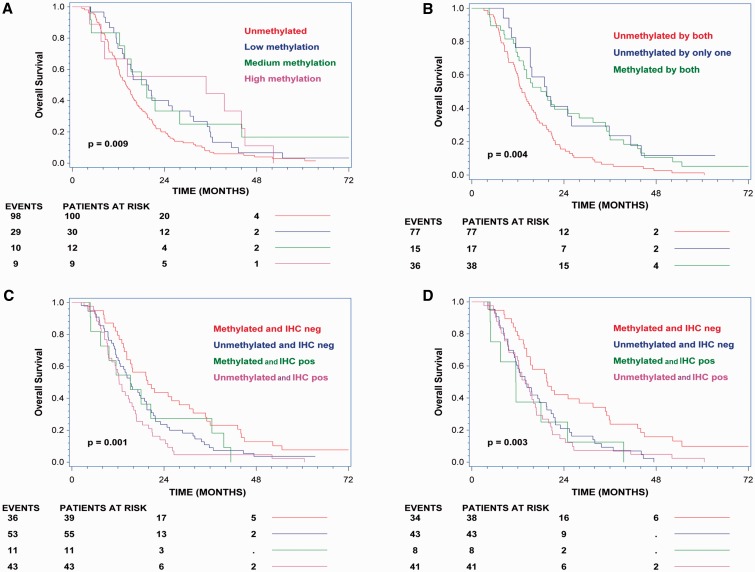
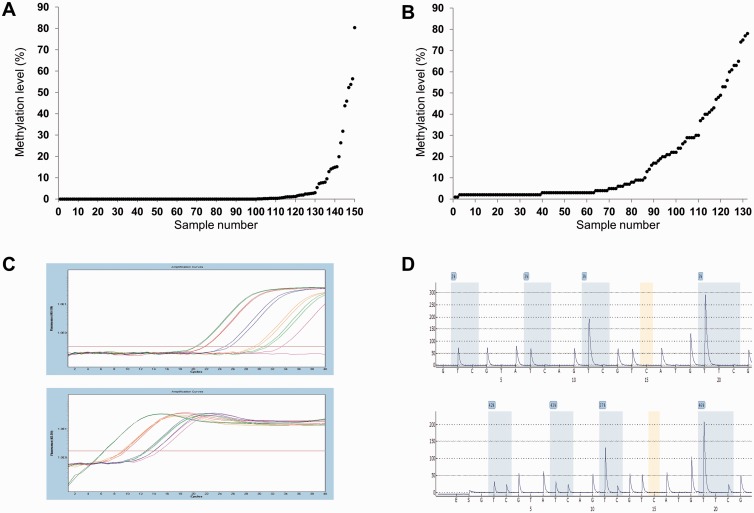
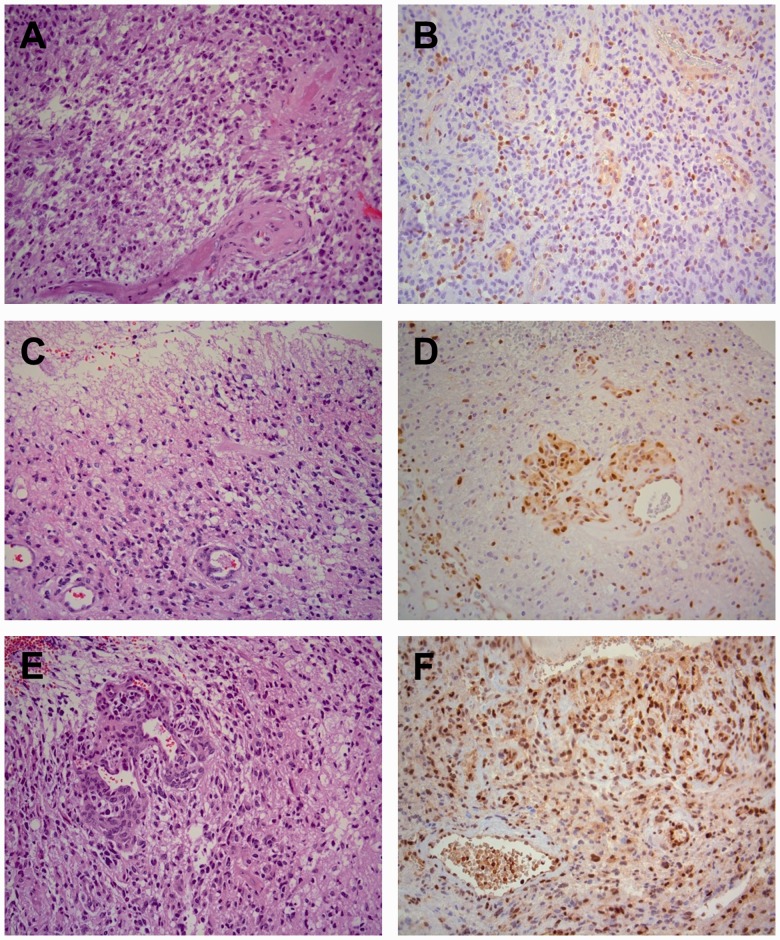
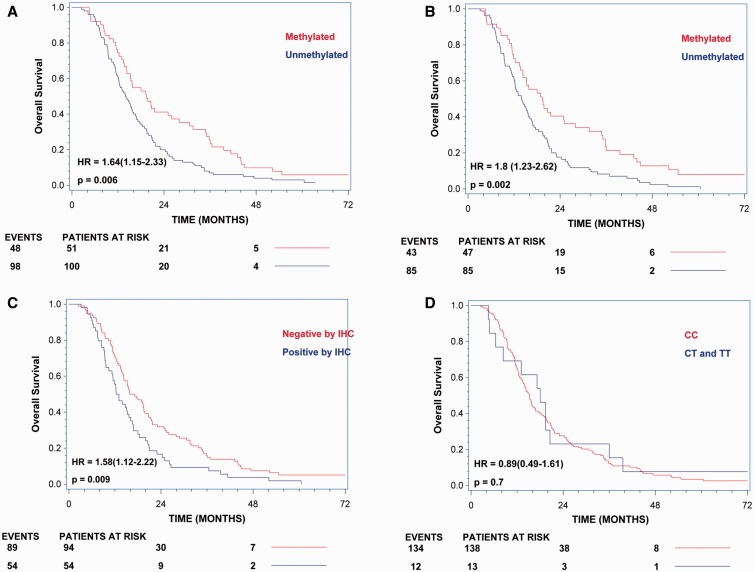
Methylation of the O(6)-methylguanine-DNA methyltransferase (MGMT) gene is a predictive and prognostic marker in newly diagnosed glioblastoma patients treated with temozolomide but how MGMT methylation should be assessed to ensure optimal detection accuracy is debated. We developed a novel quantitative methylation-specific PCR (qMSP) MGMT assay capable of providing allelic methylation data and analyzed 151 glioblastomas from patients receiving standard of care treatment (Stupp protocol). The samples were also analyzed by immunohistochemistry (IHC), standard bisulfite pyrosequencing, and genotyped for the rs1690252 MGMT promoter single nucleotide polymorphism. Monoallelic methylation was observed more frequently than biallelic methylation, and some cases with monoallelic methylation expressed the MGMT protein whereas others did not. The presence of MGMT methylation was associated with better overall survival (p = 0.006; qMSP and p = 0.002; standard pyrosequencing), and the presence of the protein was associated with worse overall survival (p = 0.009). Combined analyses of qMSP and standard pyrosequencing or IHC identified additional patients who benefited from temozolomide treatment. Finally, low methylation levels were also associated with better overall survival (p = 0.061; qMSP and p = 0.02; standard pyrosequencing). These data support the use of both MGMT methylation and MGMT IHC but not allelic methylation data as prognostic markers in patients with temozolomide-treated glioblastoma.
O(6)-甲基鸟嘌呤-DNA甲基转移酶(MGMT)基因的甲基化是新诊断的胶质母细胞瘤患者接受替莫唑胺治疗时的一种预测和预后标志物,但对于应如何评估MGMT甲基化以确保最佳检测准确性仍存在争议。我们开发了一种新型的定量甲基化特异性PCR(qMSP)MGMT检测方法,该方法能够提供等位基因甲基化数据,并分析了151例接受标准治疗方案(Stupp方案)的胶质母细胞瘤患者的样本。这些样本还通过免疫组织化学(IHC)、标准亚硫酸氢盐焦磷酸测序进行了分析,并对rs1690252 MGMT启动子单核苷酸多态性进行了基因分型。单等位基因甲基化比双等位基因甲基化更常见,一些单等位基因甲基化的病例表达MGMT蛋白,而另一些则不表达。MGMT甲基化的存在与更好的总生存期相关(p = 0.006;qMSP和p = 0.002;标准焦磷酸测序),而蛋白的存在与更差的总生存期相关(p = 0.009)。qMSP与标准焦磷酸测序或IHC的联合分析确定了更多从替莫唑胺治疗中获益的患者。最后,低甲基化水平也与更好的总生存期相关(p = 0.061;qMSP和p = 0.02;标准焦磷酸测序)。这些数据支持将MGMT甲基化和MGMT IHC均用作替莫唑胺治疗的胶质母细胞瘤患者的预后标志物,但不支持将等位基因甲基化数据用作预后标志物。