Nothnick Warren, Alali Zahraa
Department of Molecular and Integrative Physiology, University of Kansas Medical Center, Kansas City, KS, USA; Institute for Reproductive Health and Regenerative Medicine, Center for Reproductive Sciences, University of Kansas Medical Center, Kansas City, KS, USA.
Department of Molecular and Integrative Physiology, University of Kansas Medical Center, Kansas City, KS, USA.
F1000Res. 2016 Feb 17;5. doi: 10.12688/f1000research.7504.1. eCollection 2016.
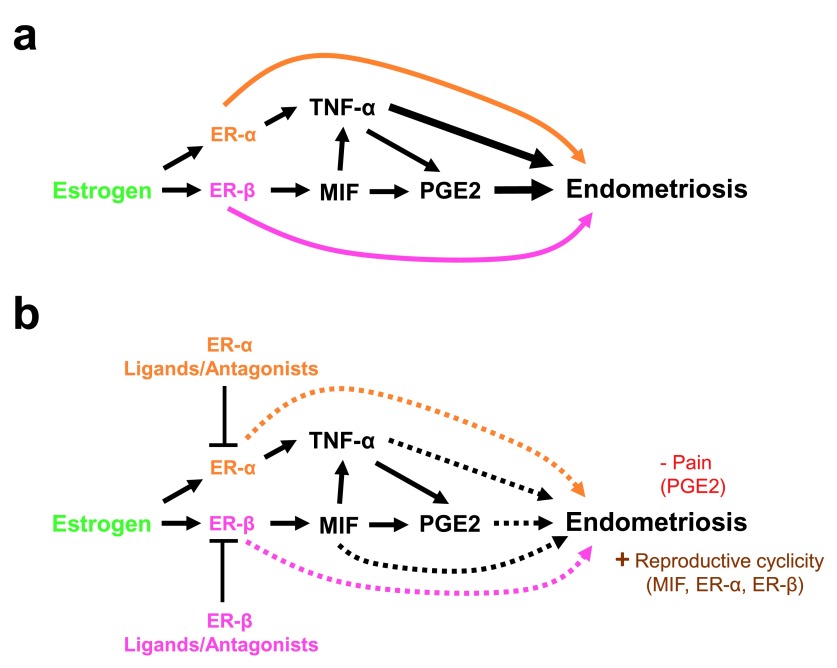
In this review, we focus on recent advancements in our understanding of the roles of inflammatory mediators in endometriosis pathophysiology and the potential for improved therapies based upon targeting these pathways. We review the association between endometriosis and inflammation and the initial promise of anti-tumor necrosis factor therapies based upon experimental evidence, and how and why these studies have not translated to the clinic. We then discuss emerging data on the role of inter-relationship among macrophage migration inhibitory factor, prostaglandin E 2, and estrogen receptor-beta, and the potential utility of targeting these factors in endometriosis treatment. In doing so, we highlight the strengths and discuss the current research on identification of novel, anti-inflammatory-based therapy and the necessity to expand experimental endpoints to include clinically relevant measures when assessing the efficacy of potential new therapies for endometriosis.
在本综述中,我们聚焦于近期在理解炎症介质在子宫内膜异位症病理生理学中的作用以及基于靶向这些途径改善治疗方法的潜力方面所取得的进展。我们回顾子宫内膜异位症与炎症之间的关联以及基于实验证据的抗肿瘤坏死因子疗法的初步前景,以及这些研究未能转化至临床的方式和原因。然后,我们讨论关于巨噬细胞移动抑制因子、前列腺素E2和雌激素受体β之间相互关系作用的新数据,以及靶向这些因子在子宫内膜异位症治疗中的潜在效用。在此过程中,我们强调了优势,并讨论了目前关于识别新型抗炎疗法的研究,以及在评估子宫内膜异位症潜在新疗法的疗效时扩大实验终点以纳入临床相关指标的必要性。