Schwerd Tobias, Pandey Sumeet, Yang Huei-Ting, Bagola Katrin, Jameson Elisabeth, Jung Jonathan, Lachmann Robin H, Shah Neil, Patel Smita Y, Booth Claire, Runz Heiko, Düker Gesche, Bettels Ruth, Rohrbach Marianne, Kugathasan Subra, Chapel Helen, Keshav Satish, Elkadri Abdul, Platt Nick, Muise Alexio M, Koletzko Sibylle, Xavier Ramnik J, Marquardt Thorsten, Powrie Fiona, Wraith James E, Gyrd-Hansen Mads, Platt Frances M, Uhlig Holm H
Translational Gastroenterology Unit, University of Oxford, Oxford, UK.
Nuffield Department of Clinical Medicine, Ludwig Institute for Cancer Research, University of Oxford, Oxford, UK.
Gut. 2017 Jun;66(6):1060-1073. doi: 10.1136/gutjnl-2015-310382. Epub 2016 Mar 7.
Patients with Niemann-Pick disease type C1 (NPC1), a lysosomal lipid storage disorder that causes neurodegeneration and liver damage, can present with IBD, but neither the significance nor the functional mechanism of this association is clear. We studied bacterial handling and antibacterial autophagy in patients with NPC1.
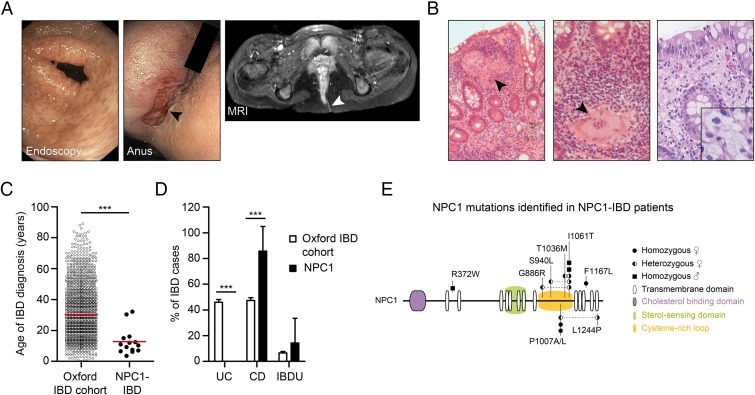
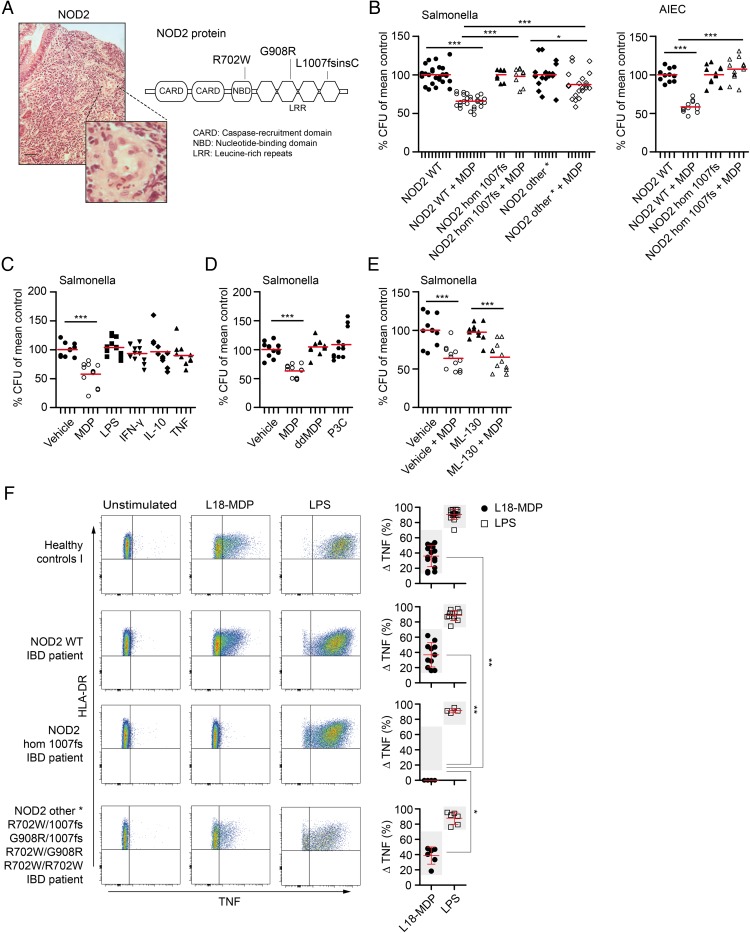
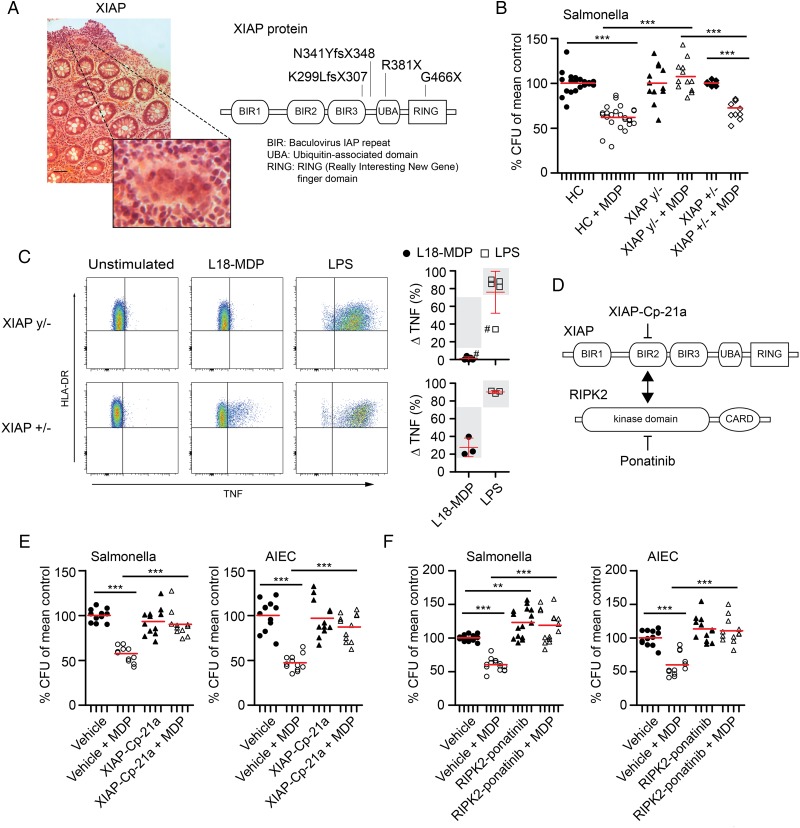
We characterised intestinal inflammation in 14 patients with NPC1 who developed IBD. We investigated bacterial handling and cytokine production of NPC1 monocytes or macrophages in vitro and compared NPC1-associated functional defects to those caused by IBD-associated nucleotide-binding oligomerization domain-containing protein 2 (NOD2) variants or mutations in X-linked inhibitor of apoptosis (XIAP).
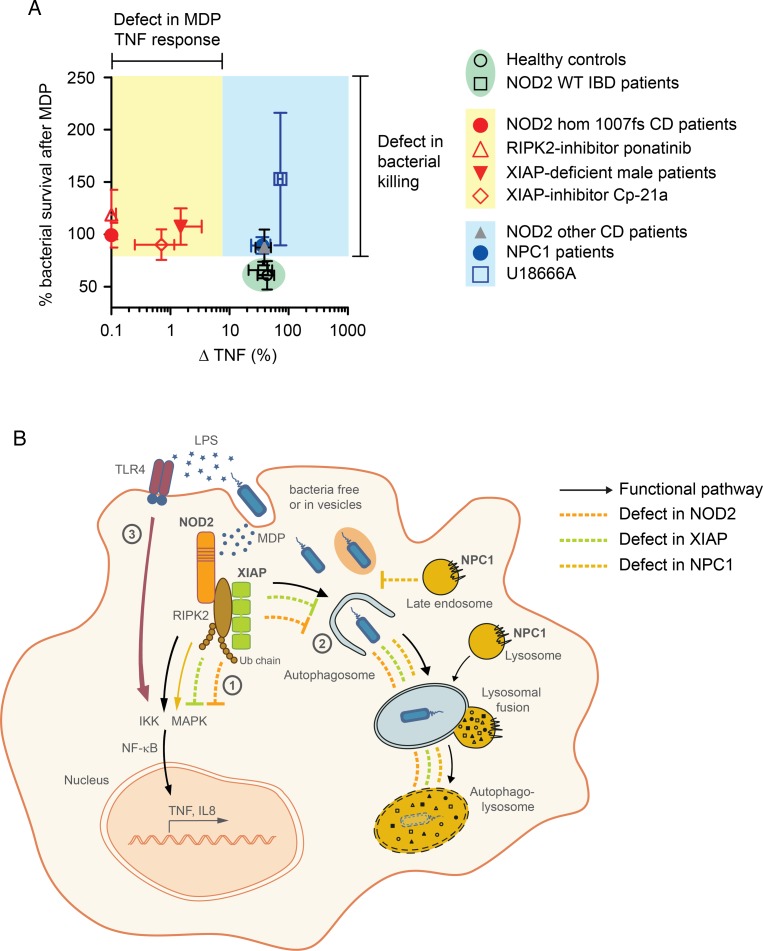
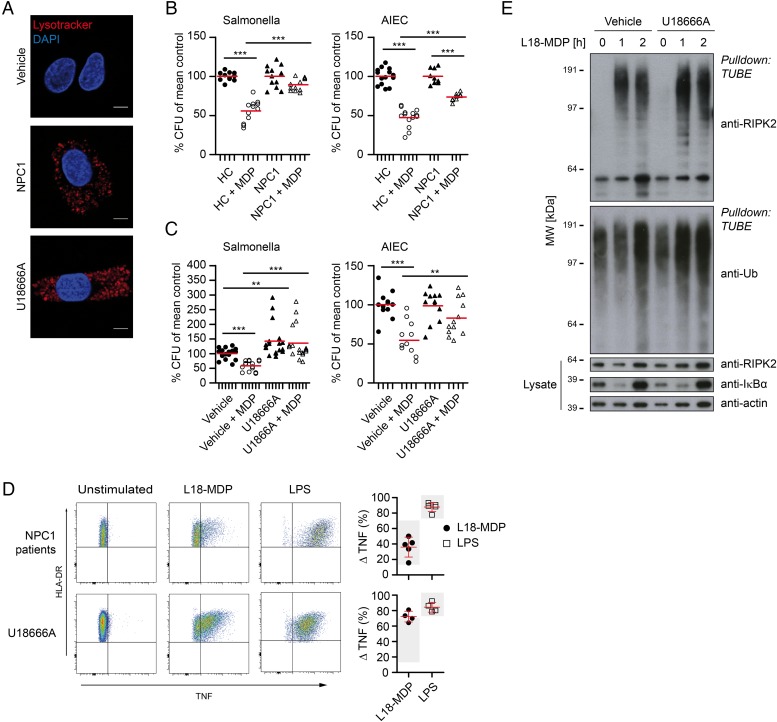
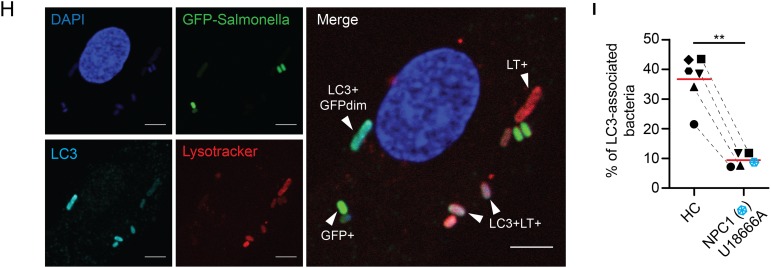
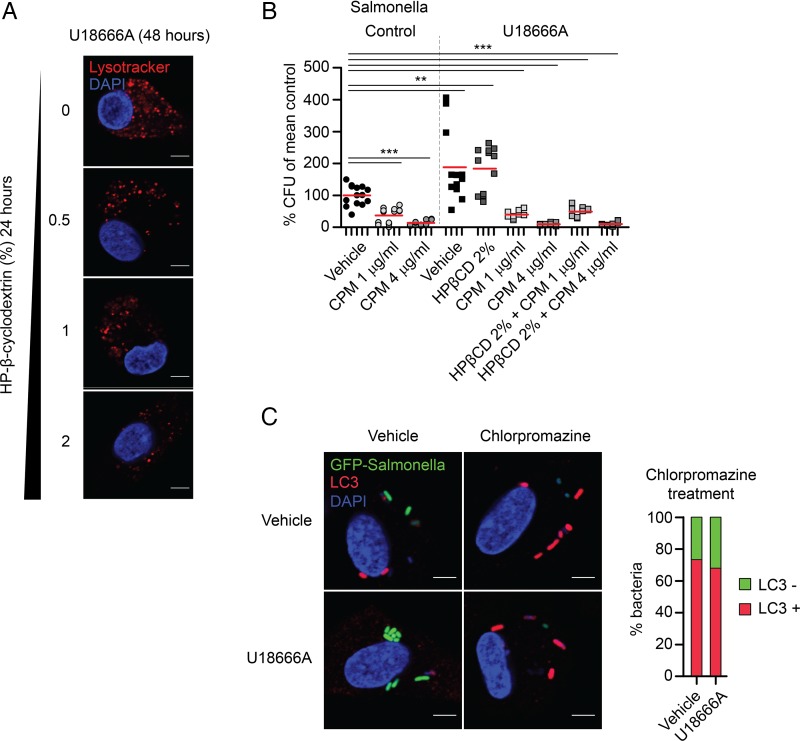
Patients with the lysosomal lipid storage disorder NPC1 have increased susceptibility to early-onset fistulising colitis with granuloma formation, reminiscent of Crohn's disease (CD). Mutations in NPC1 cause impaired autophagy due to defective autophagosome function that abolishes NOD2-mediated bacterial handling in vitro similar to variants in NOD2 or XIAP deficiency. In contrast to genetic NOD2 and XIAP variants, NPC1 mutations do not impair NOD2-receptor-interacting kinase 2 (RIPK2)-XIAP-dependent cytokine production. Pharmacological activation of autophagy can rescue bacterial clearance in macrophages in vitro by increasing the autophagic flux and bypassing defects in NPC1.
NPC1 confers increased risk of early-onset severe CD. Our data support the concept that genetic defects at different checkpoints of selective autophagy cause a shared outcome of CD-like immunopathology linking monogenic and polygenic forms of IBD. Muramyl dipeptide-driven cytokine responses and antibacterial autophagy induction are parallel and independent signalling cascades downstream of the NOD2-RIPK2-XIAP complex.
1型尼曼-匹克病(NPC1)是一种溶酶体脂质贮积病,可导致神经退行性变和肝损伤,此类患者可能出现炎症性肠病(IBD),但这种关联的意义和功能机制均不明确。我们研究了NPC1患者的细菌处理及抗菌自噬情况。
我们对14例发生IBD的NPC1患者的肠道炎症进行了特征分析。我们在体外研究了NPC1单核细胞或巨噬细胞的细菌处理及细胞因子产生情况,并将NPC1相关的功能缺陷与由IBD相关的含核苷酸结合寡聚化结构域蛋白2(NOD2)变体或X连锁凋亡抑制蛋白(XIAP)突变所导致的缺陷进行了比较。
溶酶体脂质贮积病NPC1患者对伴有肉芽肿形成的早发性瘘管性结肠炎易感性增加,这让人联想到克罗恩病(CD)。NPC1中的突变由于自噬体功能缺陷导致自噬受损,这在体外消除了NOD2介导的细菌处理,类似于NOD2变体或XIAP缺乏。与遗传性NOD2和XIAP变体不同,NPC1突变不会损害NOD2受体相互作用激酶2(RIPK2)-XIAP依赖性细胞因子的产生。自噬的药理学激活可通过增加自噬通量并绕过NPC1中的缺陷来挽救体外巨噬细胞中的细菌清除。
NPC1会增加早发性重症CD的风险。我们的数据支持这样一种概念,即选择性自噬不同检查点的基因缺陷会导致类似CD的免疫病理学的共同结果,将单基因和多基因形式的IBD联系起来。胞壁酰二肽驱动的细胞因子反应和抗菌自噬诱导是NOD2-RIPK2-XIAP复合物下游平行且独立的信号级联反应。