Carah Jennifer K, Howard Jeanette K, Thompson Sally E, Short Gianotti Anne G, Bauer Scott D, Carlson Stephanie M, Dralle David N, Gabriel Mourad W, Hulette Lisa L, Johnson Brian J, Knight Curtis A, Kupferberg Sarah J, Martin Stefanie L, Naylor Rosamond L, Power Mary E
Jennifer K. Carah is an ecologist, Jeanette K. Howard is the lead freshwater scientist, Lisa L. Hulette is a senior project director, and Stefanie L. Martin was an associate project director at The Nature Conservancy of California, in San Francisco. Jennifer works on stream and salmonid habitat conservation and restoration. Jeanette works on freshwater systems conservation planning and water resource sustainability. Lisa directs The Nature Conservancy of California's Salmon Program, and Stefanie is a conservation program manager who focuses on evaluating the economic value of conservation and the effects of market dynamics on conservation approaches. Sally E. Thompson is an ecohydrologist who studies hydrology, spatial ecology, and water resource sustainability and David N. Dralle is a graduate student who studies mathematical methods in ecohydrology in the Department of Civil and Environmental Engineering at the University of California, Berkeley. Stephanie M. Carlson is an ecologist who studies ecology and conservation of freshwater fishes in the Department of Environmental Science, Policy, and Management and Mary E. Power is an ecologist who studies river food webs and upland river-coastal ocean linkages in the Department of Integrative Biology at the University of California, Berkeley. Anne G. Short Gianotti is a geographer in the Department of Earth and Environment at Boston University; she studies human-environment relations, environmental governance, and sustainable development. Scott D. Bauer is a senior environmental scientist with the California Department of Fish and Wildlife (CDFW) in Eureka; he works on CDFW's Watershed Enforcement Team, a program created in the summer of 2014 to regulate and enforce existing environmental laws at marijuana cultivation sites. Mourad W. Gabriel is the executive director for the Integral Ecology Research Center, a nonprofit research organization in Blue Lake, California; he studies wildlife disease ecology and the environmental impacts associated with marijuana cultivation. Brian J. Johnson is California director of Trout Unlimited in Berkeley. Curtis A. Knight is executive director of California Trout in San Francisco. Sarah J. Kupferberg is an ecologist with McBain Associates, in Arcata, California. Sarah studies stream ecology, amphibian biology, and the impacts of hydropower facilities on aquatic resources. Rosamond L. Naylor is an economist in the Department of Environmental Earth Science at Stanford University. She studies the economic and biophysical dimensions of food security and the environmental impacts of crop and animal production. E-mail:
Bioscience. 2015 Aug 1;65(8):822-829. doi: 10.1093/biosci/biv083. Epub 2015 Jun 19.
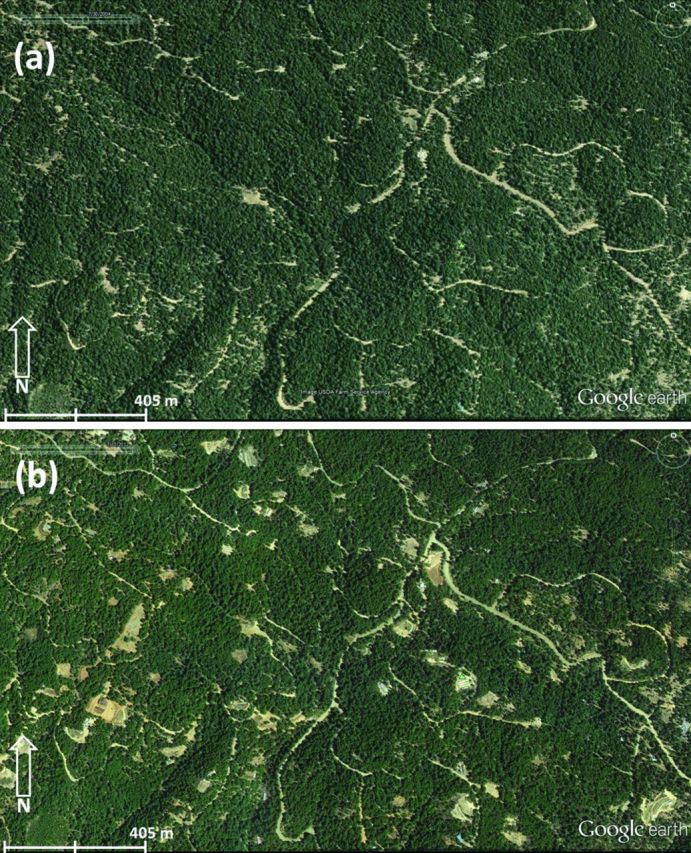
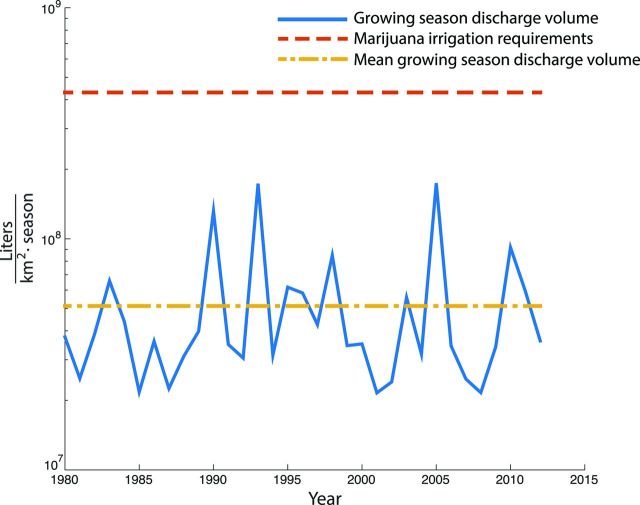
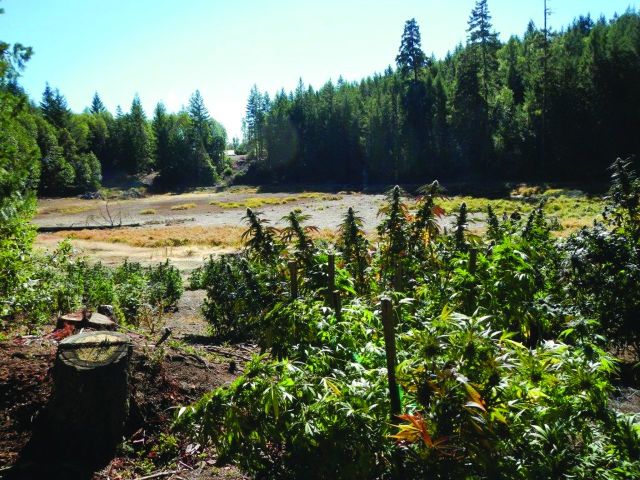
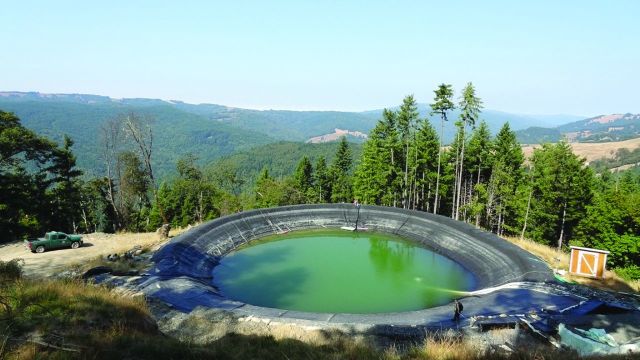
The liberalization of marijuana policies, including the legalization of medical and recreational marijuana, is sweeping the United States and other countries. Marijuana cultivation can have significant negative collateral effects on the environment that are often unknown or overlooked. Focusing on the state of California, where by some estimates 60%-70% of the marijuana consumed in the United States is grown, we argue that (a) the environmental harm caused by marijuana cultivation merits a direct policy response, (b) current approaches to governing the environmental effects are inadequate, and
大麻政策的自由化,包括医用大麻和娱乐用大麻的合法化,正在席卷美国和其他国家。大麻种植会对环境产生重大的负面附带影响,而这些影响往往不为人知或被忽视。以加利福尼亚州为例,据估计美国消费的大麻中有60%-70%是在该州种植的,我们认为:(a) 大麻种植造成的环境危害值得直接的政策回应;(b) 当前治理环境影响的方法并不充分;并且