Kalter Henry D, Yaroh Asma Gali, Maina Abdou, Koffi Alain K, Bensaïd Khaled, Amouzou Agbessi, Black Robert E
Department of International Health, Johns Hopkins Bloomberg School of Public Health, Baltimore, MD, USA.
Ministry of Health, Niamey, Niger.
J Glob Health. 2016 Jun;6(1):010604. doi: 10.7189/jogh.06.010604.
This study was one of a set of verbal/social autopsy (VASA) investigations undertaken by the WHO/UNICEF-supported Child Health Epidemiology Reference Group to estimate the causes and determinants of neonatal and child deaths in high priority countries. The study objective was to help explain the lack of decrease in neonatal mortality in Niger from 2007 to 2010, a period during which child mortality was decreasing.
VASA interviews were conducted of a random sample of 453 neonatal deaths identified by the 2010 Niger National Mortality Survey (NNMS). Causes of death were determined by expert algorithm analysis, and the prevalence of household, community and health system determinants were examined along the continuum of maternal and newborn care, the Pathway to Survival for newborn illnesses, and an extended pathway for maternal complications. The social autopsy findings were compared to available data for survivors from the same cohort collected by the NNMS and the 2012 Niger Demographic and Health Survey.
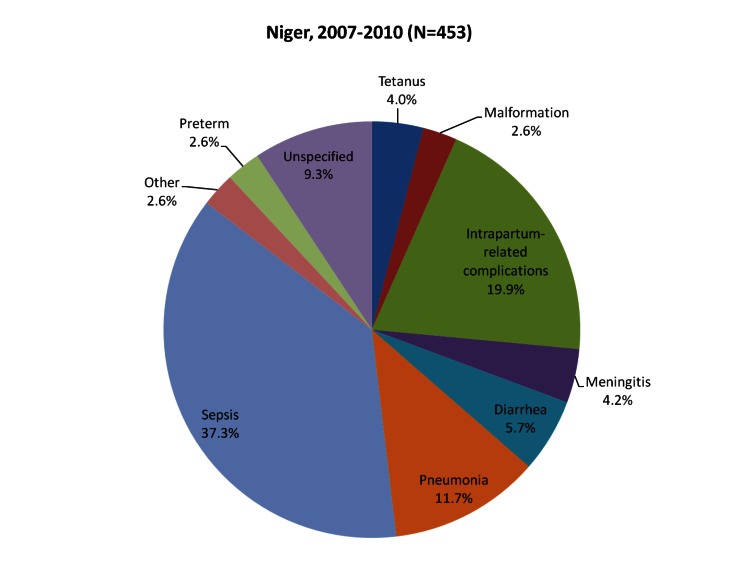
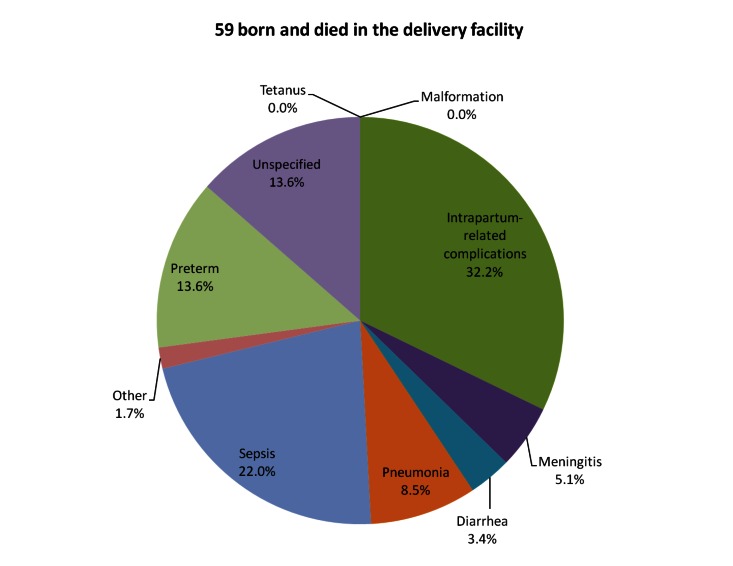
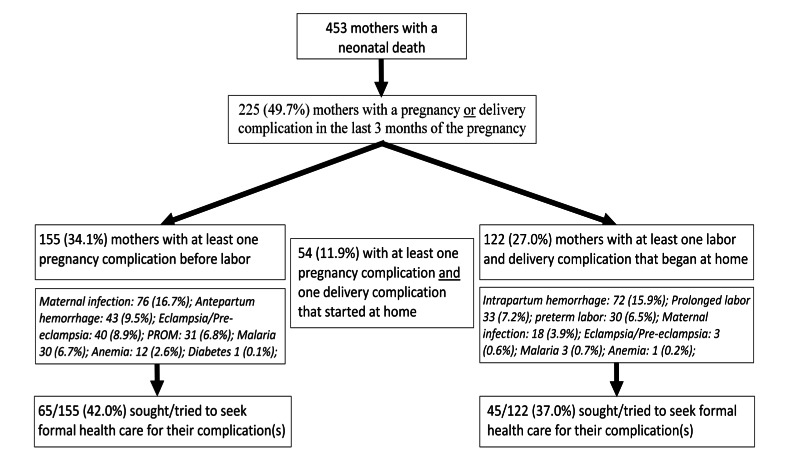
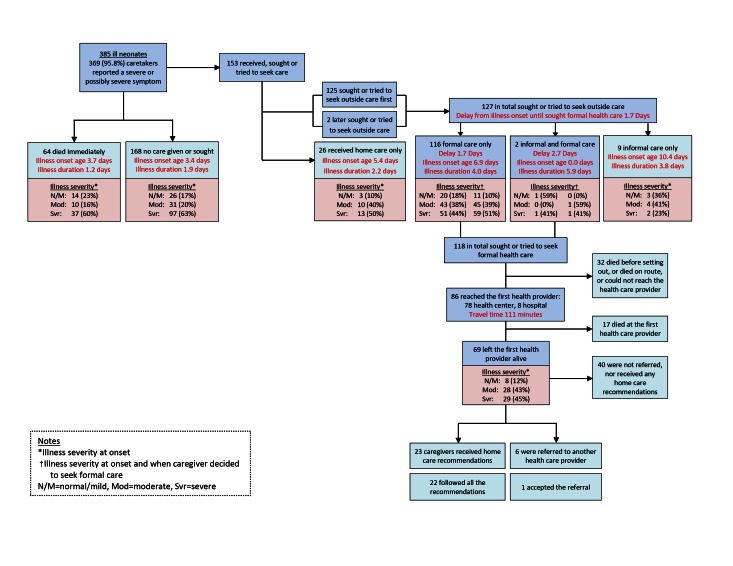
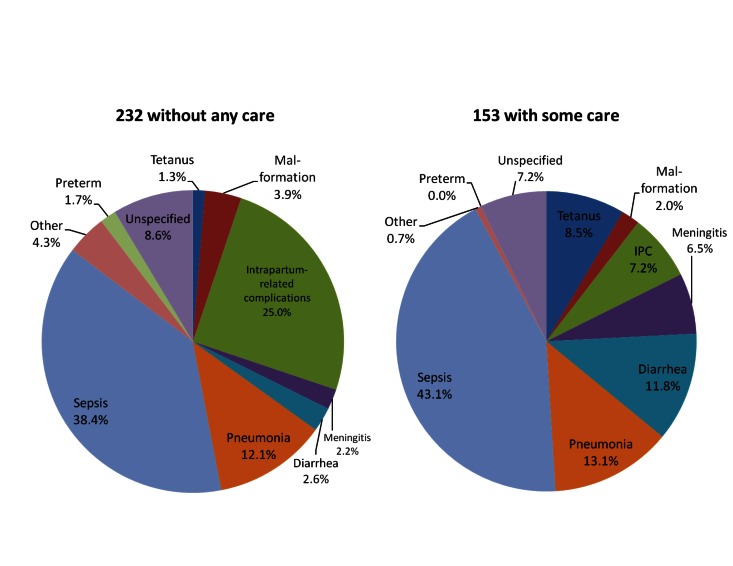
Severe neonatal infection and birth asphyxia were the leading causes of early neonatal death in the community and facilities. Death in the community after delayed careseeking for severe infection predominated during the late neonatal period. The levels of nearly all demographic, antenatal and delivery care factors were in the direction of risk for the VASA study decedents. They more often resided rurally (P < 0.001) and their mothers were less educated (P = 0.03) and gave birth when younger (P = 0.03) than survivors' mothers. Their mothers also were less likely to receive quality antenatal care (P < 0.001), skilled attendance at birth (P = 0.03) or to deliver in an institution (P < 0.001). Nearly half suffered an obstetric complication, with more maternal infection (17.9% vs 0.2%), antepartum hemorrhage (12.5% vs 0.5%) and eclampsia/preeclampsia (9.5% vs 1.6%) than for all births in Niger. Their mothers also were unlikely to seek health care for their own complications (37% to 42%) as well as for the newborn's illness (30.6%).
Niger should scale up its recently implemented package of high-impact interventions to additional integrated health facilities and expand the package to provide antenatal care and management of labor and delivery, with support to reach a higher level facility when required. Community interventions are needed to improve illness recognition and careseeking for severe neonatal infection.
本研究是由世界卫生组织/联合国儿童基金会支持的儿童健康流行病学参考小组开展的一系列口头/社会尸检(VASA)调查之一,旨在评估高优先级国家新生儿和儿童死亡的原因及决定因素。研究目的是帮助解释2007年至2010年期间尼日尔新生儿死亡率未能下降的原因,而在此期间儿童死亡率却在下降。
对2010年尼日尔国家死亡率调查(NNMS)确定的453例新生儿死亡随机样本进行VASA访谈。通过专家算法分析确定死亡原因,并沿着孕产妇和新生儿护理连续统一体、新生儿疾病生存途径以及孕产妇并发症扩展途径,研究家庭、社区和卫生系统决定因素的流行情况。将社会尸检结果与NNMS和2012年尼日尔人口与健康调查收集的同一队列幸存者的现有数据进行比较。
严重新生儿感染和出生窒息是社区和医疗机构中早期新生儿死亡的主要原因。晚期新生儿期以因严重感染延迟就医后在社区死亡为主。几乎所有人口统计学、产前和分娩护理因素的水平都表明VASA研究中的死者面临风险。与幸存者的母亲相比,他们更多居住在农村(P<0.001),母亲受教育程度较低(P = 0.03)且生育时年龄较小(P = 0.03)。他们的母亲接受优质产前护理(P<0.001)、熟练助产(P = 0.03)或在医疗机构分娩(P<0.001)的可能性也较小。近一半的产妇发生产科并发症,与尼日尔所有分娩相比,产妇感染(17.9%对0.2%)、产前出血(12.5%对0.5%)和子痫/先兆子痫(9.5%对1.6%)更多。他们的母亲也不太可能因自身并发症(37%至42%)以及新生儿疾病(30.6%)寻求医疗保健。
尼日尔应将其最近实施的一系列高影响力干预措施推广到更多综合卫生设施,并扩大该措施以提供产前护理以及分娩的管理,并在需要时提供支持以转诊到更高层级的医疗机构。需要开展社区干预措施,以提高对严重新生儿感染的疾病识别和就医率。