Deng Aihua, Lin Wei, Shi Nana, Wu Jie, Sun Zhaopeng, Sun Qinyun, Bai Hua, Pan Yongxin, Wen Tingyi
CAS Key Laboratory of Pathogenic Microbiology and Immunology, Institute of Microbiology, Chinese Academy of Sciences, Beijing, 100101, China.
Biogeomagnetism Group, Paleomagnetism and Geochronology Laboratory, Key Laboratory of Earth and Planetary Physics, Institute of Geology and Geophysics, Chinese Academy of Sciences, Beijing, 100029, China.
Protein Cell. 2016 Apr;7(4):267-280. doi: 10.1007/s13238-016-0253-x. Epub 2016 Mar 9.
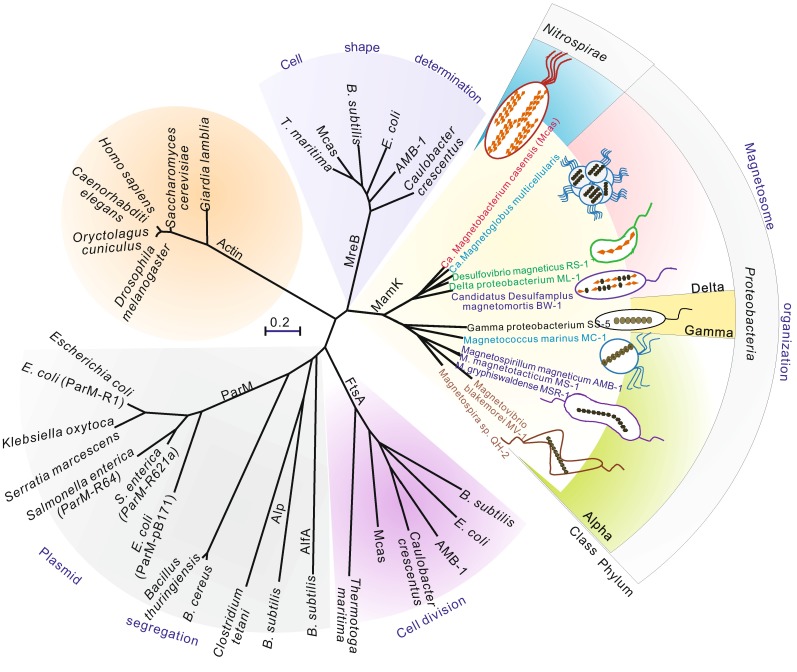
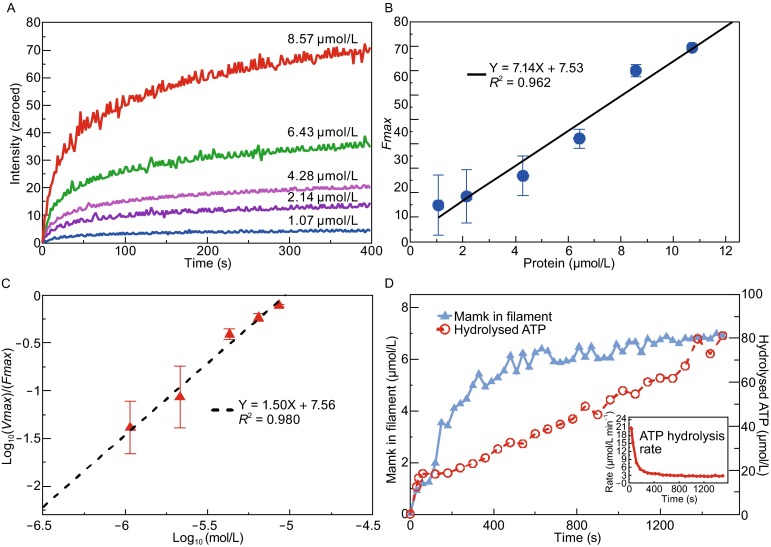
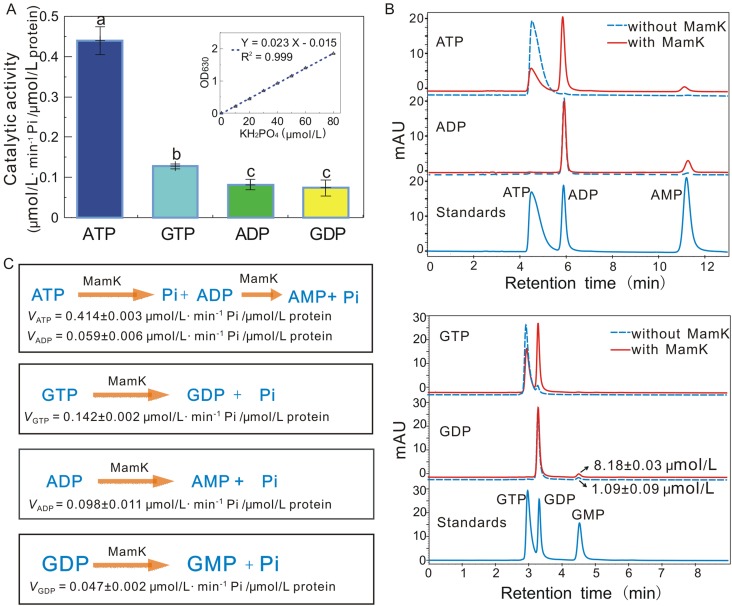
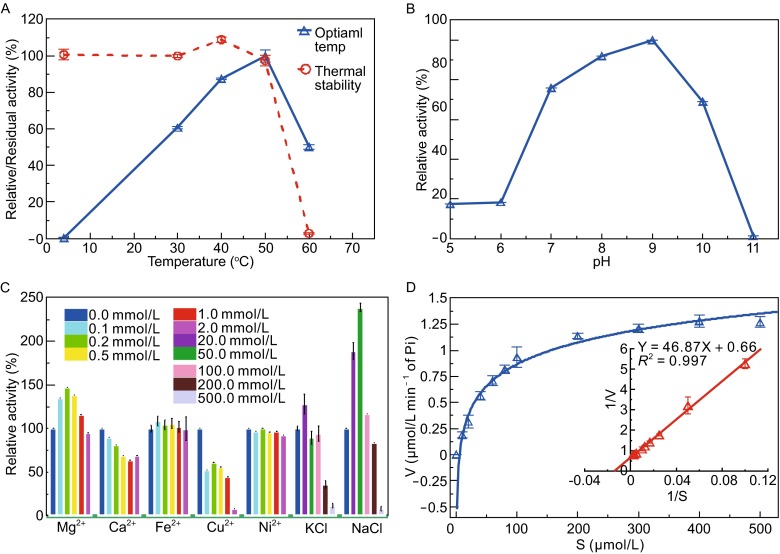
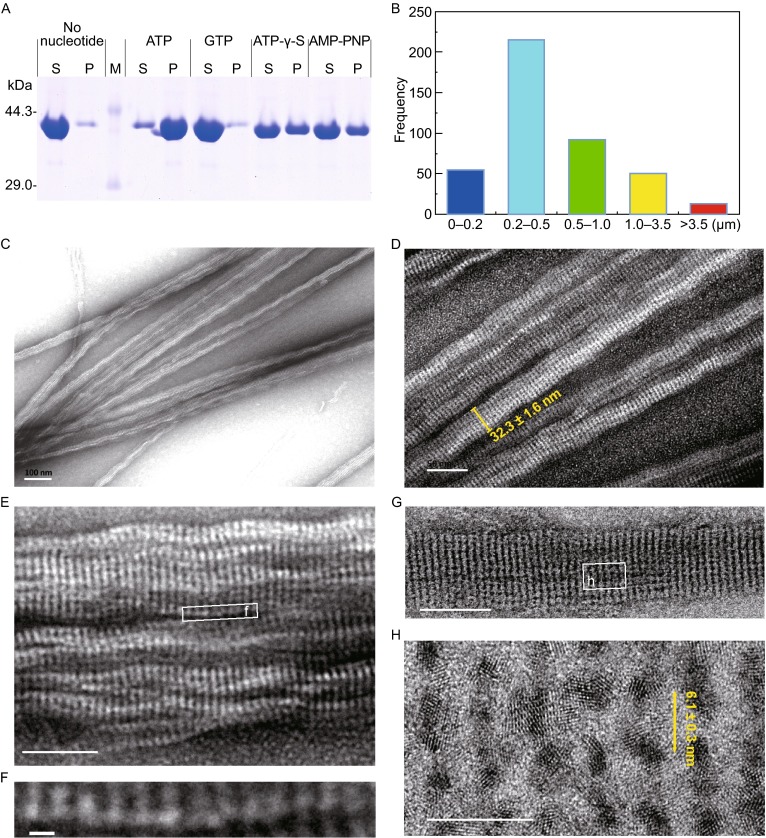
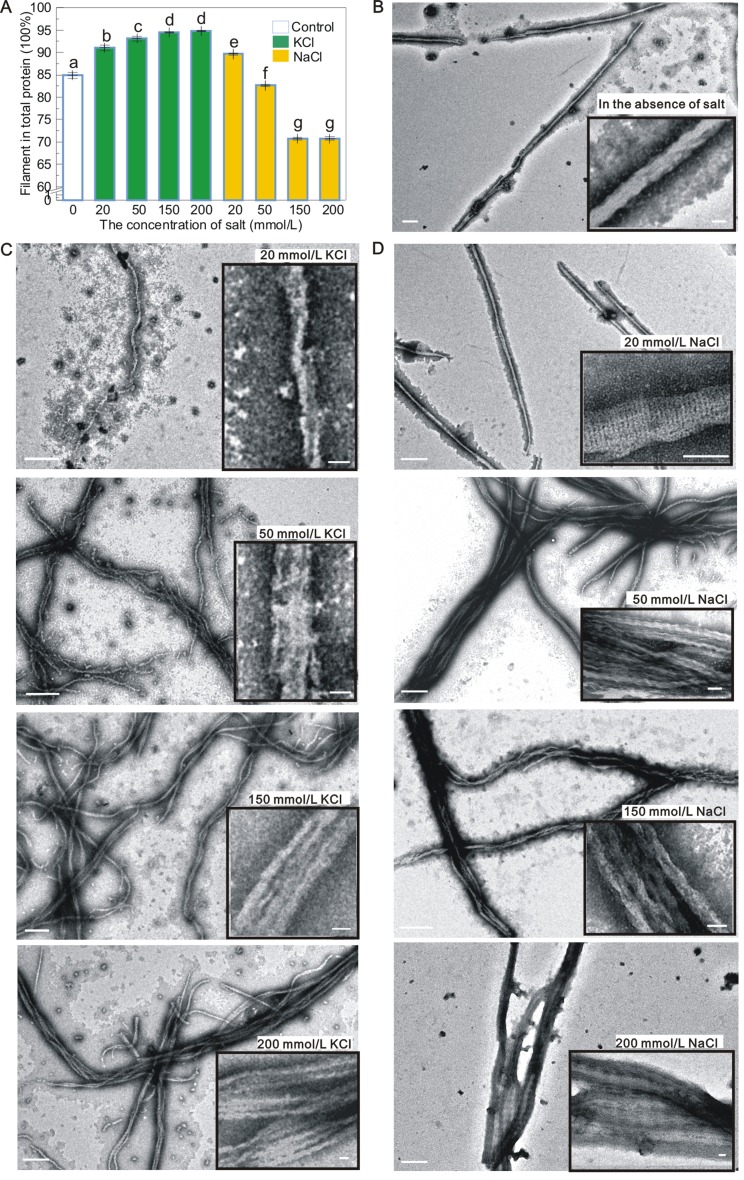
Magnetotactic bacteria (MTB), a group of phylogenetically diverse organisms that use their unique intracellular magnetosome organelles to swim along the Earth's magnetic field, play important roles in the biogeochemical cycles of iron and sulfur. Previous studies have revealed that the bacterial actin protein MamK plays essential roles in the linear arrangement of magnetosomes in MTB cells belonging to the Proteobacteria phylum. However, the molecular mechanisms of multiple-magnetosome-chain arrangements in MTB remain largely unknown. Here, we report that the MamK filaments from the uncultivated 'Candidatus Magnetobacterium casensis' (Mcas) within the phylum Nitrospirae polymerized in the presence of ATP alone and were stable without obvious ATP hydrolysis-mediated disassembly. MamK in Mcas can convert NTP to NDP and NDP to NMP, showing the highest preference to ATP. Unlike its Magnetospirillum counterparts, which form a single magnetosome chain, or other bacterial actins such as MreB and ParM, the polymerized MamK from Mcas is independent of metal ions and nucleotides except for ATP, and is assembled into well-ordered filamentous bundles consisted of multiple filaments. Our results suggest a dynamically stable assembly of MamK from the uncultivated Nitrospirae MTB that synthesizes multiple magnetosome chains per cell. These findings further improve the current knowledge of biomineralization and organelle biogenesis in prokaryotic systems.
趋磁细菌(MTB)是一类系统发育多样的生物体,它们利用其独特的细胞内磁小体细胞器沿地球磁场游动,在铁和硫的生物地球化学循环中发挥着重要作用。先前的研究表明,细菌肌动蛋白MamK在属于变形菌门的MTB细胞中磁小体的线性排列中起着至关重要的作用。然而,MTB中多磁小体链排列的分子机制在很大程度上仍然未知。在这里,我们报告说,来自硝化螺旋菌门中未培养的“候选趋磁杆菌卡森斯氏菌”(Mcas)的MamK细丝仅在ATP存在下聚合,并且在没有明显的ATP水解介导的解聚情况下是稳定的。Mcas中的MamK可以将NTP转化为NDP,将NDP转化为NMP,对ATP的偏好性最高。与其形成单个磁小体链的磁螺菌对应物或其他细菌肌动蛋白(如MreB和ParM)不同,来自Mcas的聚合MamK除了ATP外不依赖于金属离子和核苷酸,并且组装成由多根细丝组成的有序丝状束。我们的结果表明,来自未培养的硝化螺旋菌MTB的MamK具有动态稳定的组装,每个细胞合成多条磁小体链。这些发现进一步完善了目前对原核系统中生物矿化和细胞器生物发生的认识。