Zhou Jie, Du Xuewen, Yamagata Natsuko, Xu Bing
Department of Chemistry, Brandeis University , 415 South Street, Waltham, Massachusetts 02453, United States.
J Am Chem Soc. 2016 Mar 23;138(11):3813-23. doi: 10.1021/jacs.5b13541. Epub 2016 Mar 11.
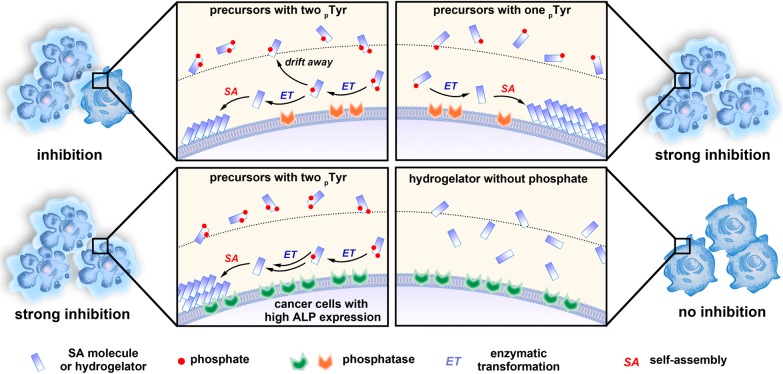
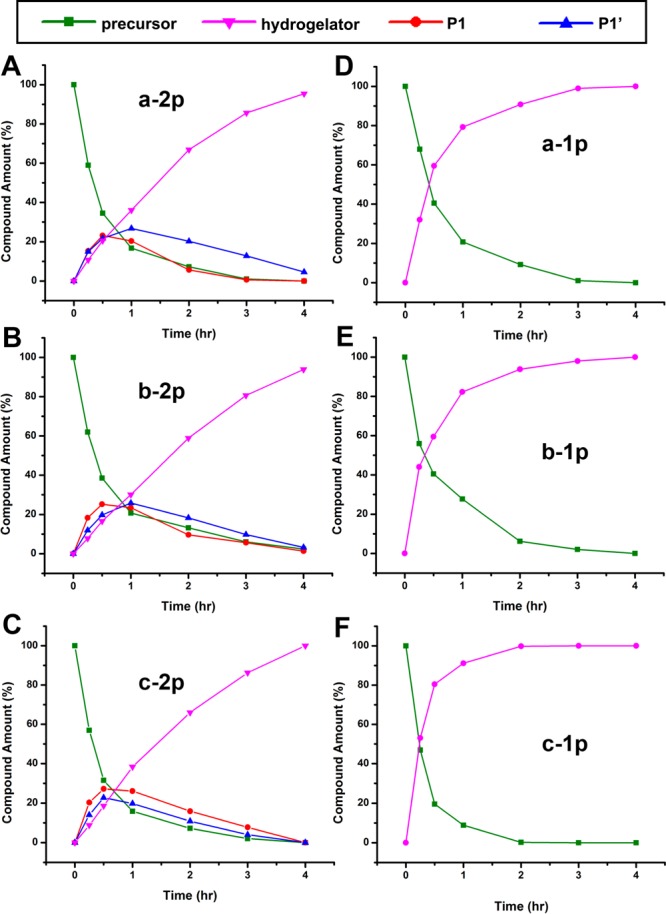
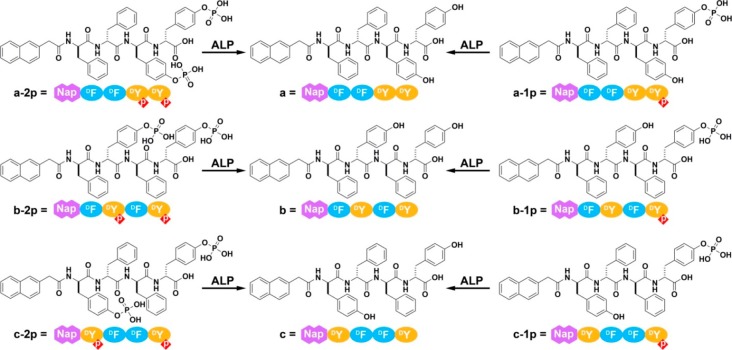
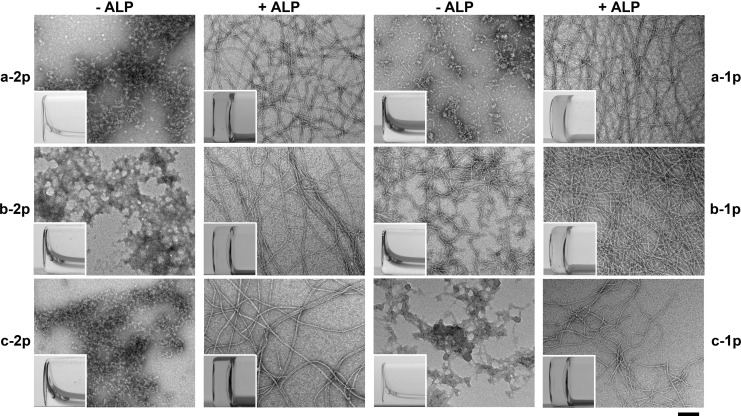
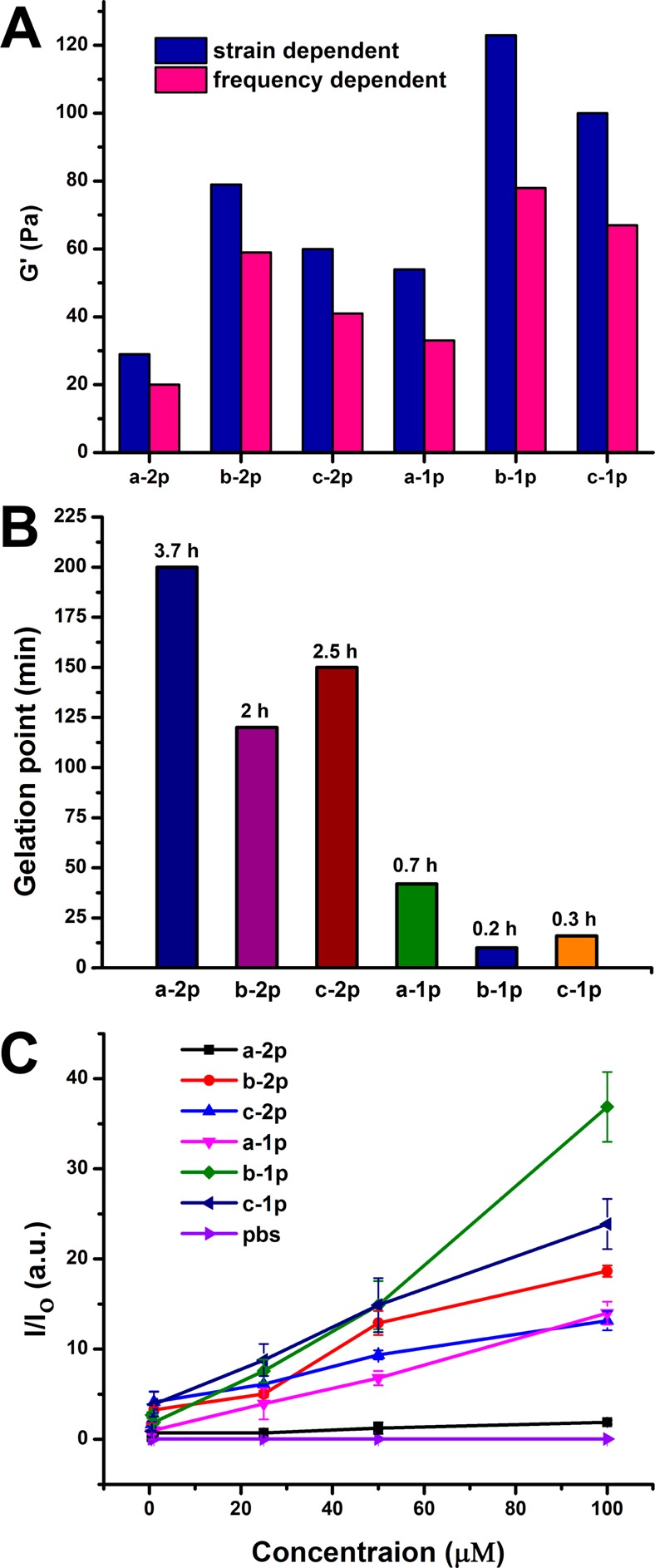
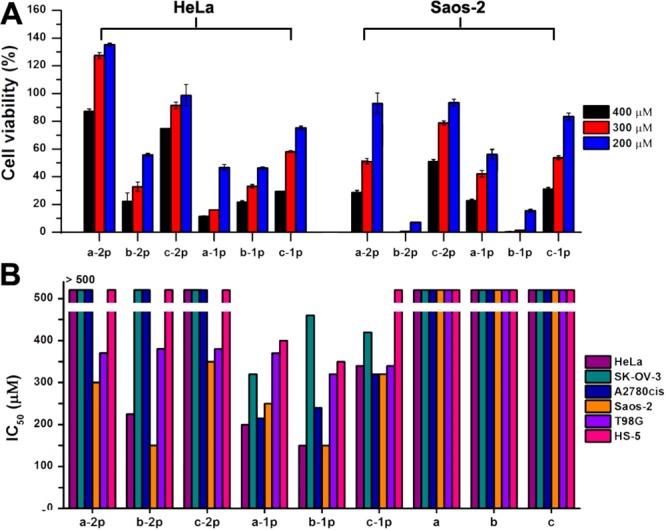
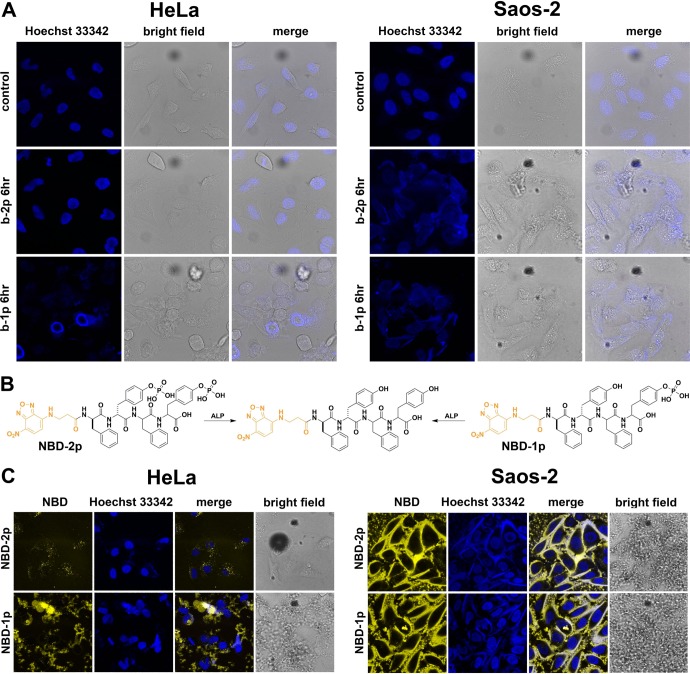
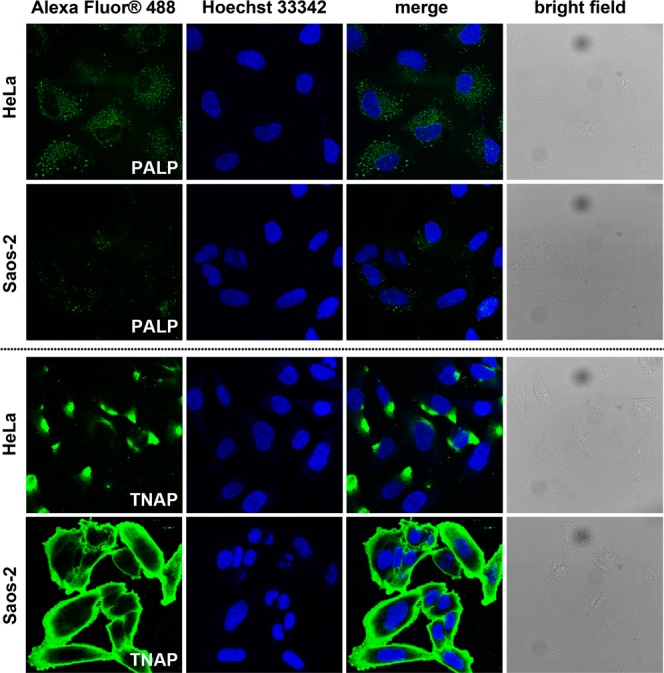
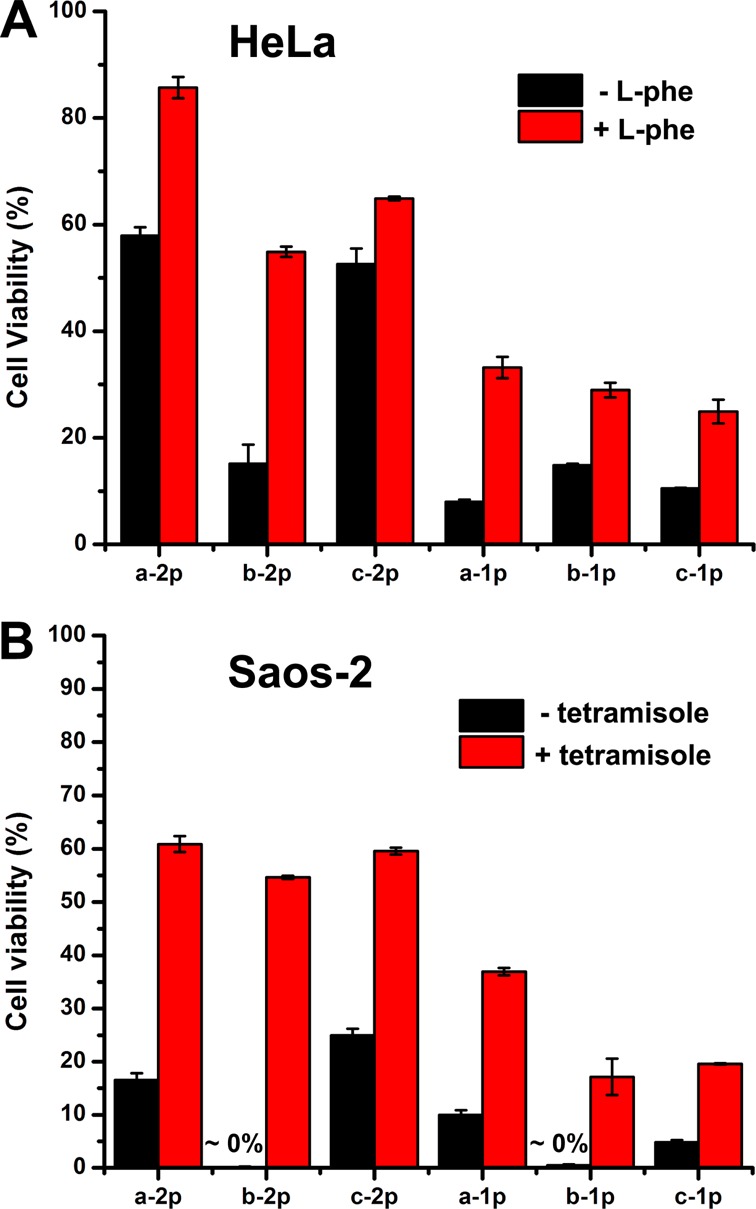
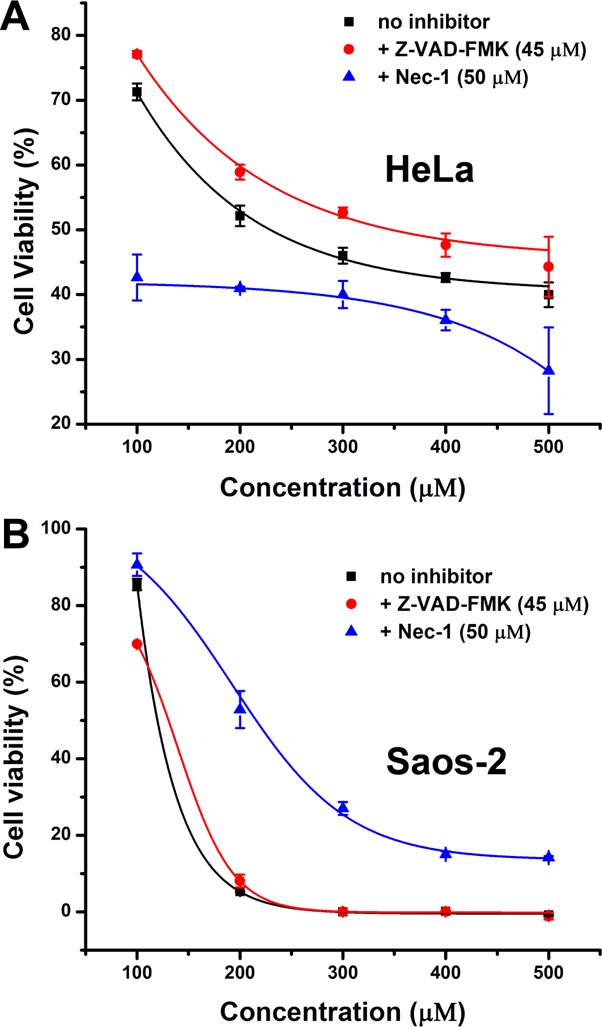
Selective inhibition of cancer cells remains a challenge in chemotherapy. Here we report the molecular and cellular validation of enzyme-instructed self-assembly (EISA) as a multiple step process for selectively killing cancer cells that overexpress alkaline phosphatases (ALPs). We design and synthesize two kinds of D-tetrapeptide containing one or two phosphotyrosine residues and with the N-terminal capped by a naphthyl group. Upon enzymatic dephosphorylation, these D-tetrapeptides turn into self-assembling molecules to form nanofibers in water. Incubating these D-tetrapeptides with several cancer cell lines and one normal cell line, the unphosphorylated D-tetrapeptides are innocuous to all the cell lines, the mono- and diphosphorylated D-tetrapeptides selectively inhibit the cancer cells, but not the normal cell. The monophosphorylated D-tetrapeptides exhibit more potent inhibitory activity than the diphosphorylated D-tetrapeptides do; the cancer cell lines express higher level of ALPs are more susceptible to inhibition by the phosphorylated D-tetrapeptides; the precursors of D-tetrapeptides that possess higher self-assembling abilities exhibit higher inhibitory activities. These results confirm the important role of enzymatic reaction and self-assembly. Using uncompetitive inhibitors of ALPs and fluorescent D-tetrapeptides, we delineate that the enzyme catalyzed dephosphorylation and the self-assembly steps, together, result in the localization of the nanofibers of D-tetrapeptides for killing the cancer cells. We find that the cell death modality likely associates with the cell type and prove the interactions between nanofibers and the death receptors. This work illustrates a paradigm-shifting and biomimetic approach and contributes useful molecular insights for the development of spatiotemporal defined supramolecular processes/assemblies as potential anticancer therapeutics.
在化疗中,对癌细胞进行选择性抑制仍然是一项挑战。在此,我们报告了酶促自组装(EISA)作为一种多步骤过程的分子和细胞验证,该过程用于选择性杀死过表达碱性磷酸酶(ALP)的癌细胞。我们设计并合成了两种含一个或两个磷酸酪氨酸残基且N端被萘基封端的D - 四肽。经酶促去磷酸化后,这些D - 四肽转变为自组装分子,在水中形成纳米纤维。将这些D - 四肽与几种癌细胞系和一种正常细胞系一起孵育,未磷酸化的D - 四肽对所有细胞系均无毒,单磷酸化和双磷酸化的D - 四肽选择性抑制癌细胞,而不抑制正常细胞。单磷酸化的D - 四肽比双磷酸化的D - 四肽表现出更强的抑制活性;表达较高水平ALP的癌细胞系对磷酸化D - 四肽的抑制更敏感;具有较高自组装能力的D - 四肽前体表现出更高的抑制活性。这些结果证实了酶促反应和自组装的重要作用。使用ALP的非竞争性抑制剂和荧光D - 四肽,我们阐明酶催化的去磷酸化和自组装步骤共同导致D - 四肽纳米纤维定位以杀死癌细胞。我们发现细胞死亡方式可能与细胞类型有关,并证明了纳米纤维与死亡受体之间的相互作用。这项工作展示了一种范式转变的仿生方法,并为开发作为潜在抗癌疗法的时空定义超分子过程/组装提供了有用的分子见解。