Du Xuewen, Zhou Jie, Wang Huainin, Shi Junfeng, Kuang Yi, Zeng Wu, Yang Zhimou, Xu Bing
Department of Chemistry, Brandeis University, Waltham, MA 02454, USA.
The Heller School for Social Policy and Management, Brandeis University, Waltham, MA 02454, USA.
Cell Death Dis. 2017 Feb 16;8(2):e2614. doi: 10.1038/cddis.2016.466.
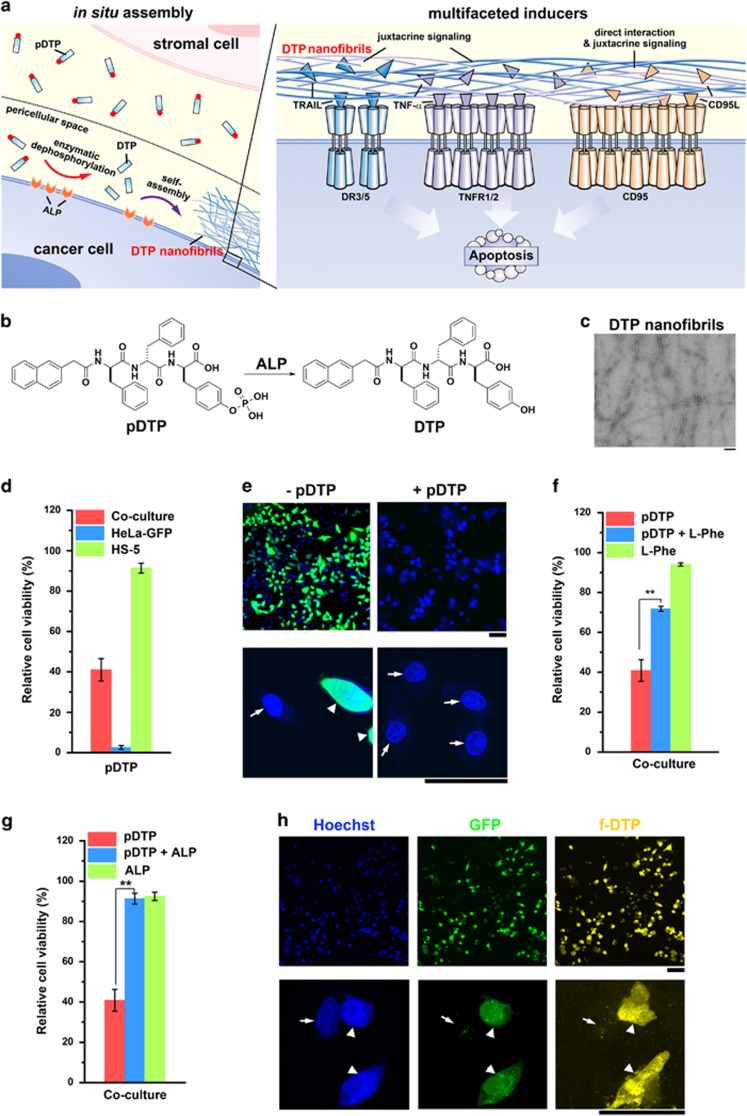
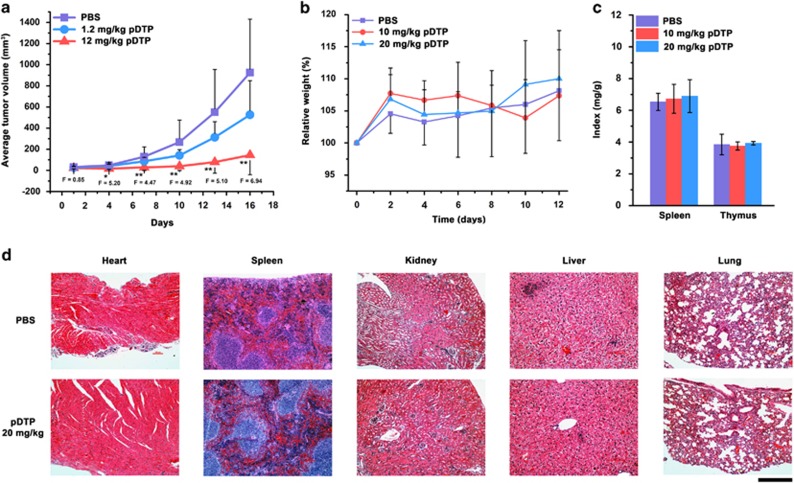
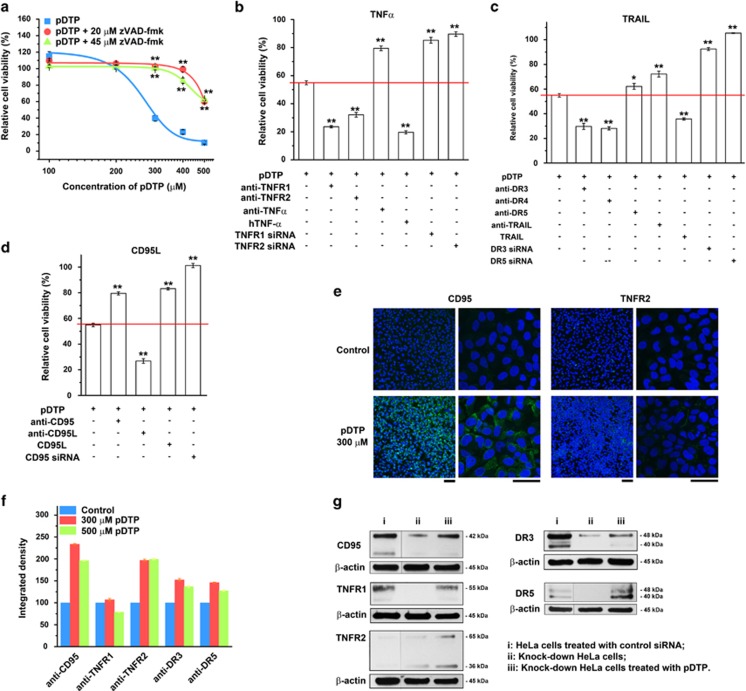
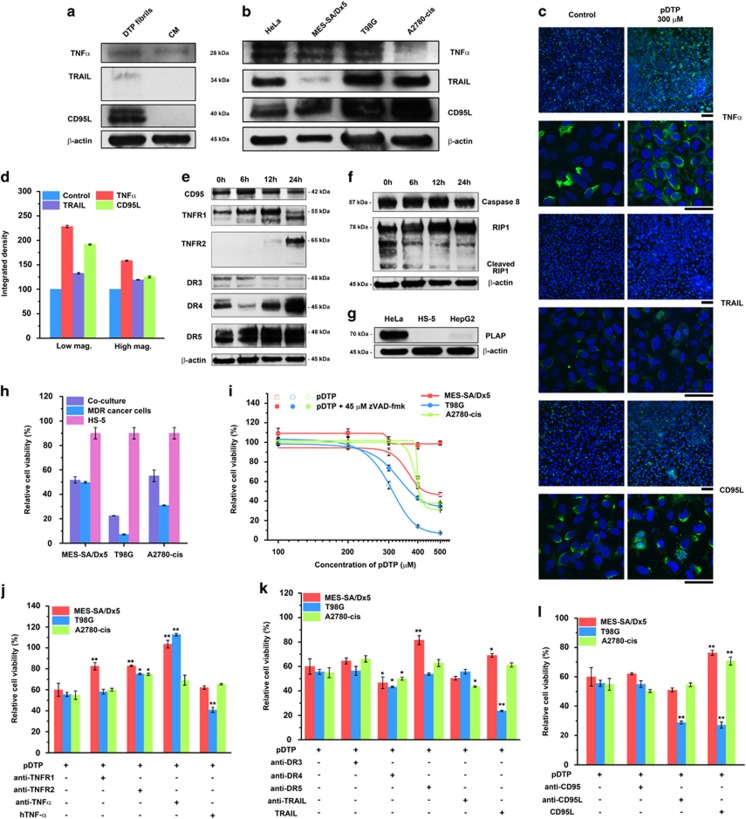
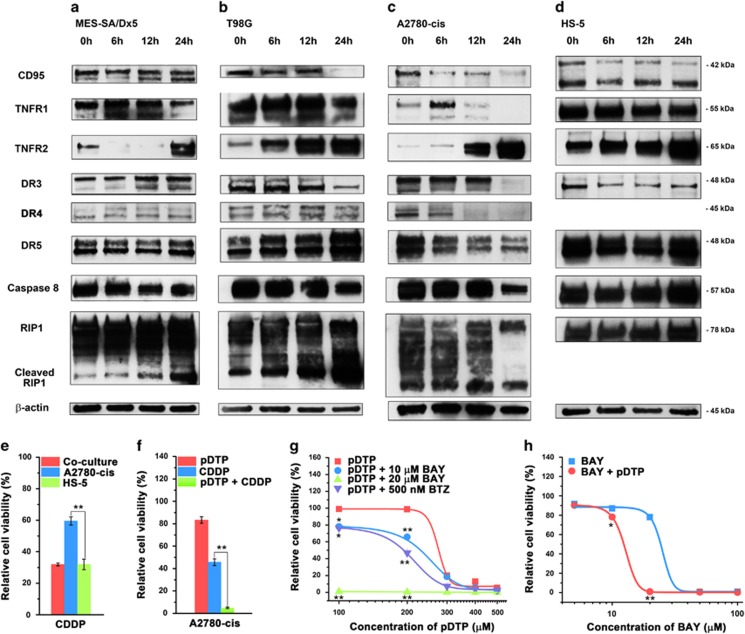
Nanofibrils of small molecules, as a new class of biofunctional entities, exhibit emergent properties for controlling cell fates, but the relevant mechanism remains to be elucidated and the in vivo effect has yet to be examined. Here, we show that D-peptide nanofibrils, generated by enzyme-instructed self-assembly (EISA), pleiotropically activate extrinsic death signaling for selectively killing cancer cells. Catalyzed by alkaline phosphatases and formed in situ on cancer cells, D-peptide nanofibrils present autocrine proapoptotic ligands to their cognate receptors in a juxtacrine manner, as well as directly cluster the death receptors. As multifaceted initiators, D-peptide nanofibrils induce apoptosis of cancer cells without harming normal cells in a co-culture, kill multidrug-resistant (MDR) cancer cells, boost the activities of anticancer drugs, and inhibit tumor growth in a murine model. Such a supramolecular cellular biochemical process (consisting of reaction, assembly, and binding) for multi-targeting or modulating protein-protein interaction networks ultimately may lead to new ways for combating cancer drug resistance.
小分子纳米纤维作为一类新型生物功能实体,展现出调控细胞命运的新兴特性,但相关机制仍有待阐明,其体内效应也尚未得到研究。在此,我们表明,通过酶促自组装(EISA)生成的D-肽纳米纤维可多效性激活外在死亡信号,从而选择性杀死癌细胞。D-肽纳米纤维由碱性磷酸酶催化并在癌细胞原位形成,以旁分泌方式向其同源受体呈现自分泌促凋亡配体,同时直接使死亡受体聚集。作为多面启动子,D-肽纳米纤维可诱导癌细胞凋亡,在共培养体系中不损害正常细胞,杀死多药耐药(MDR)癌细胞,增强抗癌药物活性,并在小鼠模型中抑制肿瘤生长。这种用于多靶点或调节蛋白质-蛋白质相互作用网络的超分子细胞生化过程(包括反应、组装和结合)最终可能会带来对抗癌症耐药性的新方法。