Weishaupt Nina, Zhang Angela, Deziel Robert A, Tasker R Andrew, Whitehead Shawn N
Department of Anatomy and Cell Biology, Schulich School of Medicine and Dentistry, University of Western Ontario London, ON, Canada.
Department of Biomedical Sciences, University of Prince Edward Island Charlottetown, PEI, Canada.
Front Neurosci. 2016 Mar 2;10:81. doi: 10.3389/fnins.2016.00081. eCollection 2016.
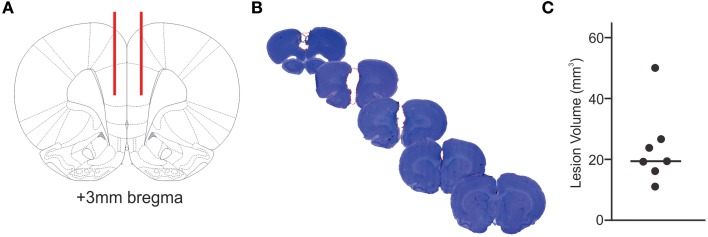
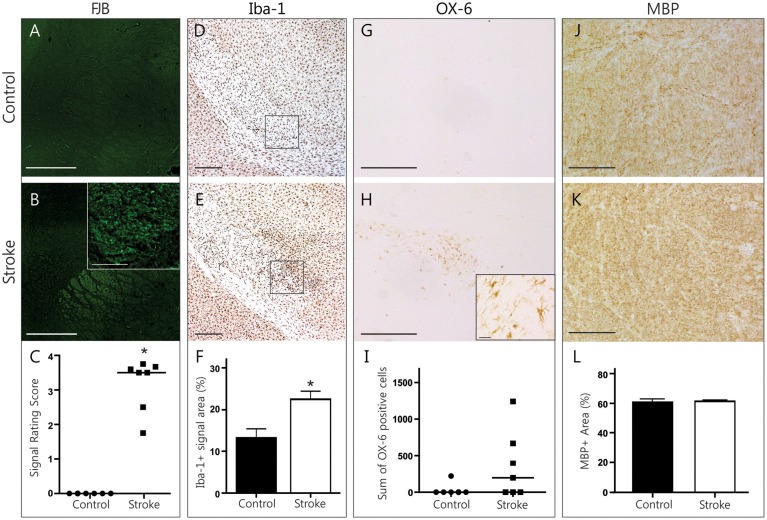
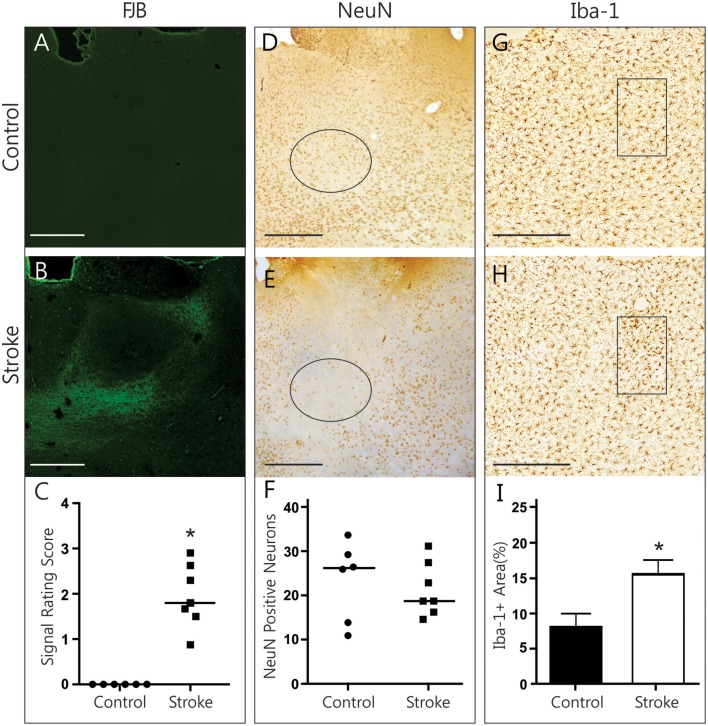
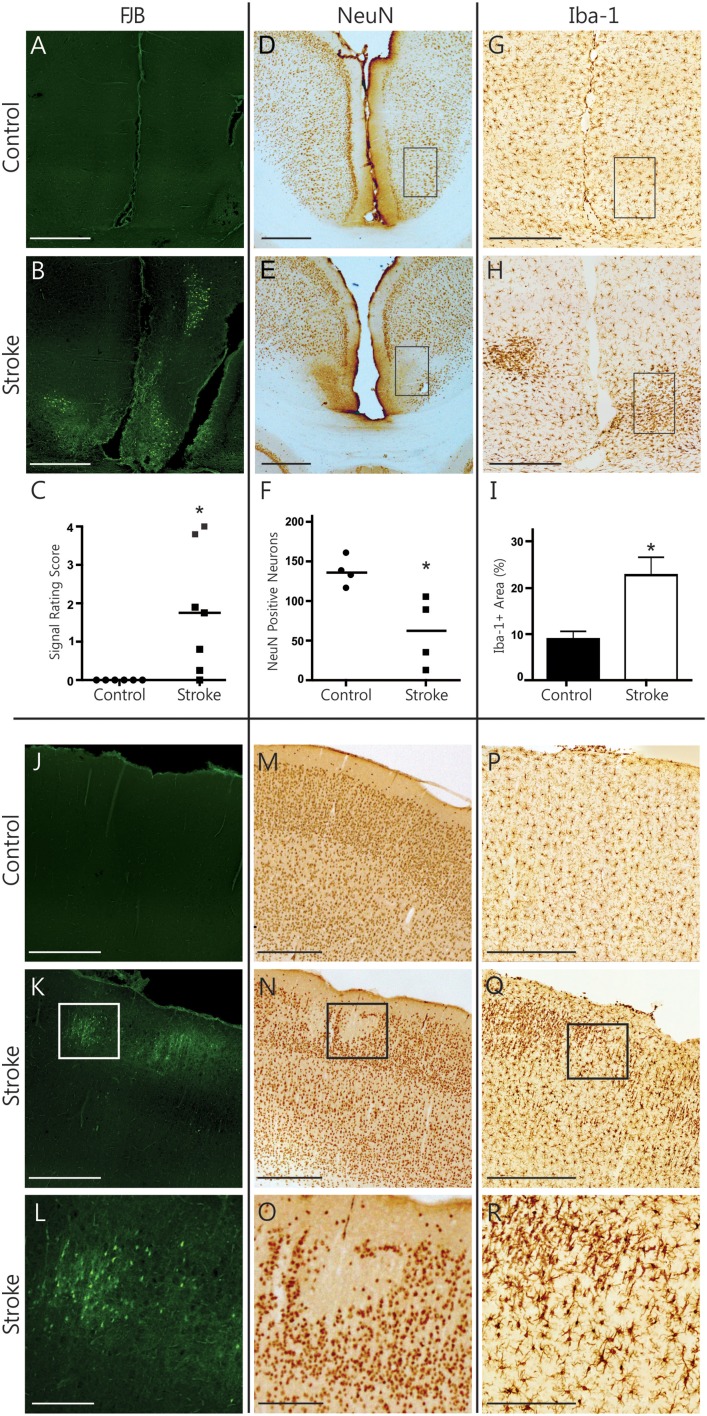
Secondary damage processes, such as inflammation and oxidative stress, can exacerbate an ischemic lesion and spread to adjacent brain regions. Yet, few studies investigate how regions remote from the infarct could also suffer from degeneration and inflammation in the aftermath of a stroke. To find out to what extent far-remote brain regions are affected after stroke, we used a bilateral endothelin-1-induced prefrontal infarct rat model. Brain regions posterior to the prefrontal cortical infarct were analyzed for ongoing neurodegeneration using FluoroJadeB (FJB) and for neuroinflammation using Iba1 and OX-6 immunohistochemistry 28 days post-stroke. The FJB-positive dorsomedial nucleus of the thalamus (DMN) and retrosplenial area (RSA) of the cortex displayed substantial neuroinflammation. Significant neuronal loss was only observed within the cortex. Significant microglia recruitment and activation in the FJB-positive internal capsule indicates remote white matter pathology. These findings demonstrate that even regions far remote from an infarct are affected predictably based on anatomical connectivity, and that white matter inflammation is an integral part of remote pathology. The delayed nature of this pathology makes it a valid target for preventative treatment, potentially with an extended time window of opportunity for therapeutic intervention using anti-inflammatory agents.
继发性损伤过程,如炎症和氧化应激,可加剧缺血性病变并扩散至邻近脑区。然而,很少有研究调查中风后远离梗死灶的区域如何也会发生变性和炎症。为了弄清楚中风后远隔脑区受影响的程度,我们使用了双侧内皮素-1诱导的前额叶梗死大鼠模型。在中风后28天,使用FluoroJadeB(FJB)分析前额叶皮质梗死灶后方的脑区是否存在进行性神经变性,并使用Iba1和OX-6免疫组织化学分析神经炎症。FJB阳性的丘脑背内侧核(DMN)和皮质的脾后区(RSA)显示出大量神经炎症。仅在皮质内观察到明显的神经元丢失。FJB阳性内囊中有明显的小胶质细胞募集和激活,表明存在远隔白质病变。这些发现表明,即使是远离梗死灶的区域也会根据解剖连接性受到可预测的影响,并且白质炎症是远隔病变的一个组成部分。这种病变的延迟性质使其成为预防性治疗的有效靶点,可能为使用抗炎药物进行治疗干预提供更长的机会窗口。