Lester Nigel, Garcia Danilo, Lundström Sebastian, Brändström Sven, Råstam Maria, Kerekes Nóra, Nilsson Thomas, Cloninger C Robert, Anckarsäter Henrik
Department of Psychiatry, Center for Well-Being, Washington University School of Medicine, St. Louis, MO USA.
Department of Psychiatry, Center for Well-Being, Washington University School of Medicine, St. Louis, MO USA ; Blekinge Center of Competence, Blekinge County Council, Karlskrona, Sweden ; Department of Psychology, University of Gothenburg, Gothenburg, Sweden ; Department of Psychology, Lund University, Lund, Sweden ; Network for Empowerment and Well-Being, Lyckeby, Sweden ; Institute for Neuroscience and Physiology, Centre for Ethics, Law and Mental Health (CELAM), University of Gothenburg, Gothenburg, Sweden.
Ann Gen Psychiatry. 2016 Mar 12;15:10. doi: 10.1186/s12991-016-0094-2. eCollection 2016.
The character higher order scales (self-directedness, cooperativeness, and self-transcendence) in the temperament and character inventory are important general measures of health and well-being [Mens Sana Monograph 11:16-24 (2013)]. Recent research has found suggestive evidence of common environmental influence on the development of these character traits during adolescence. The present article expands earlier research by focusing on the internal consistency and the etiology of traits measured by the lower order sub-scales of the character traits in adolescence.
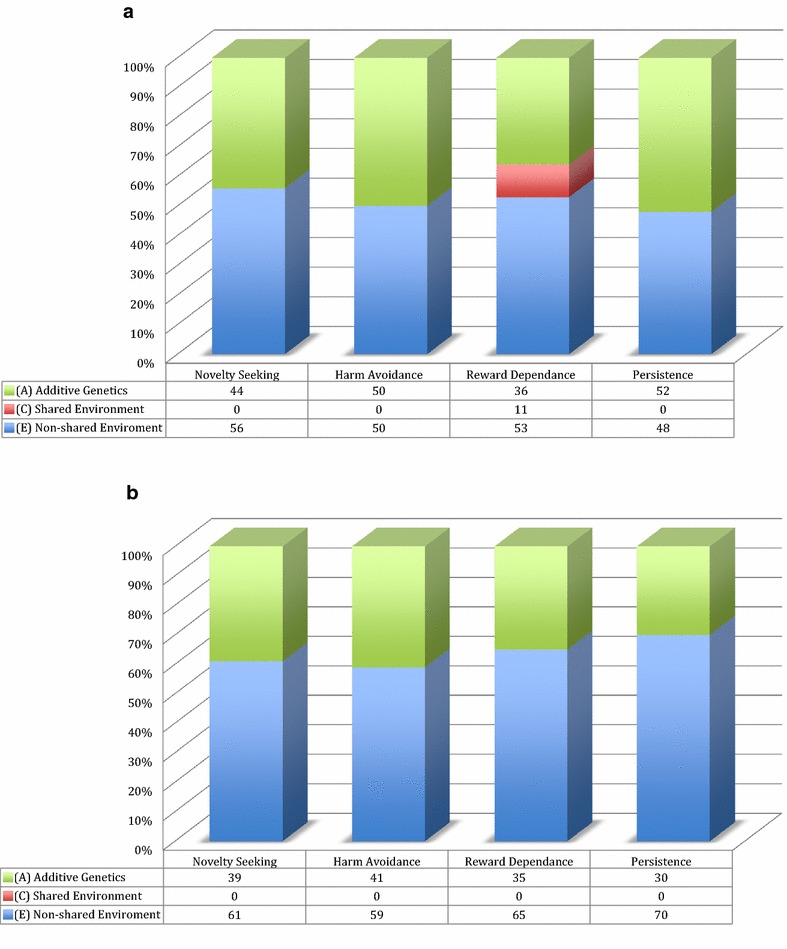
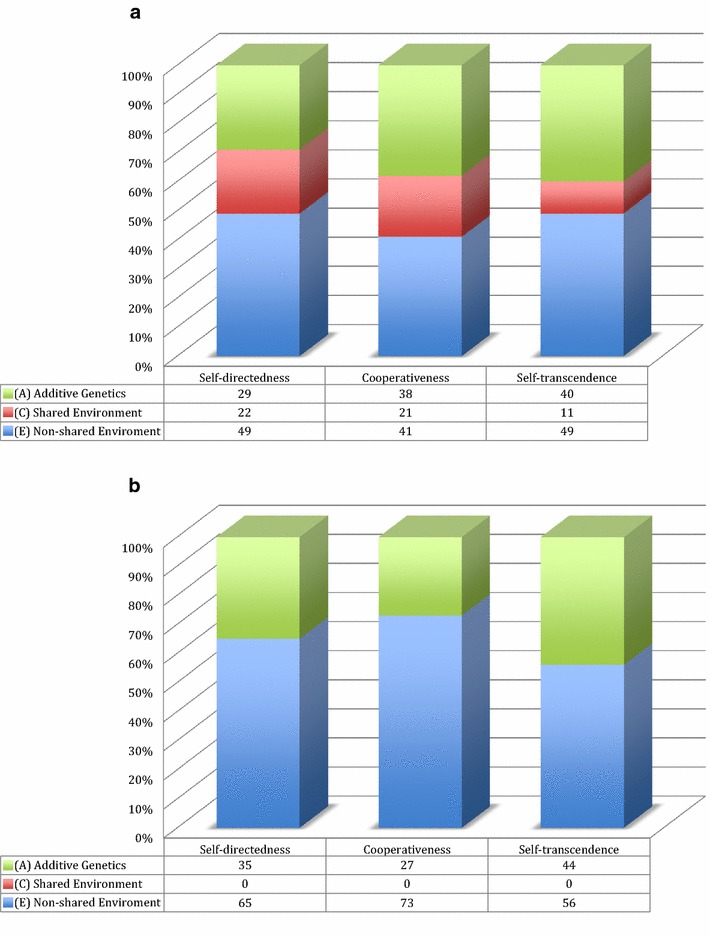
The twin modeling analysis of 423 monozygotic pairs and 408 same sex dizygotic pairs estimated additive genetics (A), common environmental (C), and non-shared environmental (E) influences on twin resemblance. All twins were part of the on-going longitudinal Child and Adolescent Twin Study in Sweden (CATSS).
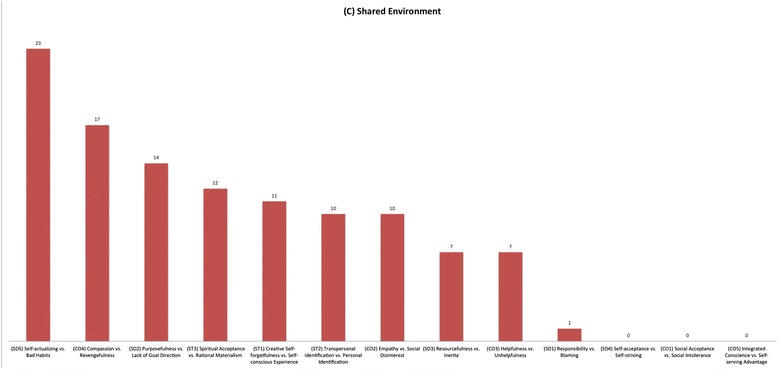
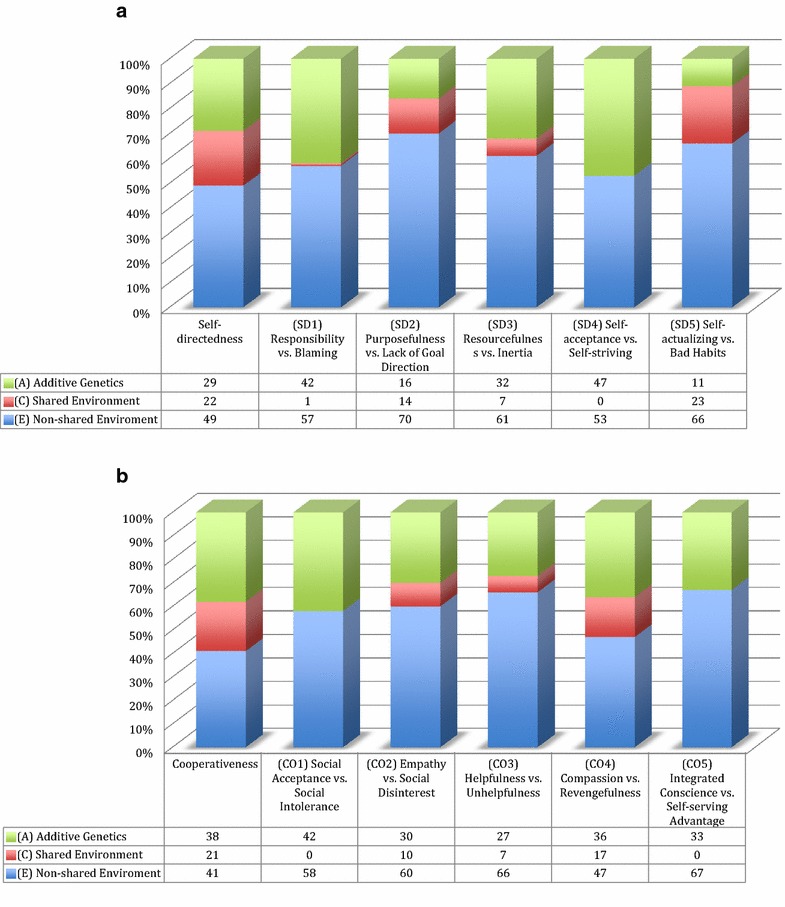
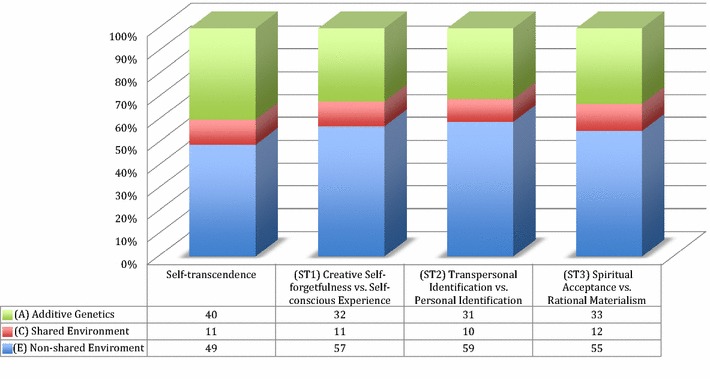
The twin modeling analysis suggested a common environmental contribution for two out of five self-directedness sub-scales (0.14 and 0.23), for three out of five cooperativeness sub-scales (0.07-0.17), and for all three self-transcendence sub-scales (0.10-0.12).
The genetic structure at the level of the character lower order sub-scales in adolescents shows that the proportion of the shared environmental component varies in the trait of self-directedness and in the trait of cooperativeness, while it is relatively stable across the components of self-transcendence. The presence of this unique shared environmental effect in adolescence has implications for understanding the relative importance of interventions and treatment strategies aimed at promoting overall maturation of character, mental health, and well-being during this period of the life span.
气质与性格问卷中的高阶量表(自主导向性、合作性和自我超越性)是衡量健康和幸福感的重要综合指标[《Mens Sana Monograph》11:16 - 24 (2013)]。近期研究发现了一些提示性证据,表明青春期这些性格特质的发展受到共同环境影响。本文通过关注青春期性格特质低阶子量表所测特质的内部一致性和病因,扩展了早期研究。
对423对同卵双胞胎和408对同性异卵双胞胎进行双生子模型分析,估计加性遗传(A)、共同环境(C)和非共享环境(E)对双胞胎相似性的影响。所有双胞胎均为瑞典正在进行的儿童和青少年双生子纵向研究(CATSS)的一部分。
双生子模型分析表明,在五个自主导向性子量表中有两个(0.14和0.23)、五个合作性子量表中有三个(0.07 - 0.17)以及所有三个自我超越性子量表(0.10 - 0.12)存在共同环境影响。
青少年性格低阶子量表层面的遗传结构表明,共享环境成分的比例在自主导向性特质和合作性特质中有所不同,而在自我超越性的各个成分中相对稳定。青春期这种独特的共享环境效应的存在,对于理解旨在促进这一生命阶段性格全面成熟、心理健康和幸福感的干预措施及治疗策略的相对重要性具有启示意义。