Juan De Solis Alain, Baquero Arian F, Bennett Camdin M, Grove Kevin L, Zeltser Lori M
Division of Molecular Genetics, Naomi Berrie Diabetes Center, Columbia University, New York, NY 10032, USA.
Division of Diabetes, Obesity & Metabolism, Oregon National Primate Research Center, Beaverton, OR 97006, USA.
Mol Metab. 2016 Jan 15;5(3):198-209. doi: 10.1016/j.molmet.2016.01.003. eCollection 2016 Mar.
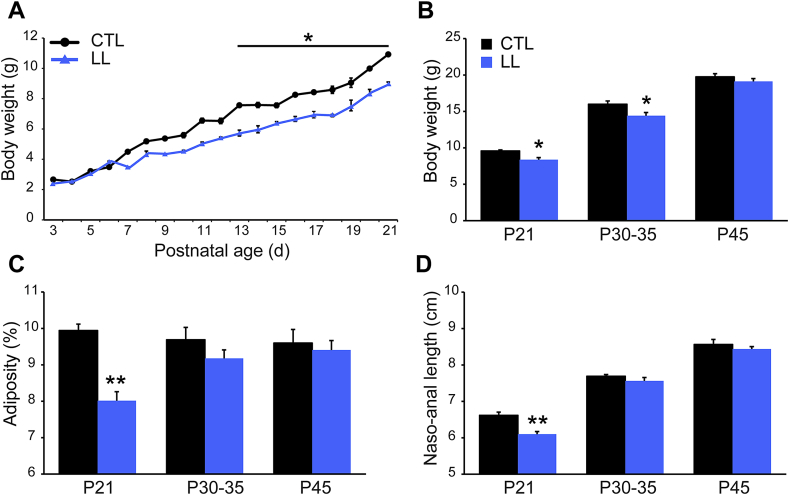
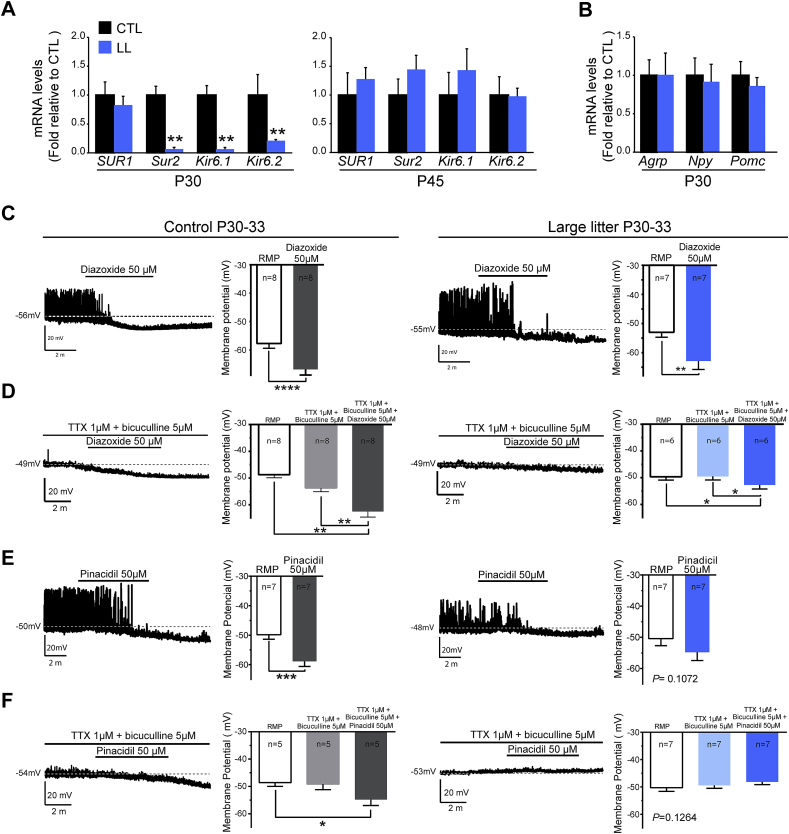
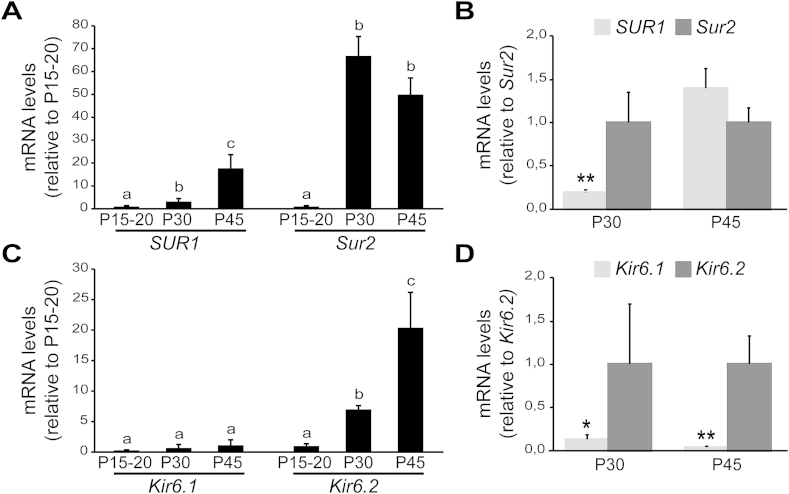
Humans and animals exposed to undernutrition (UN) during development often experience accelerated "catch-up" growth when food supplies are plentiful. Little is known about the mechanisms regulating early growth rates. We previously reported that actions of leptin and presynaptic inputs to orexigenic NPY/AgRP/GABA (NAG) neurons in the arcuate nucleus of the hypothalamus are almost exclusively excitatory during the lactation period, since neuronal and humoral inhibitory systems do not develop until after weaning. Moreover, we identified a critical step that regulates the maturation of electrophysiological responses of NAG neurons at weaning - the onset of genes encoding ATP-dependent potassium (KATP) channel subunits. We explored the possibility that UN promotes subsequent catch-up growth, in part, by delaying the maturation of negative feedback systems to neuronal circuits driving food intake.
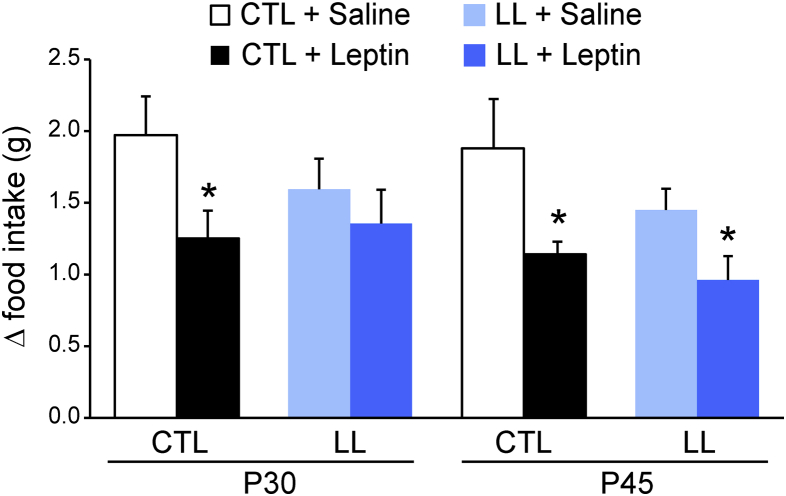
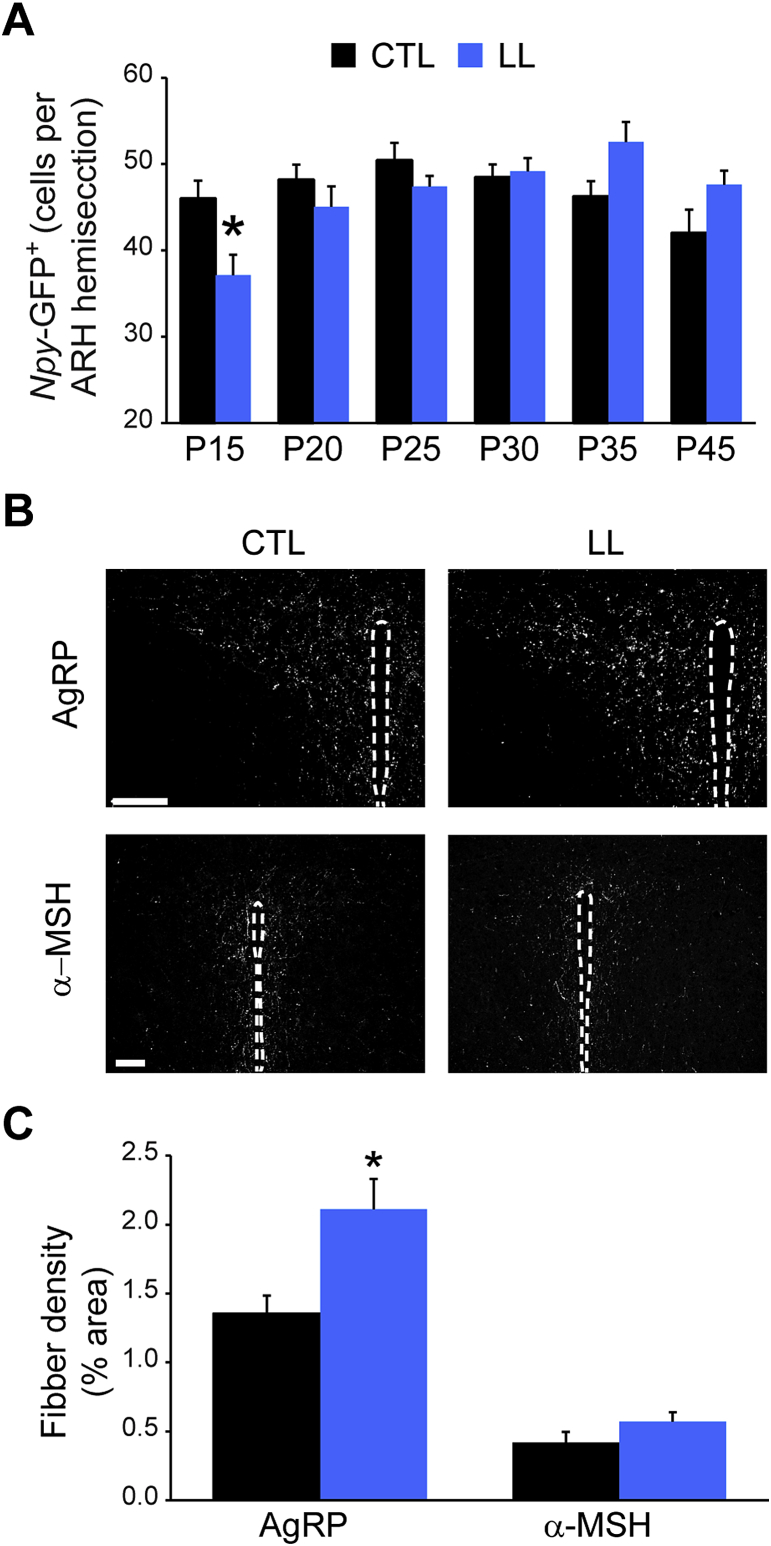
We used the large litter (LL) size model to study the impacts of postnatal UN followed by catch-up growth. We evaluated the maturation of presynaptic and postsynaptic inhibitory systems in NAG neurons using a combination of electrophysiological and molecular criteria, in conjunction with leptin's ability to suppress fasting-induced hyperphagia.
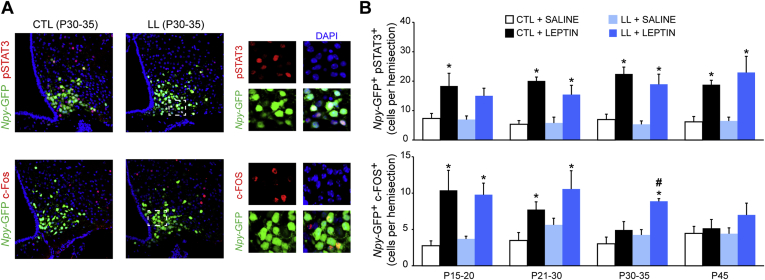
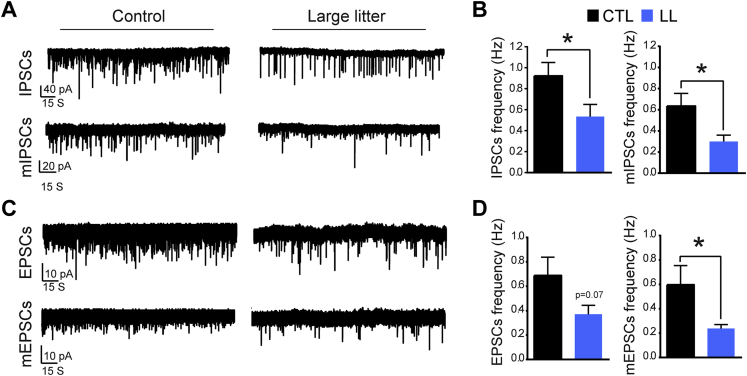
The onset of KATP channel subunit expression and function, the switch in leptin's effect on NAG neurons, the ingrowth of inhibitory inputs to NAG neurons, and the development of homeostatic feedback to feeding circuits were delayed in LL offspring relative to controls. The development of functional KATP channels and the establishment of leptin-mediated suppression of food intake in the peri-weaning period were tightly linked and were not initiated until growth and adiposity of LL offspring caught up to controls.
Our data support the idea that initiation of KATP channel subunit expression in NAG neurons serves as a molecular gatekeeper for the maturation of homeostatic feeding circuits.
在发育过程中遭受营养不良(UN)的人类和动物在食物供应充足时,往往会经历加速的“追赶性”生长。关于调节早期生长速率的机制,人们了解甚少。我们之前报道过,瘦素的作用以及向下丘脑弓状核中促食欲的神经肽Y/刺鼠基因相关蛋白/γ-氨基丁酸(NAG)神经元的突触前输入在哺乳期几乎完全是兴奋性的,因为神经元和体液抑制系统直到断奶后才发育。此外,我们确定了一个关键步骤,即断奶时编码ATP依赖性钾(KATP)通道亚基的基因开始表达,该步骤调节NAG神经元电生理反应的成熟。我们探讨了营养不良部分通过延迟驱动食物摄入的神经回路的负反馈系统成熟来促进后续追赶性生长的可能性。
我们使用大窝仔数(LL)模型来研究出生后营养不良及随后的追赶性生长的影响。我们结合电生理和分子标准,评估NAG神经元中突触前和突触后抑制系统的成熟情况,并评估瘦素抑制禁食诱导的食欲亢进的能力。
相对于对照组,LL后代中KATP通道亚基表达和功能的开始、瘦素对NAG神经元作用的转变、NAG神经元抑制性输入的长入以及对进食回路的稳态反馈的发育均延迟。功能性KATP通道的发育以及断奶期瘦素介导的食物摄入抑制的建立紧密相关,并且直到LL后代的生长和肥胖赶上对照组才开始。
我们的数据支持这样一种观点,即NAG神经元中KATP通道亚基表达的开始是稳态进食回路成熟的分子守门人。