Tu Yu-Kang
Institute of Epidemiology &Preventive Medicine, College of Public Health, National Taiwan University, Taipei, Taiwan.
Sci Rep. 2016 Mar 16;6:23247. doi: 10.1038/srep23247.
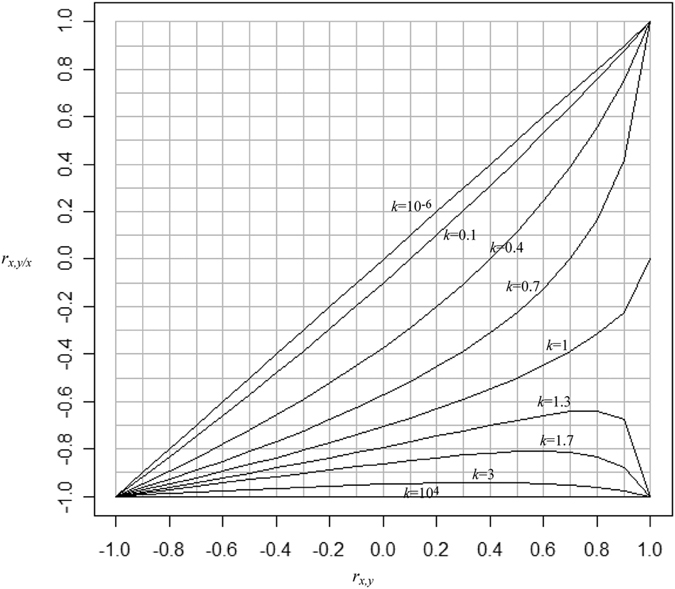
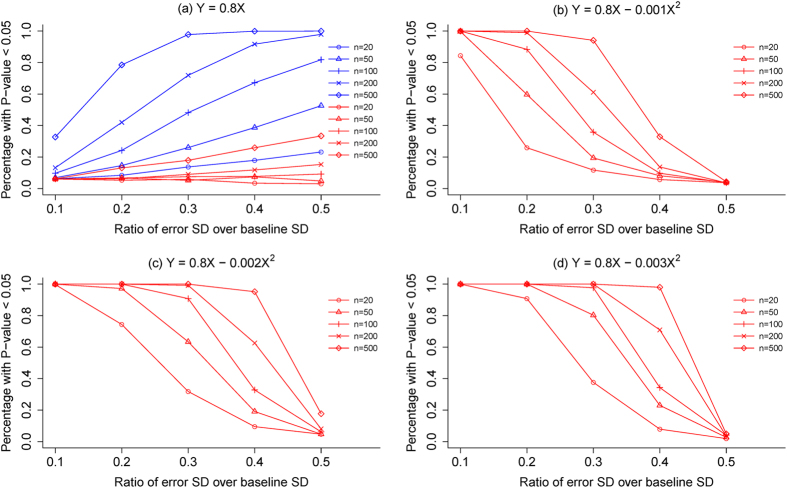
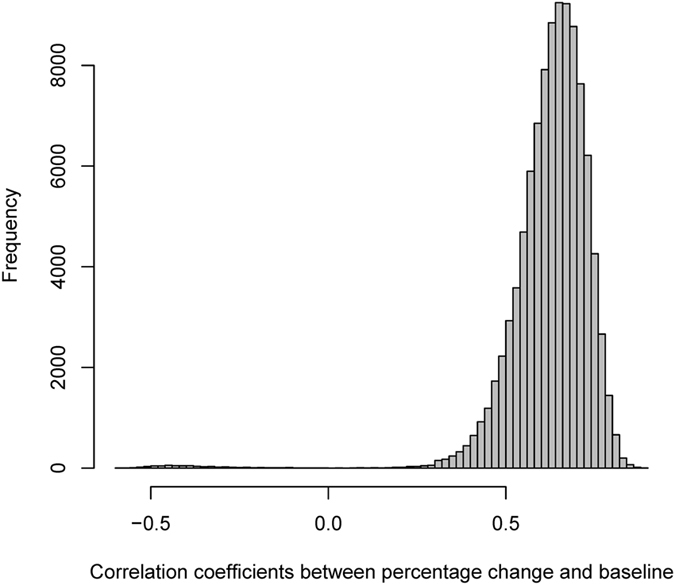
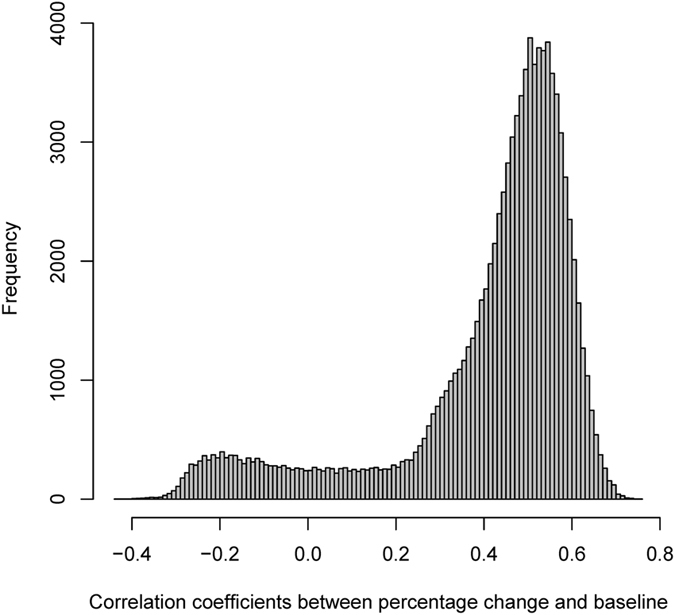
Testing the relation between percentage change and baseline value has been controversial, but it is not clear why this practice may yield spurious results. In this paper, we first explained why the usual testing of the relation between percentage change and baseline value is inappropriate and then demonstrated how the appropriate null hypothesis could be formulated. We also proposed a simple procedure for testing the appropriate null hypothesis based on the assumption that when there is no relation between percentage change and baseline value, the coefficients of variation for repeated measurements of a random variable should remain unchanged. Two examples were used to demonstrate how the usual testing gave rise to misleading results, whilst results from our simple test were in general consistent with those from simulations. We also undertook simulations to investigate the impact of measurement errors on the performance of the proposed test. Results suggested the type-I error rates increased with the magnitude of measurement errors, whilst the statistical power to detect a genuine relation decreased. The usual approach to testing the relation between percentage change and baseline value tended to yield misleading results and should be avoided.
检验百分比变化与基线值之间的关系一直存在争议,但尚不清楚这种做法为何会产生虚假结果。在本文中,我们首先解释了为何通常对百分比变化与基线值之间关系的检验是不合适的,然后说明了如何构建适当的原假设。我们还基于这样的假设提出了一个简单的程序来检验适当的原假设,即当百分比变化与基线值之间不存在关系时,随机变量重复测量的变异系数应保持不变。通过两个例子说明了通常的检验如何产生误导性结果,而我们简单检验的结果总体上与模拟结果一致。我们还进行了模拟,以研究测量误差对所提出检验性能的影响。结果表明,I型错误率随测量误差的大小而增加,而检测真实关系的统计功效则降低。检验百分比变化与基线值之间关系的通常方法往往会产生误导性结果,应予以避免。