Zhang Zewei, Chen Haitao, Xu Chao, Song Lu, Huang Lulu, Lai Yuebiao, Wang Yuqi, Chen Hanlu, Gu Danlin, Ren Lili, Yao Qinghua
Department of Abdominal Surgical Oncology, Zhejiang Cancer Hospital, Hangzhou, Zhejiang 310022, P.R. China.
Second Clinical College, Zhejiang Chinese Medical University, Hangzhou, Zhejiang 310053, P.R. China.
Oncol Rep. 2016 May;35(5):2615-23. doi: 10.3892/or.2016.4669. Epub 2016 Mar 10.
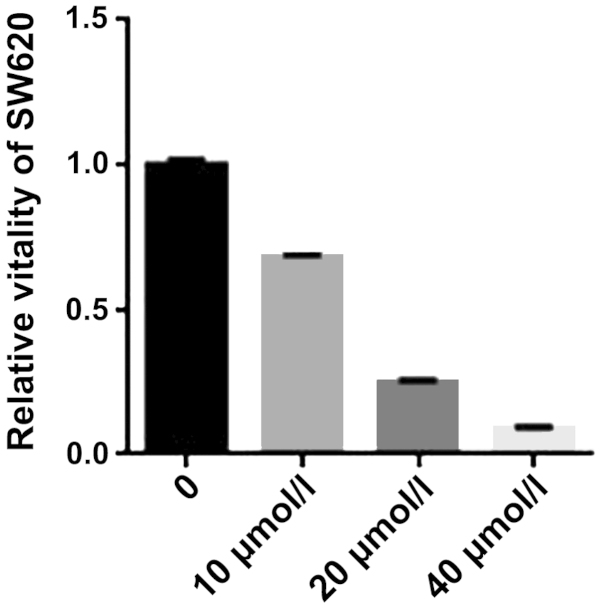
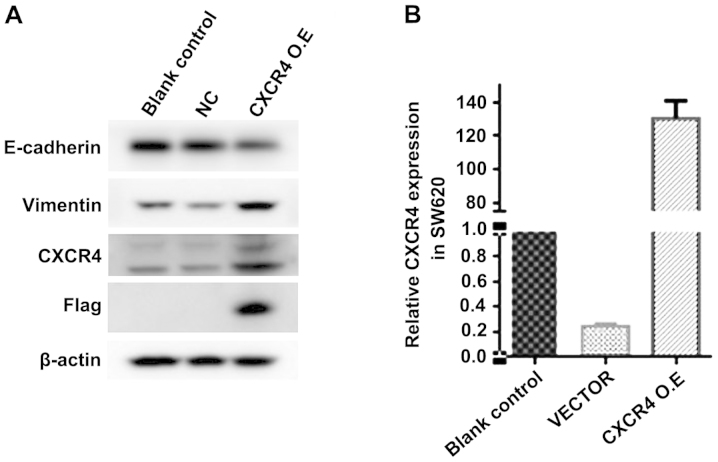
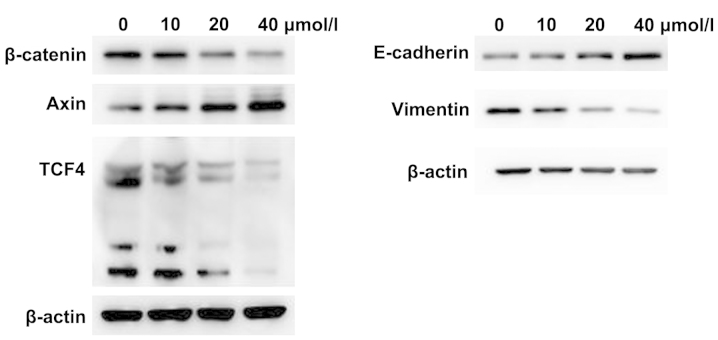
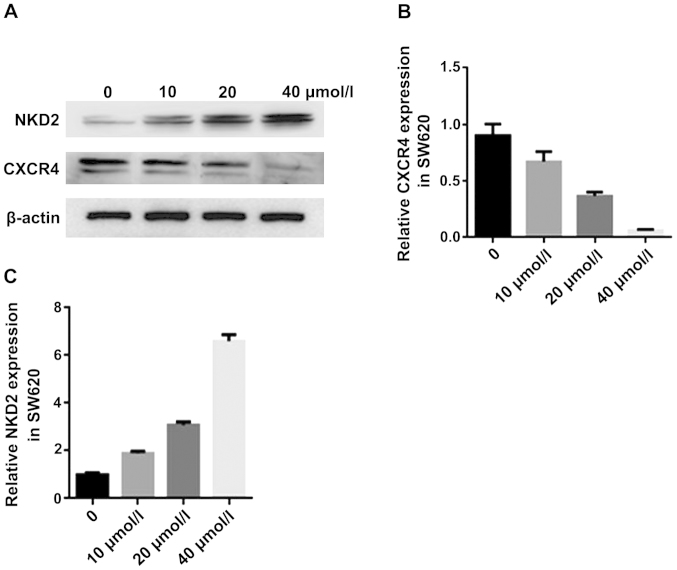
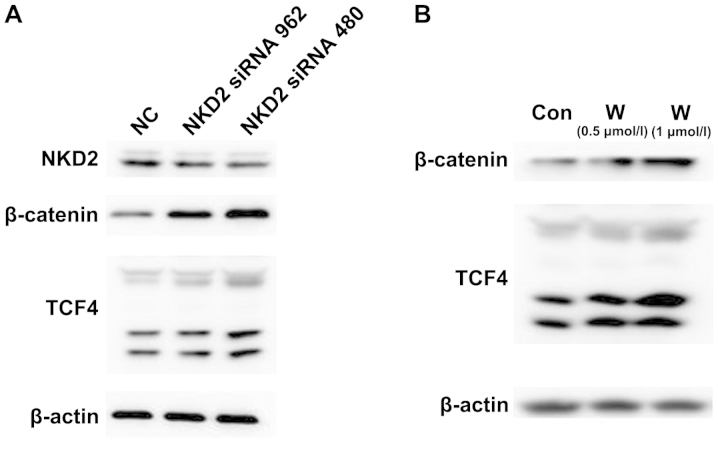
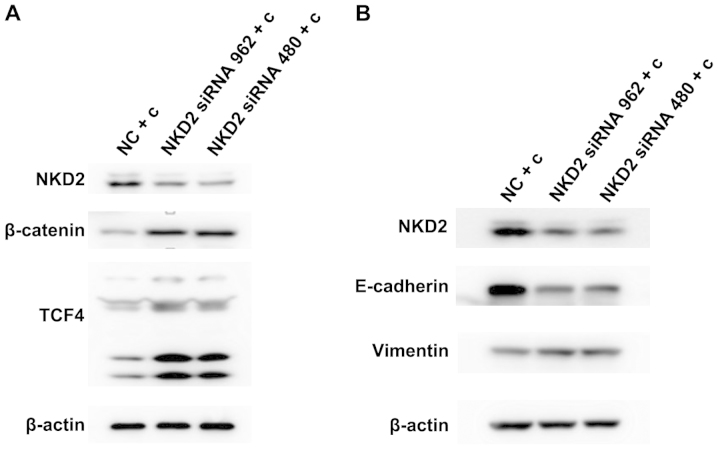
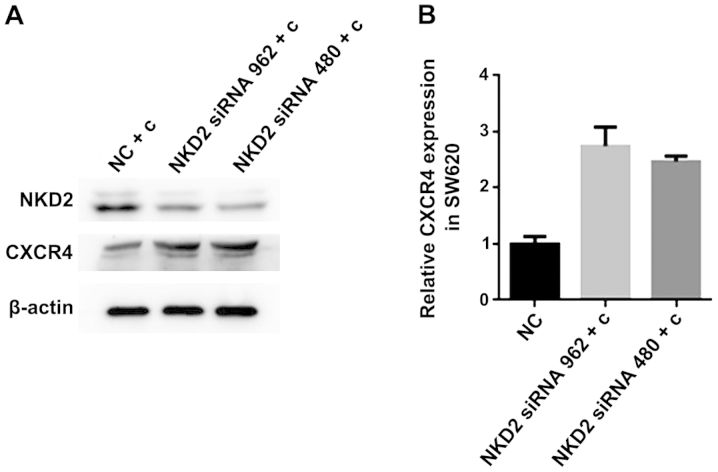
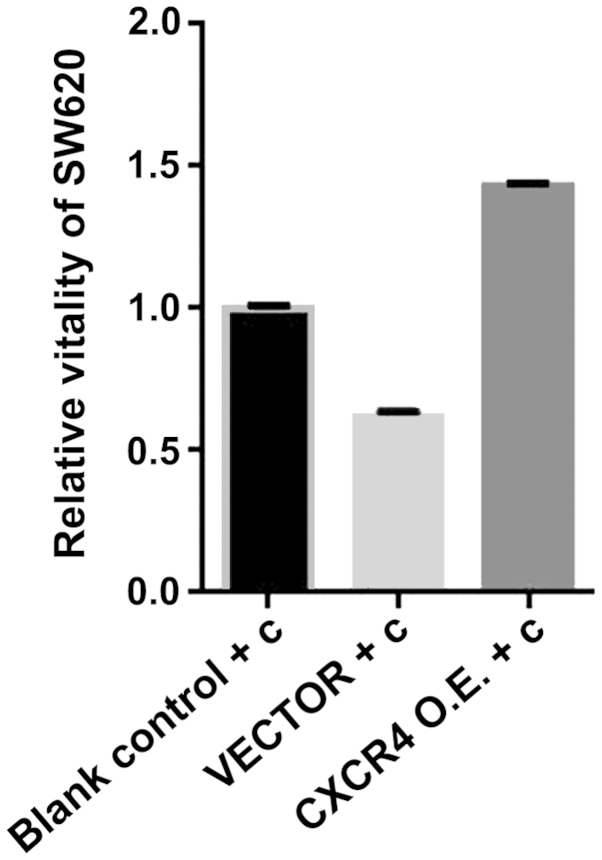
Tumor invasion and metastasis are closely associated with epithelial‑mesenchymal transition (EMT). EMT refers to epithelial cells under physiological and pathological conditions that are specific to mesenchymal transition. Curcumin inhibits EMT progression via Wnt signaling. The Wnt signaling pathway is a conservative EMT‑related signaling pathway that is involved in the development of various tumors. In the present study, MTS assays were employed to analyze the proliferation of curcumin‑treated cells. Naked cuticle homolog 2 (NKD2), chemokine receptor 4 (CXCR4) and antibodies associated with EMT were examined in SW620 colorectal cancer cell lines using western blot analysis and real‑time qPCR. NKD2 small‑interfering RNA (siRNA) and CXCR4 expression plasmid was synthesized and transfected into the colorectal cancer cell lines, and NKD2 and CXCR4 expression levels were detected. The results showed that curcumin significantly inhibited the proliferation of colorectal cancer cells and upregulated the expression of NKD2 in SW620 colorectal cancer cells and in the xenograft, resulting in the downregulation of key markers in the Wnt signaling. In addition, the progression of ETM was inhibited due to the overexpression of E‑cadherin as well as the downregulation of vimentin. Curcumin also inhibited tumor metastasis by downregulating the expression of CXCR4 significantly. The results suggested involvement of the NKD2‑Wnt‑CXCR4 signaling pathway in colorectal cancer cells. In addition, curcumin is inhibit this signaling and the development of colorectal cancer.
肿瘤侵袭和转移与上皮-间质转化(EMT)密切相关。EMT是指上皮细胞在生理和病理条件下向间质转化的特异性过程。姜黄素通过Wnt信号通路抑制EMT进程。Wnt信号通路是一条保守的与EMT相关的信号通路,参与多种肿瘤的发生发展。在本研究中,采用MTS法分析姜黄素处理细胞的增殖情况。利用蛋白质印迹分析和实时定量PCR在SW620结肠癌细胞系中检测裸角质同源物2(NKD2)、趋化因子受体4(CXCR4)以及与EMT相关的抗体。合成NKD2小干扰RNA(siRNA)和CXCR4表达质粒并转染至结肠癌细胞系,检测NKD2和CXCR4的表达水平。结果显示,姜黄素显著抑制结肠癌细胞的增殖,并上调SW620结肠癌细胞及异种移植瘤中NKD2的表达,导致Wnt信号通路关键标志物的下调。此外,由于E-钙黏蛋白的过表达以及波形蛋白的下调,EMT进程受到抑制。姜黄素还通过显著下调CXCR4的表达抑制肿瘤转移。结果提示NKD2-Wnt-CXCR4信号通路参与结肠癌细胞的发生发展。此外,姜黄素可抑制该信号通路及结肠癌的发展。