Australian Research Council Centre of Excellence in Plant Energy Biology, Research School of Biology, Australian National University Canberra, Acton, Australian Capital Territory 0200, Australia.
Sci Adv. 2016 Feb 19;2(2):e1501340. doi: 10.1126/sciadv.1501340. eCollection 2016 Feb.
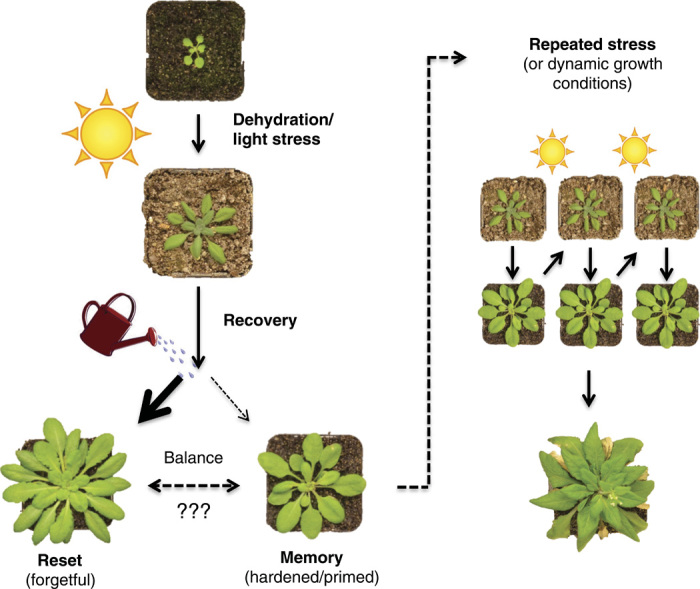
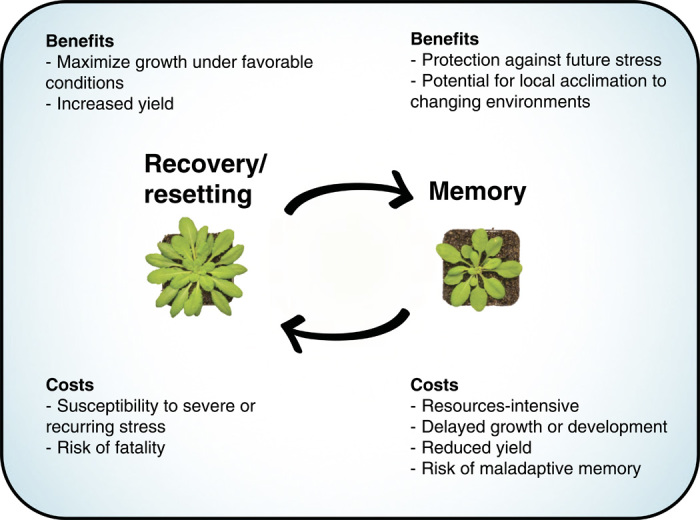
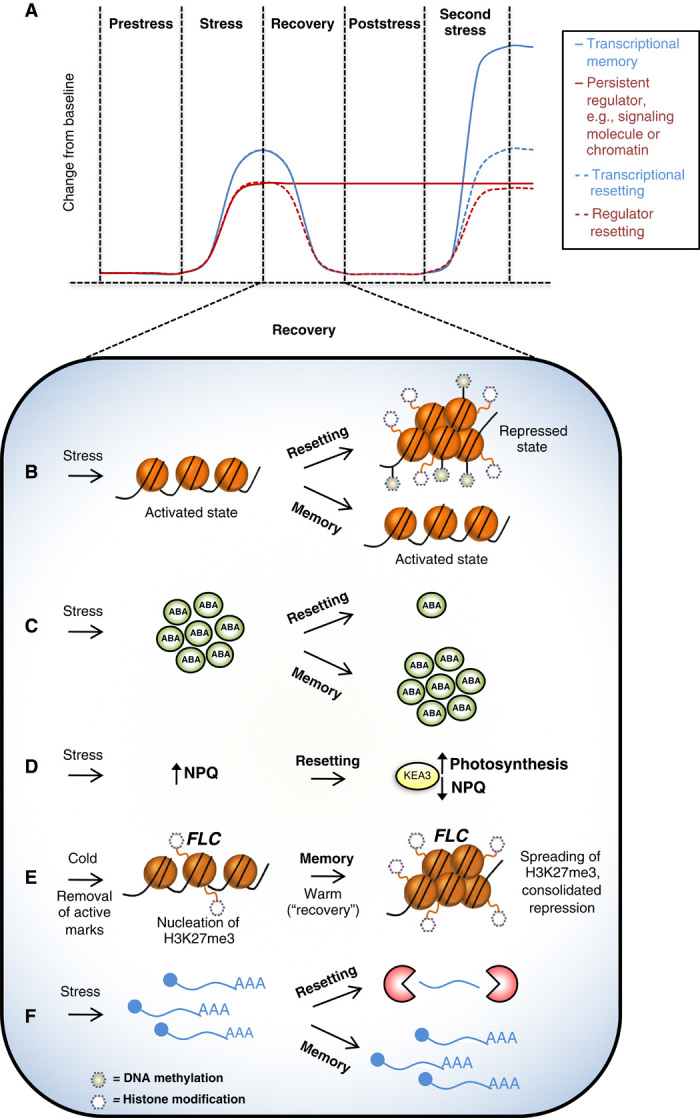
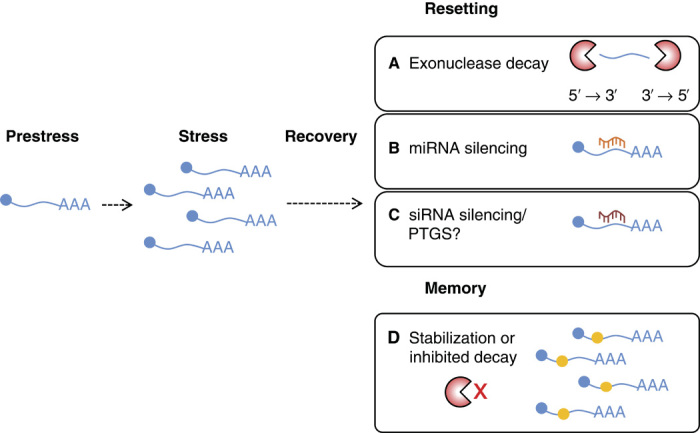
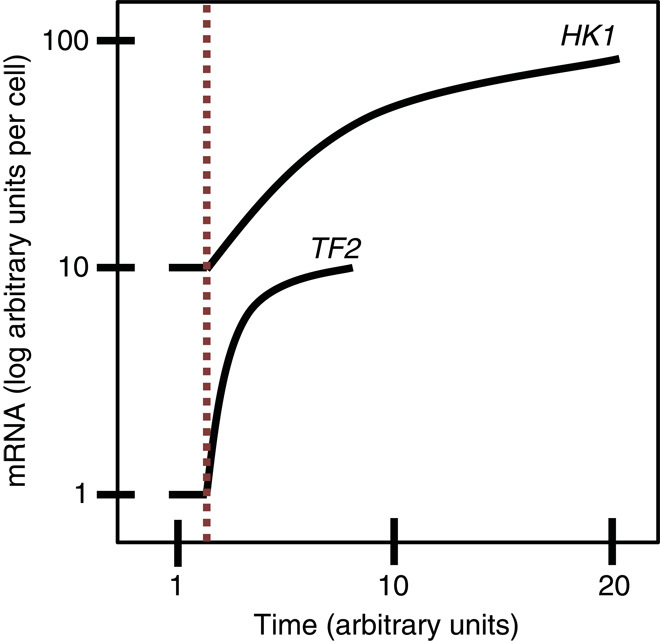
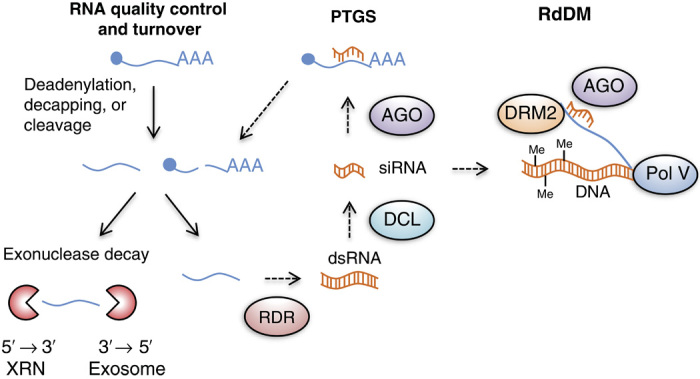
Plants grow in dynamic environments where they can be exposed to a multitude of stressful factors, all of which affect their development, yield, and, ultimately, reproductive success. Plants are adept at rapidly acclimating to stressful conditions and are able to further fortify their defenses by retaining memories of stress to enable stronger or more rapid responses should an environmental perturbation recur. Indeed, one mechanism that is often evoked regarding environmental memories is epigenetics. Yet, there are relatively few examples of such memories; neither is there a clear understanding of their duration, considering the plethora of stresses in nature. We propose that this field would benefit from investigations into the processes and mechanisms enabling recovery from stress. An understanding of stress recovery could provide fresh insights into when, how, and why environmental memories are created and regulated. Stress memories may be maladaptive, hindering recovery and affecting development and potential yield. In some circumstances, it may be advantageous for plants to learn to forget. Accordingly, the recovery process entails a balancing act between resetting and memory formation. During recovery, RNA metabolism, posttranscriptional gene silencing, and RNA-directed DNA methylation have the potential to play key roles in resetting the epigenome and transcriptome and in altering memory. Exploration of this emerging area of research is becoming ever more tractable with advances in genomics, phenomics, and high-throughput sequencing methodology that will enable unprecedented profiling of high-resolution stress recovery time series experiments and sampling of large natural populations.
植物生长在动态的环境中,在那里它们可能会受到多种压力因素的影响,所有这些因素都会影响它们的发育、产量,最终影响它们的生殖成功。植物擅长快速适应压力条件,并通过保留对压力的记忆来进一步加强它们的防御,以便在环境干扰再次发生时能够做出更强或更快的反应。事实上,关于环境记忆,经常提到的一个机制是表观遗传学。然而,关于这种记忆的例子相对较少,而且考虑到自然界中存在的大量压力,也没有明确了解它们的持续时间。我们提出,这个领域将受益于对使植物从压力中恢复的过程和机制的研究。对压力恢复的理解可以为环境记忆的产生和调节提供新的见解,包括何时、如何以及为什么会产生环境记忆。压力记忆可能是适应不良的,阻碍恢复并影响发育和潜在产量。在某些情况下,植物学会遗忘可能是有利的。因此,恢复过程涉及重置和记忆形成之间的平衡。在恢复过程中,RNA 代谢、转录后基因沉默和 RNA 指导的 DNA 甲基化有可能在重置表观基因组和转录组以及改变记忆方面发挥关键作用。随着基因组学、表型组学和高通量测序方法的进步,探索这个新兴的研究领域变得越来越可行,这些方法将使对高分辨率压力恢复时间序列实验的空前分析和对大型自然种群的采样成为可能。