Mazzocco Claire, Fracasso Giulio, Germain-Genevois Coralie, Dugot-Senant Nathalie, Figini Mariangela, Colombatti Marco, Grenier Nicolas, Couillaud Franck
CNRS UMS 3428 and Univ. Bordeaux, 146 rue Léo Saignat, F33076 Bordeaux.
Department of Medicine, Verona University, Italy.
Sci Rep. 2016 Mar 21;6:23314. doi: 10.1038/srep23314.
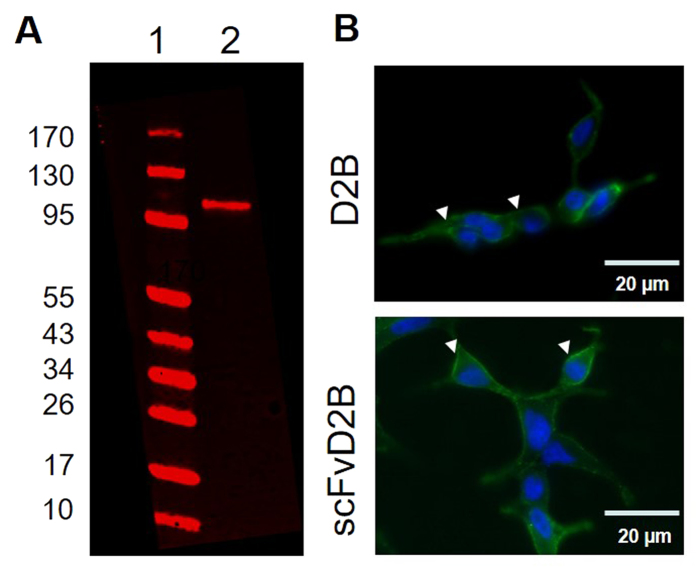
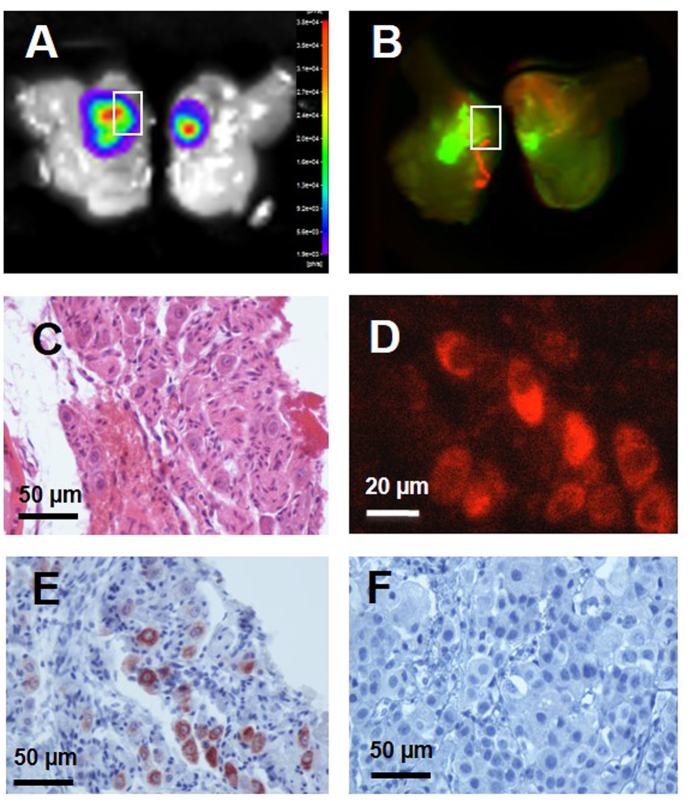
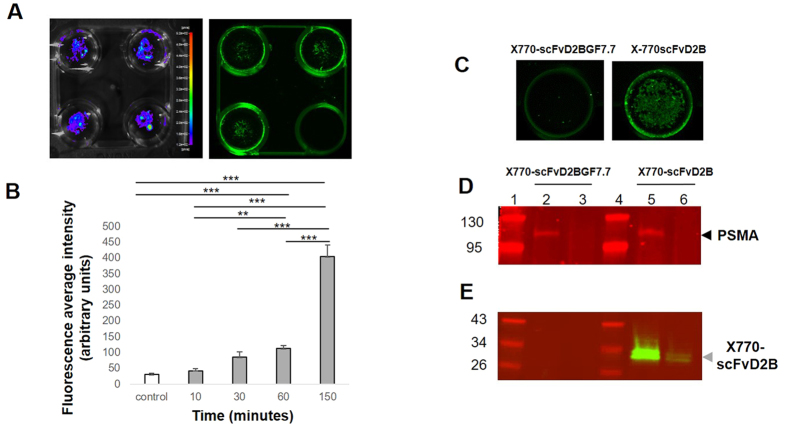
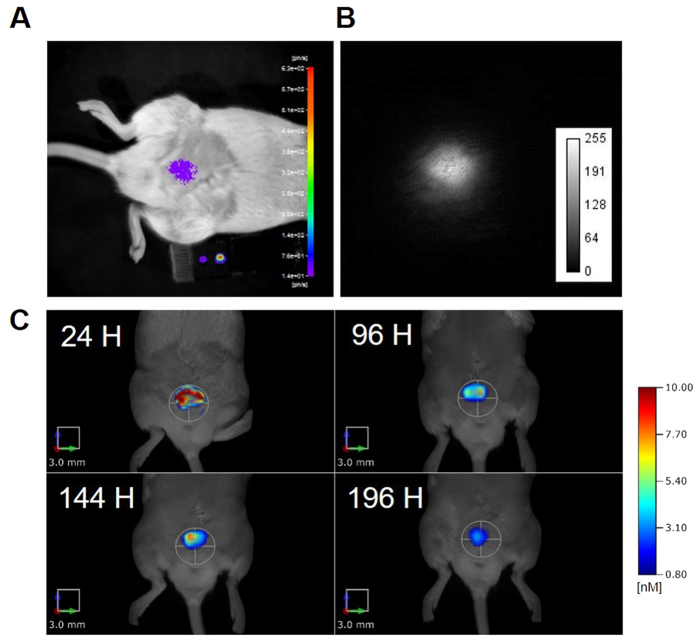
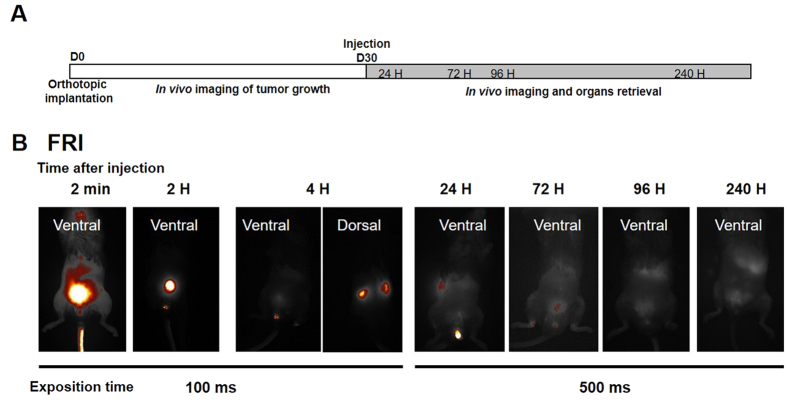
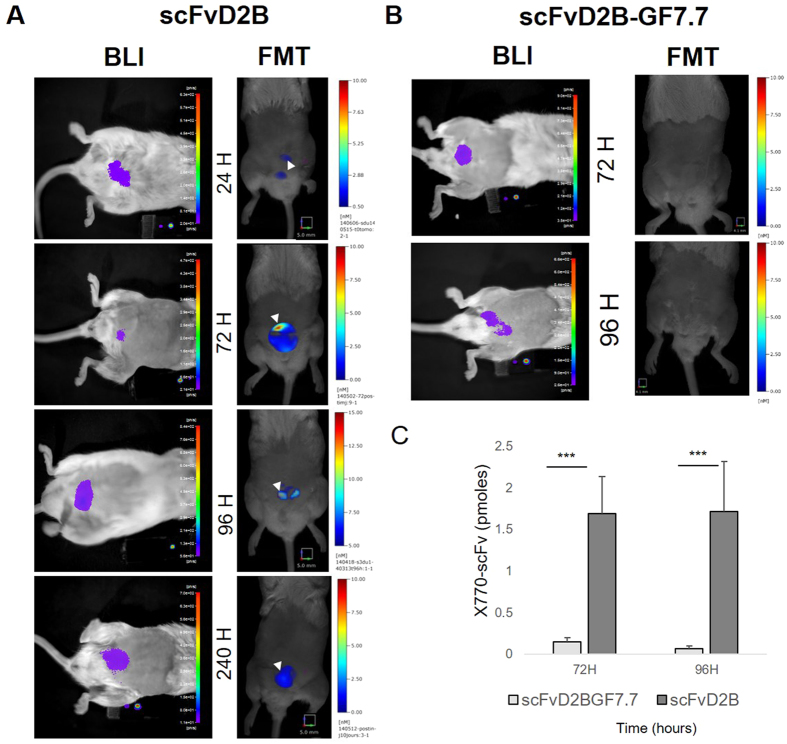
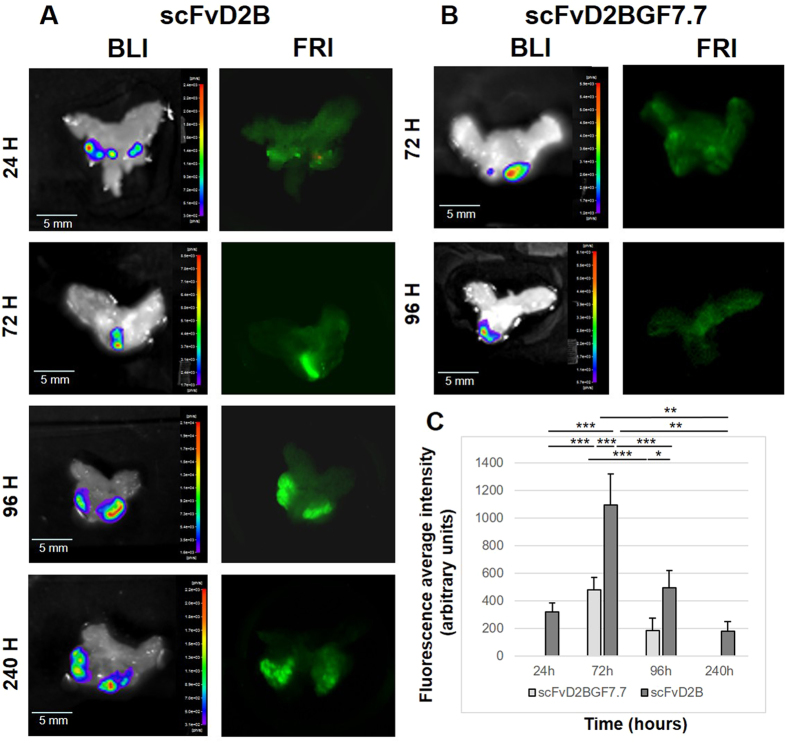
We aimed to evaluate a fluorescent-labeled single chain variable fragment (scFv) of the anti-PSMA antibody as a specific probe for the detection of prostate cancer by in vivo fluorescence imaging. An orthotopic model of prostate cancer was generated by injecting LNCaP cells into the prostate lobe. ScFvD2B, a high affinity anti-PSMA antibody fragment, was labeled using a near-infrared fluorophore to generate a specific imaging probe (X770-scFvD2B). PSMA-unrelated scFv-X770 was used as a control. Probes were injected intravenously into mice with prostate tumors and fluorescence was monitored in vivo by fluorescence molecular tomography (FMT). In vitro assays showed that X770-scFvD2B specifically bound to PSMA and was internalized in PSMA-expressing LNCaP cells. After intravenous injection, X770-scFvD2B was detected in vivo by FMT in the prostate region. On excised prostates the scFv probe co-localized with the cancer cells and was found in PSMA-expressing cells. The PSMA-unrelated scFv used as a control did not label the prostate cancer cells. Our data demonstrate that scFvD2B is a high affinity contrast agent for in vivo detection of PSMA-expressing cells in the prostate. NIR-labeled scFvD2B could thus be further developed as a clinical probe for imaging-guided targeted biopsies.
我们旨在评估抗前列腺特异性膜抗原(PSMA)抗体的荧光标记单链可变片段(scFv)作为通过体内荧光成像检测前列腺癌的特异性探针。通过将LNCaP细胞注射到前列腺叶中建立前列腺癌原位模型。使用近红外荧光团标记高亲和力抗PSMA抗体片段ScFvD2B,以生成特异性成像探针(X770-scFvD2B)。将与PSMA无关的scFv-X770用作对照。将探针静脉注射到患有前列腺肿瘤的小鼠体内,并通过荧光分子断层扫描(FMT)在体内监测荧光。体外试验表明,X770-scFvD2B特异性结合PSMA,并在表达PSMA的LNCaP细胞中内化。静脉注射后,通过FMT在体内前列腺区域检测到X770-scFvD2B。在切除的前列腺上,scFv探针与癌细胞共定位,并在表达PSMA的细胞中发现。用作对照的与PSMA无关的scFv未标记前列腺癌细胞。我们的数据表明,ScFvD2B是用于体内检测前列腺中表达PSMA细胞的高亲和力造影剂。因此,近红外标记的ScFvD2B可进一步开发为用于成像引导靶向活检的临床探针。