Lee H J, Ryu J M, Jung Y H, Lee K H, Kim D I, Han H J
Department of Veterinary Physiology, College of Veterinary Medicine, Research Institute for Veterinary Science and BK21 Creative Veterinary Research Center, Seoul National University, Seoul, Korea.
Department of Veterinary Physiology, College of Veterinary Medicine, Chonnam National University, Gwangju 61186, Korea.
Cell Death Dis. 2016 Mar 24;7(3):e2158. doi: 10.1038/cddis.2015.410.
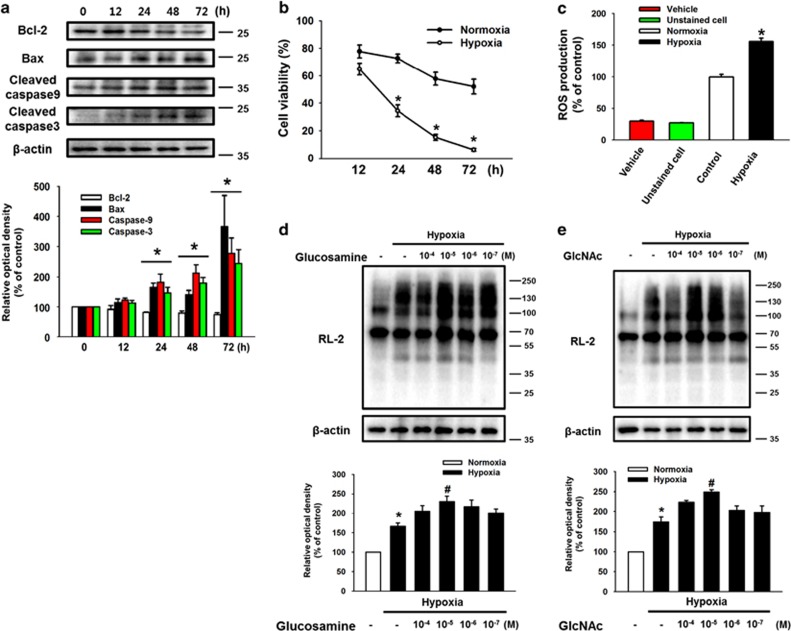
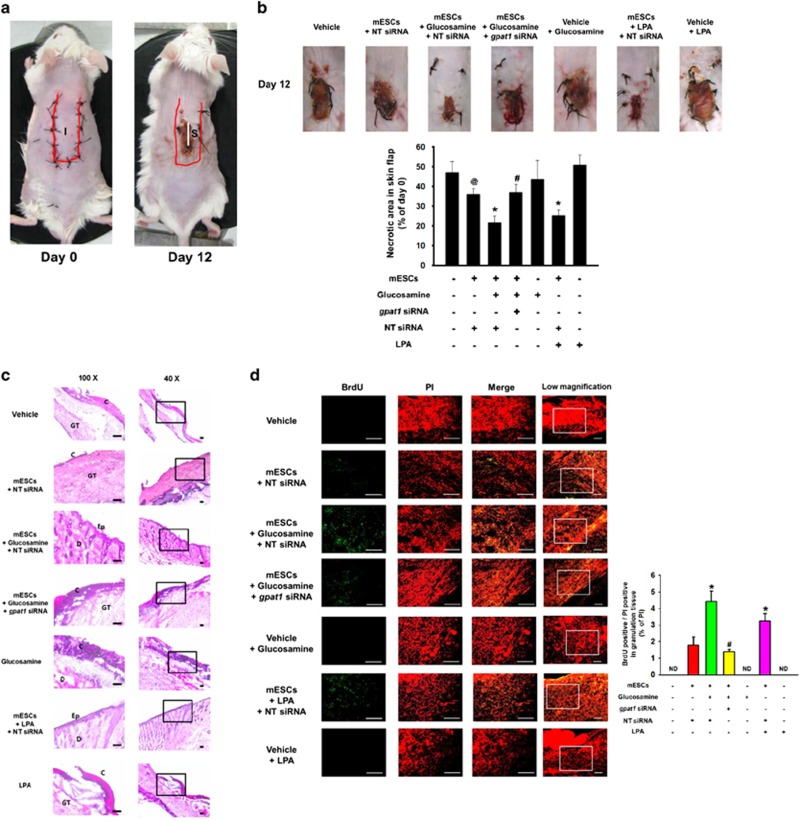
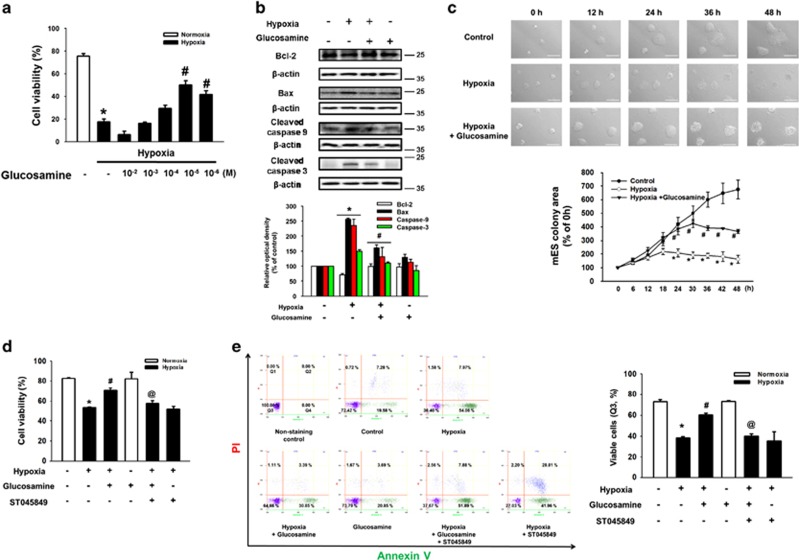
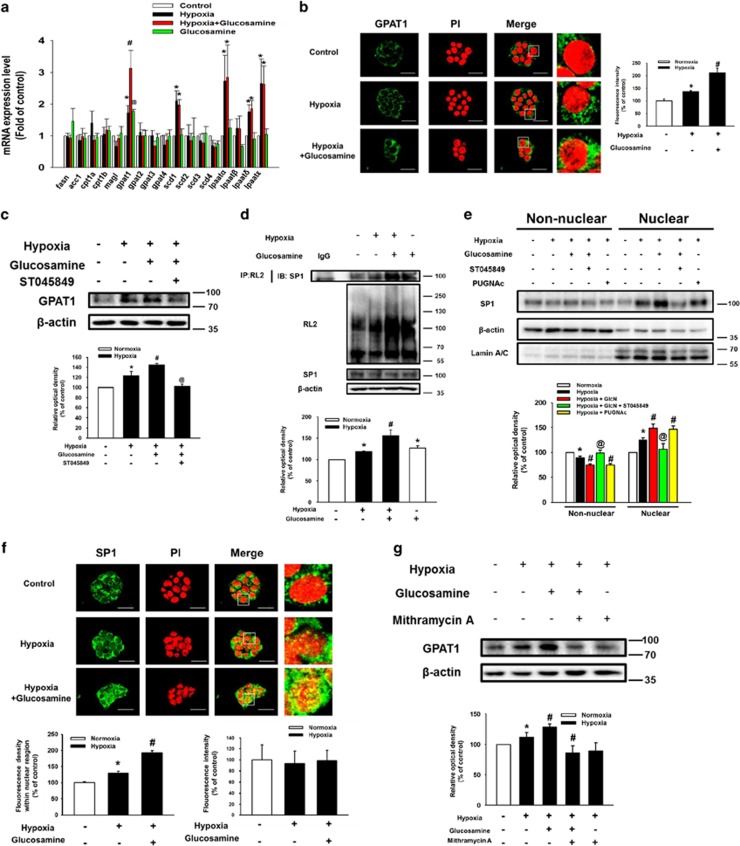
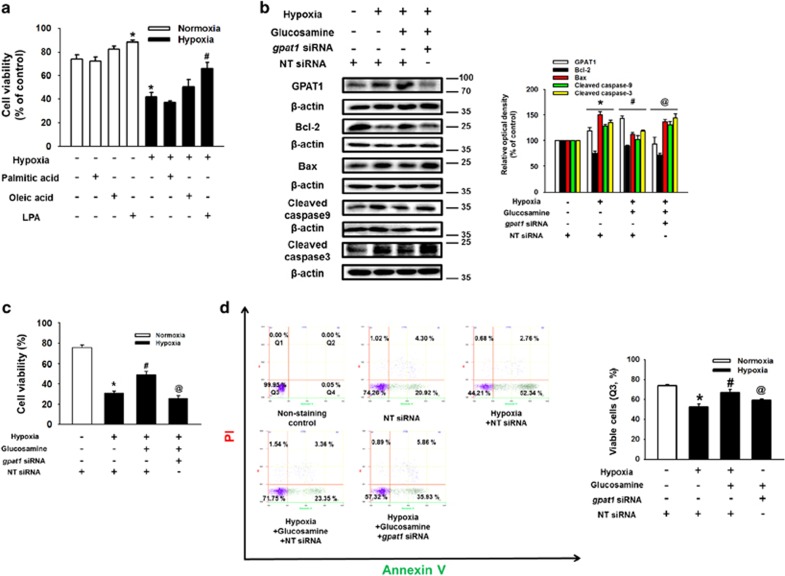
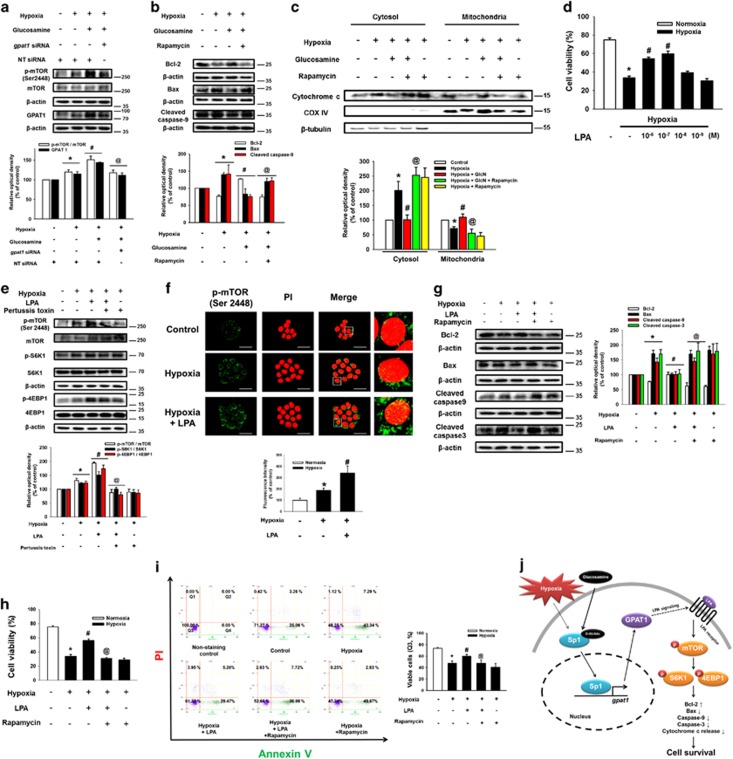
Oxygen signaling is critical for stem cell regulation, and oxidative stress-induced stem cell apoptosis decreases the efficiency of stem cell therapy. Hypoxia activates O-linked β-N-acetyl glucosaminylation (O-GlcNAcylation) of stem cells, which contributes to regulation of cellular metabolism, as well as cell fate. Our study investigated the role of O-GlcNAcylation via glucosamine in the protection of hypoxia-induced apoptosis of mouse embryonic stem cells (mESCs). Hypoxia increased mESCs apoptosis in a time-dependent manner. Moreover, hypoxia also slightly increased the O-GlcNAc level. Glucosamine treatment further enhanced the O-GlcNAc level and prevented hypoxia-induced mESC apoptosis, which was suppressed by O-GlcNAc transferase inhibitors. In addition, hypoxia regulated several lipid metabolic enzymes, whereas glucosamine increased expression of glycerol-3-phosphate acyltransferase-1 (GPAT1), a lipid metabolic enzyme producing lysophosphatidic acid (LPA). In addition, glucosamine-increased O-GlcNAcylation of Sp1, which subsequently leads to Sp1 nuclear translocation and GPAT1 expression. Silencing of GPAT1 by gpat1 siRNA transfection reduced glucosamine-mediated anti-apoptosis in mESCs and reduced mammalian target of rapamycin (mTOR) phosphorylation. Indeed, LPA prevented mESCs from undergoing hypoxia-induced apoptosis and increased phosphorylation of mTOR and its substrates (S6K1 and 4EBP1). Moreover, mTOR inactivation by rapamycin (mTOR inhibitor) increased pro-apoptotic proteins expressions and mESC apoptosis. Furthermore, transplantation of non-targeting siRNA and glucosamine-treated mESCs increased cell survival and inhibited flap necrosis in mouse skin flap model. Conversely, silencing of GPAT1 expression reversed those glucosamine effects. In conclusion, enhancing O-GlcNAcylation of Sp1 by glucosamine stimulates GPAT1 expression, which leads to inhibition of hypoxia-induced mESC apoptosis via mTOR activation.
氧信号传导对干细胞调节至关重要,而氧化应激诱导的干细胞凋亡会降低干细胞治疗的效率。缺氧会激活干细胞的O-连接β-N-乙酰葡糖胺化(O-GlcNAcylation),这有助于调节细胞代谢以及细胞命运。我们的研究通过葡糖胺探讨了O-GlcNAcylation在保护小鼠胚胎干细胞(mESCs)免受缺氧诱导凋亡中的作用。缺氧以时间依赖性方式增加mESCs凋亡。此外,缺氧也会轻微增加O-GlcNAc水平。葡糖胺处理进一步提高了O-GlcNAc水平,并防止了缺氧诱导的mESC凋亡,而O-GlcNAc转移酶抑制剂可抑制这种作用。此外,缺氧调节了几种脂质代谢酶,而葡糖胺增加了甘油-3-磷酸酰基转移酶-1(GPAT1)的表达,GPAT1是一种产生溶血磷脂酸(LPA)的脂质代谢酶。此外,葡糖胺增加了Sp1的O-GlcNAcylation,随后导致Sp1核转位和GPAT1表达。通过gpat1 siRNA转染沉默GPAT1可降低葡糖胺介导的mESCs抗凋亡作用,并降低雷帕霉素哺乳动物靶标(mTOR)的磷酸化。事实上,LPA可防止mESCs发生缺氧诱导的凋亡,并增加mTOR及其底物(S6K1和4EBP1)的磷酸化。此外,雷帕霉素(mTOR抑制剂)使mTOR失活会增加促凋亡蛋白的表达和mESC凋亡。此外,在小鼠皮瓣模型中,移植非靶向siRNA和经葡糖胺处理的mESCs可提高细胞存活率并抑制皮瓣坏死。相反,沉默GPAT1表达可逆转这些葡糖胺的作用。总之,葡糖胺增强Sp1的O-GlcNAcylation会刺激GPAT1表达,从而通过mTOR激活抑制缺氧诱导的mESC凋亡。