Stein Laura R, Bell Alison M
School of Integrative Biology, University of Illinois at Urbana-Champaign, Urbana, IL, U.S.A.
Anim Behav. 2014 Sep 1;95:165-171. doi: 10.1016/j.anbehav.2014.07.010. Epub 2014 Aug 15.
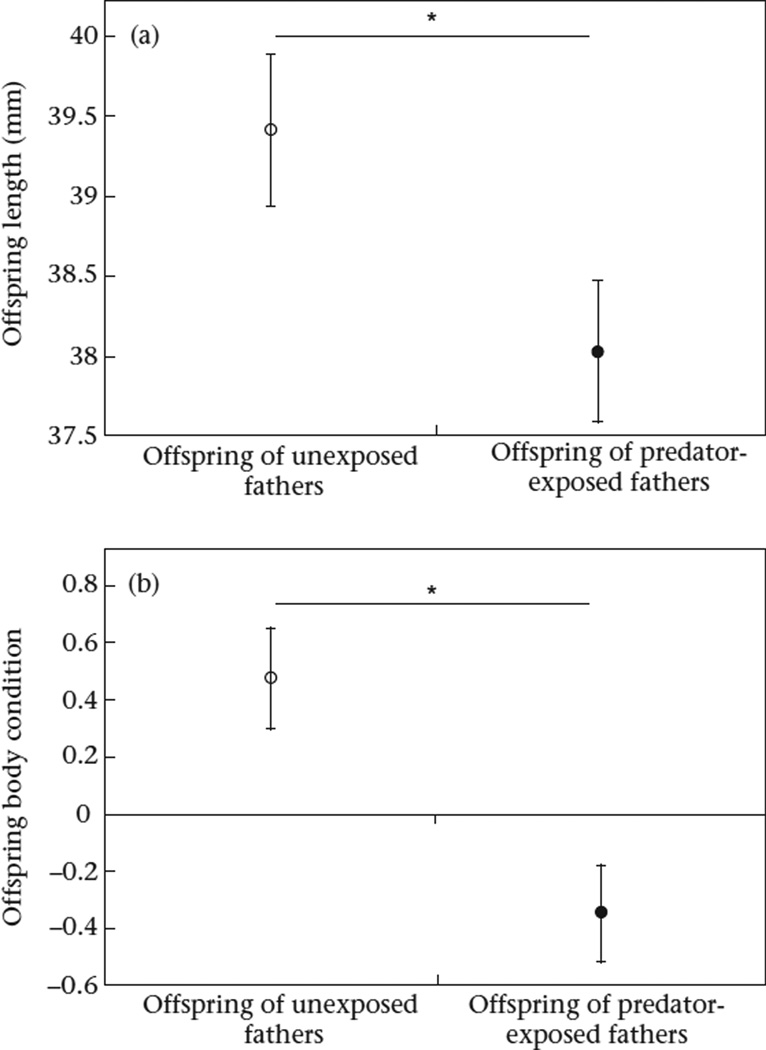
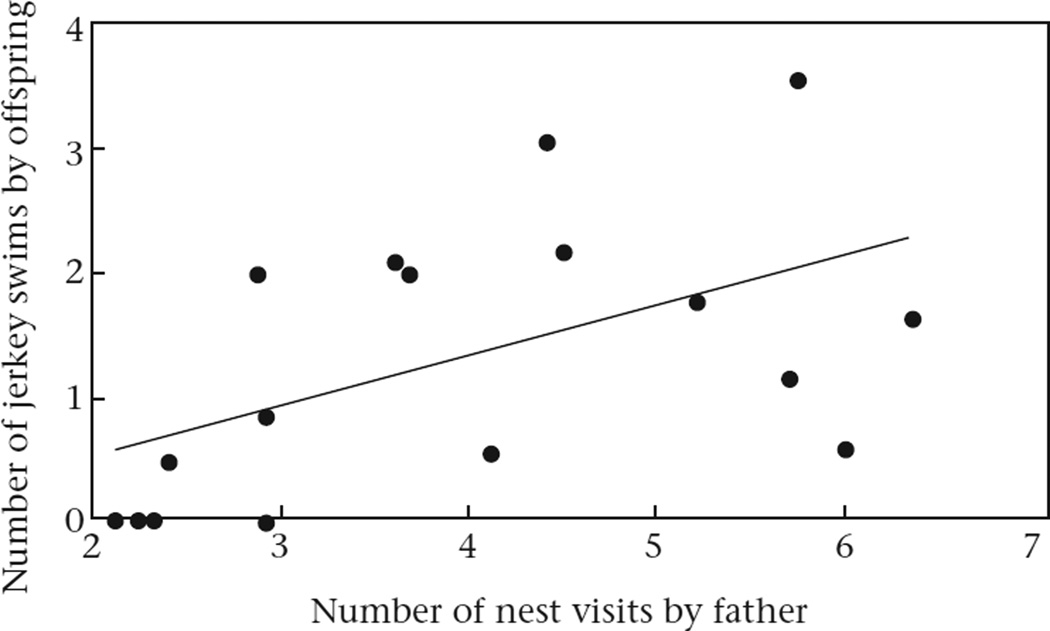
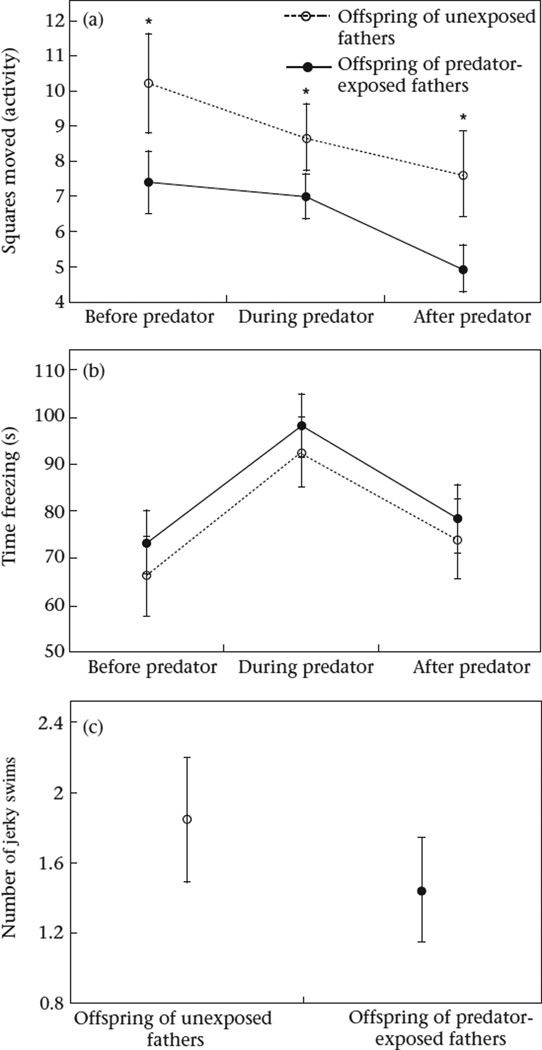
In a wide range of organisms, including humans, mothers can influence offspring via the care they provide. Comparatively little is known about the effects of fathering on offspring. Here, we test the hypothesis that fathers are capable of programming their offspring for the type of environment they are likely to encounter. Male threespine sticklebacks, , were either exposed to predation risk while fathering or not. Fathers altered their paternal behaviour when exposed to predation risk, and consequently produced adult offspring with phenotypes associated with strong predation pressure (smaller size, reduced body condition, reduced behavioural activity). Moreover, more attentive fathers produced offspring that showed stronger antipredator responses. These results are consistent with behaviourally mediated paternal programming: fathers can alter offspring phenotypes to match their future environment and influence offspring traits well into adulthood.
在包括人类在内的众多生物中,母亲能够通过她们提供的照料来影响后代。相比之下,人们对父亲养育行为对后代的影响知之甚少。在此,我们检验这样一个假设:父亲能够根据其后代可能遭遇的环境类型对他们进行编程。雄性三刺鱼在育雏期间要么接触捕食风险,要么不接触。当接触捕食风险时,父亲会改变其育雏行为,从而产生具有与强烈捕食压力相关表型(体型较小、身体状况较差、行为活动减少)的成年后代。此外,更细心的父亲所生育的后代表现出更强的反捕食反应。这些结果与行为介导的父系编程一致:父亲可以改变后代的表型以匹配其未来环境,并对成年后的后代性状产生影响。