Mao Yilin, Mathews Kathryn, Gorrie Catherine A
Neural Injury Research Unit, School of Life Sciences, Faculty of Science, University of Technology Sydney Sydney, NSW, Australia.
Front Cell Neurosci. 2016 Mar 9;10:58. doi: 10.3389/fncel.2016.00058. eCollection 2016.
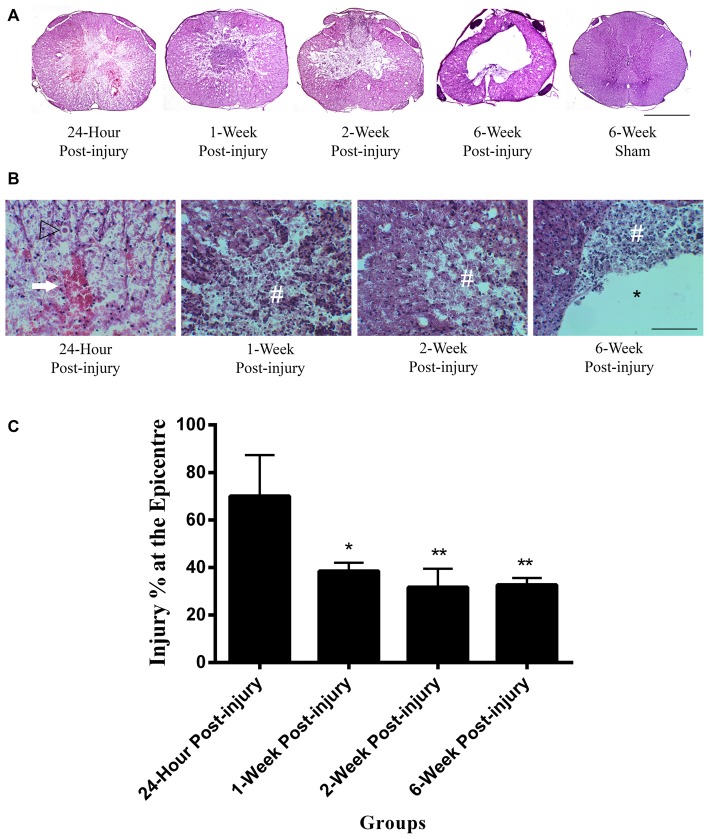
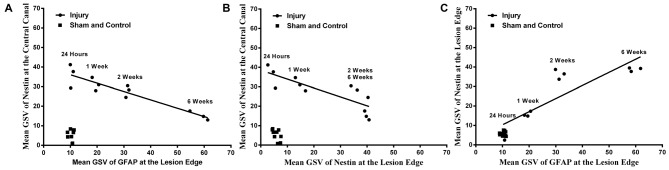
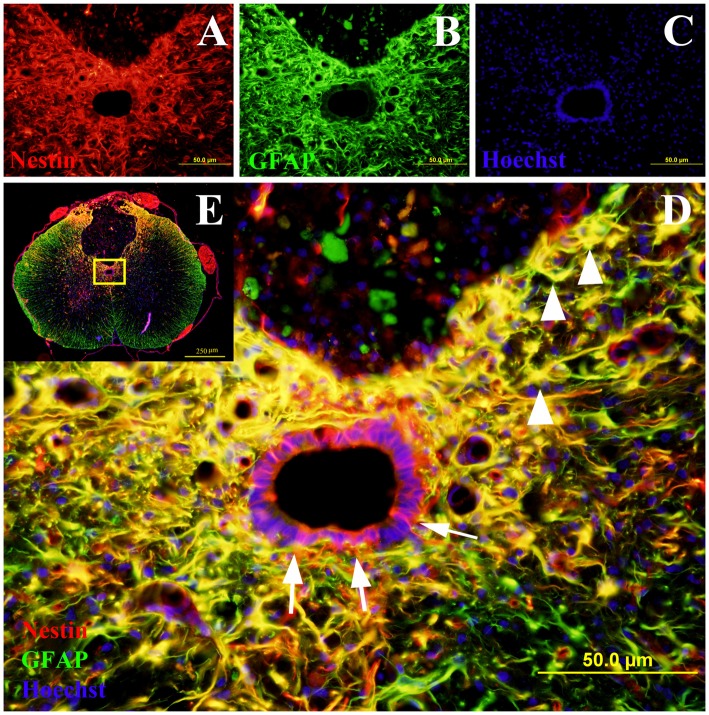
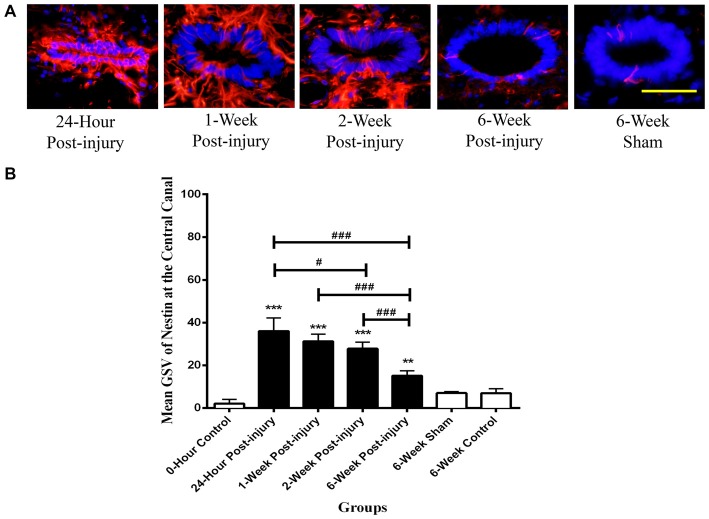
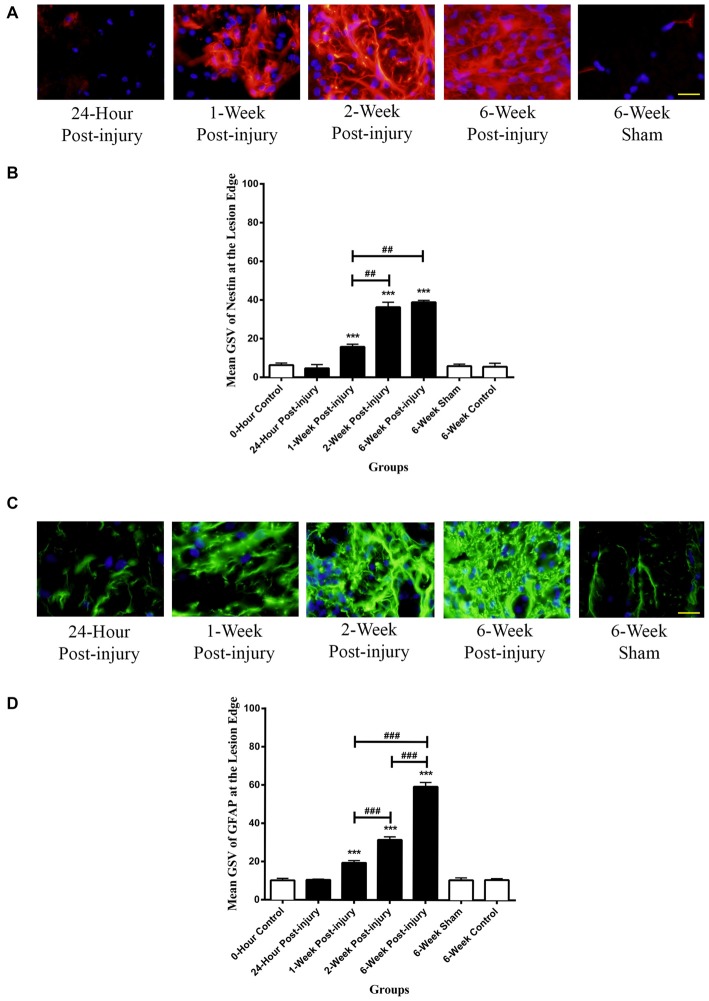
A pool of endogenous neural progenitor cells (NPCs) found in the ependymal layer and the sub-ependymal area of the spinal cord are reported to upregulate Nestin in response to traumatic spinal cord injury (SCI). These cells could potentially be manipulated within a critical time period offering an innovative approach to the repair of SCI. However, little is known about the temporal response of endogenous NPCs following SCI. This study used a mild contusion injury in rat spinal cord and immunohistochemistry to determine the temporal response of ependymal NPCs following injury and their correlation to astrocyte activation at the lesion edge. The results from the study demonstrated that Nestin staining intensity at the central canal peaked at 24 h post-injury and then gradually declined over time. Reactive astrocytes double labeled by Nestin and glial fibrillary acidic protein (GFAP) were found at the lesion edge and commenced to form the glial scar from 1 week after injury. We conclude that the critical time period for manipulating endogenous NPCs following a spinal cod injury in rats is between 24 h when Nestin expression in ependymal cells is increased and 1 week when astrocytes are activated in large numbers.
据报道,在脊髓室管膜层和室管膜下区域发现的内源性神经祖细胞(NPCs)池会在创伤性脊髓损伤(SCI)后上调巢蛋白(Nestin)的表达。在关键时间段内,这些细胞有可能被调控,为脊髓损伤的修复提供了一种创新方法。然而,关于脊髓损伤后内源性神经祖细胞的时间反应知之甚少。本研究利用大鼠脊髓轻度挫伤损伤模型和免疫组织化学方法,来确定损伤后室管膜神经祖细胞的时间反应及其与损伤边缘星形胶质细胞激活的相关性。研究结果表明,中央管处的巢蛋白染色强度在损伤后24小时达到峰值,随后随时间逐渐下降。在损伤边缘发现了由巢蛋白和胶质纤维酸性蛋白(GFAP)双重标记的反应性星形胶质细胞,且从损伤后1周开始形成胶质瘢痕。我们得出结论,在大鼠脊髓损伤后调控内源性神经祖细胞的关键时间段是在室管膜细胞中巢蛋白表达增加的24小时至大量星形胶质细胞被激活的1周之间。