Pawar Kamlesh, Sharbati Jutta, Einspanier Ralf, Sharbati Soroush
Department of Veterinary Medicine, Institute of Veterinary Biochemistry, Freie Universität Berlin Berlin, Germany.
Front Cell Infect Microbiol. 2016 Mar 9;6:27. doi: 10.3389/fcimb.2016.00027. eCollection 2016.
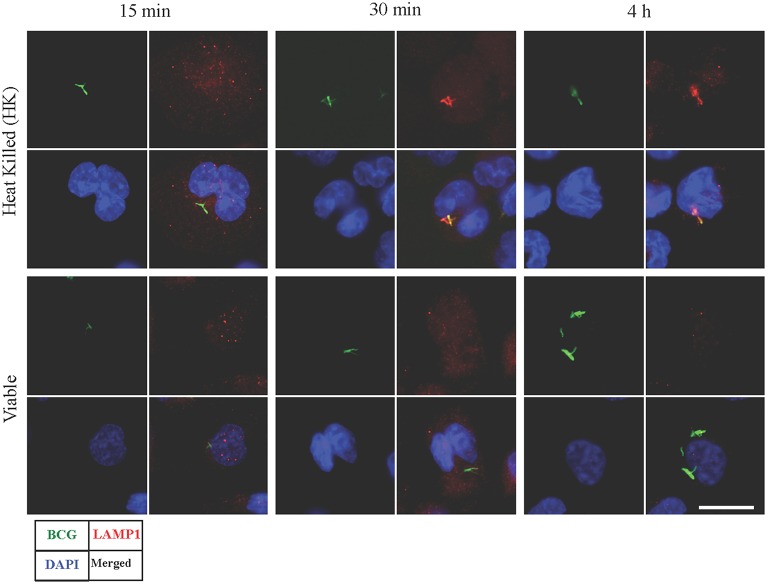
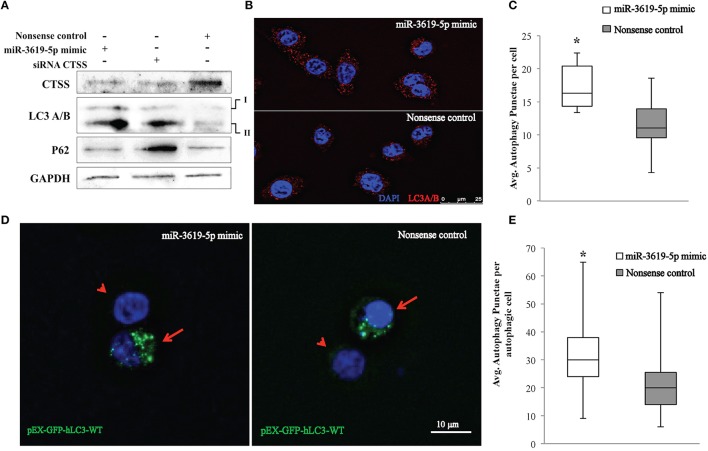
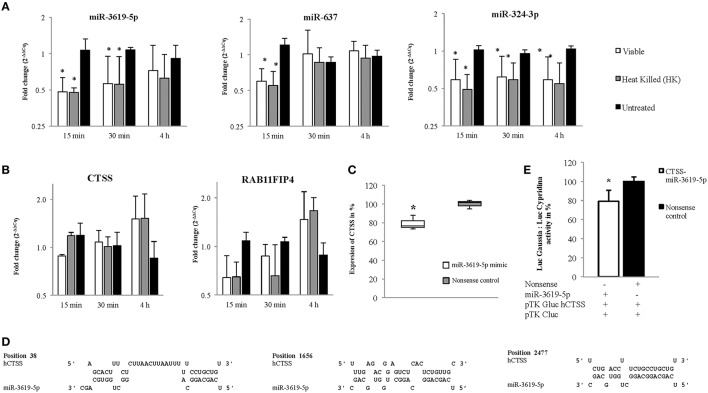
Main survival mechanism of pathogenic mycobacteria is to escape inimical phagolysosomal environment inside the macrophages. Many efforts have been made to unravel the molecular mechanisms behind this process. However, little is known about the involvement of microRNAs (miRNAs) in the regulation of phagolysosomal biosynthesis and maturation. Based on a bottom up approach, we searched for miRNAs that were involved in phagolysosomal processing events in the course of mycobacterial infection of macrophages. After infecting THP-1 derived macrophages with viable and heat killed Mycobacterium bovis BCG (BCG), early time points were identified after co-localization studies of the phagosomal marker protein LAMP1 and BCG. Differences in LAMP1 localization on the phagosomes of both groups were observed at 30 min and 4 h. After in silico based pre-selection of miRNAs, expression analysis at the identified time points revealed down-regulation of three miRNAs: miR-3619-5p, miR-637, and miR-324-3p. Consequently, most likely targets were predicted that were supposed to be mutually regulated by these three studied miRNAs. The lysosomal cysteine protease Cathepsin S (CTSS) and Rab11 family-interacting protein 4 (RAB11FIP4) were up-regulated and were considered to be connected to lysosomal trafficking and autophagy. Interaction studies verified the regulation of CTSS by miR-3619-5p. Down-regulation of CTSS by ectopic miR-3619-5p as well as its specific knockdown by siRNA affected the process of autophagy in THP-1 derived macrophages.
致病性分枝杆菌的主要生存机制是逃离巨噬细胞内不利的吞噬溶酶体环境。人们已经做出了许多努力来揭示这一过程背后的分子机制。然而,关于微小RNA(miRNA)在吞噬溶酶体生物合成和成熟调控中的作用知之甚少。基于自下而上的方法,我们寻找了在巨噬细胞感染分枝杆菌过程中参与吞噬溶酶体加工事件的miRNA。在用活的和热灭活的牛分枝杆菌卡介苗(BCG)感染THP-1衍生的巨噬细胞后,通过吞噬体标记蛋白LAMP1和BCG的共定位研究确定了早期时间点。在30分钟和4小时时观察到两组吞噬体上LAMP1定位的差异。在基于计算机的miRNA预筛选后,在确定的时间点进行表达分析,发现三种miRNA下调:miR-3619-5p、miR-637和miR-324-3p。因此,预测了最可能的靶标,这些靶标应该由这三种研究的miRNA共同调控。溶酶体半胱氨酸蛋白酶组织蛋白酶S(CTSS)和Rab11家族相互作用蛋白4(RAB11FIP4)上调,并被认为与溶酶体运输和自噬有关。相互作用研究证实了miR-3619-5p对CTSS的调控。异位miR-3619-5p下调CTSS以及用siRNA特异性敲低CTSS影响了THP-1衍生巨噬细胞中的自噬过程。