USAID | DELIVER PROJECT, John Snow, Inc., Washington, DC, USA.
Health Finance and Governance Project, Bethesda, MD, USA.
Glob Health Sci Pract. 2016 Mar 25;4(1):165-77. doi: 10.9745/GHSP-D-15-00173. Print 2016 Mar.
Public health commodity supply chains are typically weak in low-income countries, partly because they have many disparate yet interdependent functions and components. Approaches to strengthening supply chains in such settings have often fallen short-they address technical weaknesses, but not the incentives that motivate staff to perform better.
We reviewed the first year of a results-based financing (RBF) program in Mozambique, which began in January 2013. The program aimed to improve the performance of the central medical store-Central de Medicamentos e Artigos Medicos (CMAM)-by realigning incentives. We completed in-depth interviews and focus group discussions with 33 key informants, including representatives from CMAM and donor agencies, and collected quantitative data on performance measures and use of funds.
The RBF agreement linked CMAM performance payments to quarterly results on 5 performance indicators related to supply planning, distribution planning, and warehouse management. RBF is predicated on the theory that a combination of carrot and stick-i.e., shared financial incentives, plus increased accountability for results-will spur changes in behavior. Important design elements: (1) indicators were measured against quarterly targets, and payments were made only for indicators that met those targets; (2) targets were set based on documented performance, at levels that could be reasonably attained, yet pushed for improvement; (3) payment was shared with and dependent on all staff, encouraging teamwork and collaboration; (4) results were validated by verifiable data sources; and (5) CMAM had discretion over how to use the funds.
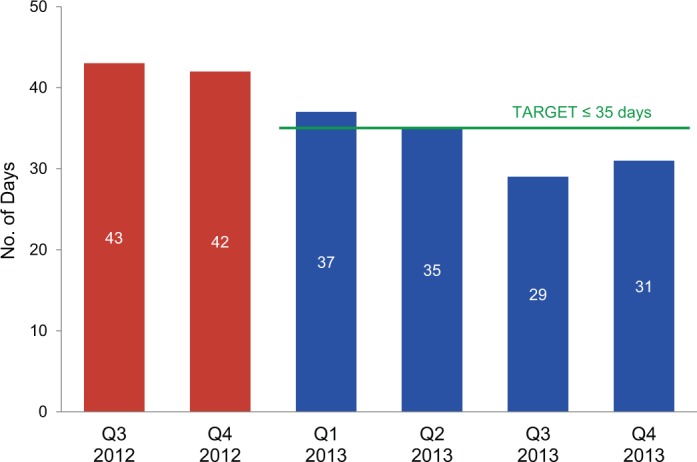
We found that CMAM's performance continually improved over baseline and that CMAM achieved many of its performance targets, for example, timely submission of quarterly supply and distribution planning reports. Warehouse indicators, such as inventory management and order fulfillment, proved more challenging but were nonetheless positive. By linking payments to periodic verified results, and giving CMAM discretion over how to spend the funds, the RBF agreement motivated the workforce; focused attention on results; strengthened data collection; encouraged teamwork and innovation; and ultimately strengthened the central supply chain.
Policy makers and program managers can use performance incentives to catalyze and leverage existing investments. To further strengthen the approach, such incentive programs can shift attention from quantity to quality indicators, improve verification processes, and aim to institutionalize the approach.
公共卫生商品供应链在低收入国家通常较为薄弱,部分原因是这些供应链具有许多不同但相互依存的功能和组成部分。在这种情况下,加强供应链的方法往往收效甚微——它们解决了技术上的弱点,但没有解决激励员工表现更好的问题。
我们回顾了 2013 年 1 月开始的基于成果的融资(RBF)方案在莫桑比克的第一年。该方案旨在通过调整激励措施来提高中央医药库(CMAM)的绩效。我们对 33 名关键信息提供者(包括 CMAM 和捐助机构的代表)进行了深入访谈和焦点小组讨论,并收集了关于绩效指标和资金使用情况的定量数据。
RBF 协议将 CMAM 的绩效支付与与供应计划、配送计划和仓库管理相关的 5 项绩效指标的季度结果挂钩。RBF 基于这样一种理论,即胡萝卜加大棒的组合——即共享财务激励措施,加上对成果的问责制——将刺激行为的改变。重要的设计要素包括:(1)指标根据季度目标进行衡量,只有达到这些目标的指标才会获得支付;(2)目标是根据记录的绩效设定的,在可以合理达到的水平上,但要推动改进;(3)支付是与所有员工共享并取决于所有员工的,鼓励团队合作和协作;(4)通过可核实的数据来源验证结果;(5)CMAM 可以自由决定如何使用资金。
我们发现,CMAM 的绩效持续优于基线,并且 CMAM 实现了许多绩效目标,例如及时提交季度供应和配送计划报告。仓库指标,如库存管理和订单履行,虽然更具挑战性,但仍然是积极的。通过将支付与定期核实的结果挂钩,并赋予 CMAM 自由支配资金的权利,RBF 协议激励了员工;将注意力集中在成果上;加强了数据收集;鼓励了团队合作和创新;最终加强了中央供应链。
政策制定者和方案管理人员可以利用绩效激励措施来催化和利用现有投资。为了进一步加强这种方法,可以将注意力从数量指标转移到质量指标,改进验证过程,并旨在使该方法制度化。