Eschler Anica, Roepenack Paula, Roesner Jan, Herlyn Philipp Karl Ewald, Martin Heiner, Reichel Martin, Rotter Robert, Vollmar Brigitte, Mittlmeier Thomas, Gradl Georg
Department of Trauma, Hand and Reconstructive Surgery, University of Rostock, Medical Center, Schillingallee 35, 18057 Rostock, Germany.
Clinic for Anesthesiology and Critical Care Medicine, University of Rostock, Medical Center, Schillingallee 35, 18059 Rostock, Germany.
Biomed Res Int. 2016;2016:4094161. doi: 10.1155/2016/4094161. Epub 2016 Feb 25.
Current treatment strategies for osteoporotic vertebral compression fractures (VCFs) focus on cement-associated solutions. Complications associated with cement application are leakage, embolism, adjacent fractures, and compromise in bony healing. This study comprises a validated VCF model in osteoporotic sheep in order to (1) evaluate a new cementless fracture fixation technique using titanium mesh implants (TMIs) and (2) demonstrate the healing capabilities in osteoporotic VCFs.
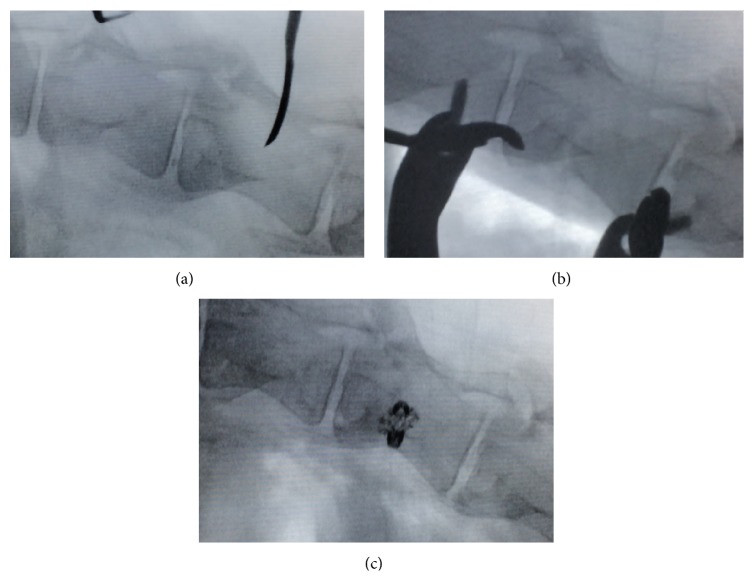
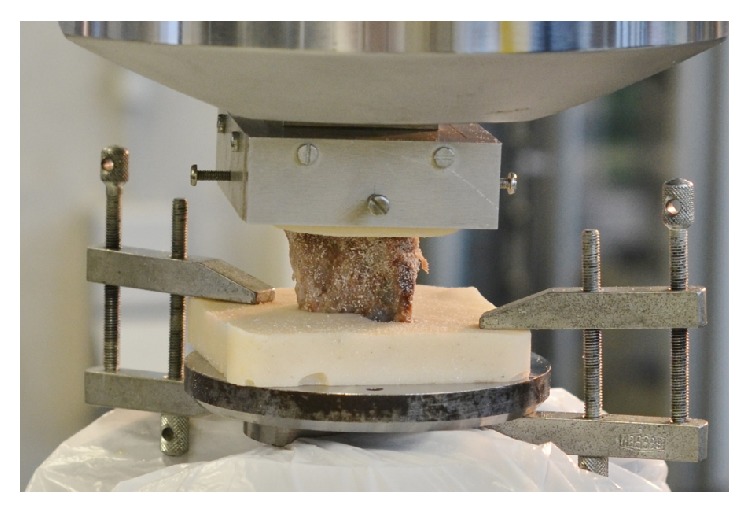
Twelve 5-year-old Merino sheep received ovariectomy, corticosteroid injections, and a calcium/phosphorus/vitamin D-deficient diet for osteoporosis induction. Standardized VCFs (type AO A3.1) were created, reduced, and fixed using intravertebral TMIs. Randomly additional autologous spongiosa grafting (G1) or no augmentation was performed (G2, n = 6 each). Two months postoperatively, macroscopic, micro-CT and biomechanical evaluation assessed bony consolidation.
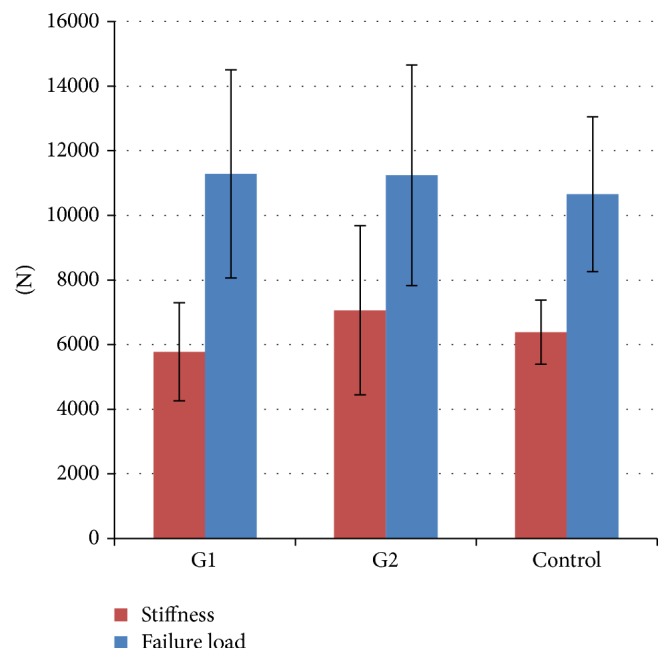
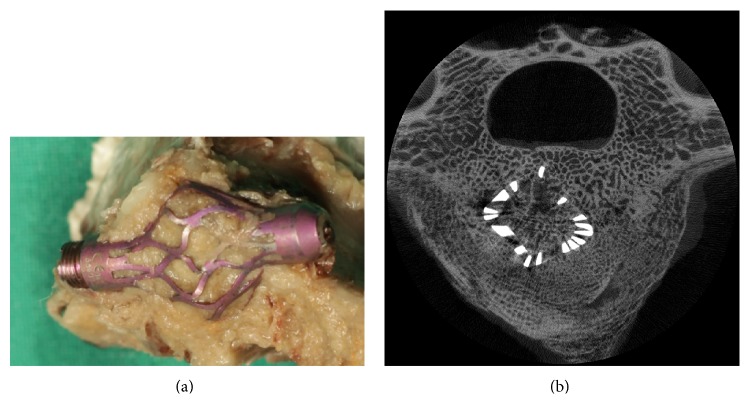
Fracture reduction succeeded in all cases without intraoperative complications. Bony consolidation was proven for all cases with increased amounts of callus development for G2 (58.3%). Micro-CT revealed cage integration. Neither group showed improved results with biomechanical testing.
Fracture reduction/fixation using TMIs without cement in osteoporotic sheep lumbar VCF resulted in bony fracture healing. Intravertebral application of autologous spongiosa showed no beneficial effects. The technique is now available for clinical use; thus, it offers an opportunity to abandon cement-associated complications.
目前骨质疏松性椎体压缩骨折(VCF)的治疗策略主要集中在与骨水泥相关的解决方案上。与骨水泥应用相关的并发症包括渗漏、栓塞、相邻椎体骨折以及骨愈合受损。本研究构建了一个经过验证的骨质疏松绵羊VCF模型,目的是(1)评估一种使用钛网植入物(TMI)的新型非骨水泥骨折固定技术,以及(2)证明骨质疏松性VCF的愈合能力。
12只5岁的美利奴绵羊接受卵巢切除术、皮质类固醇注射以及钙/磷/维生素D缺乏饮食以诱导骨质疏松。制造标准化的VCF(AO A3.1型),复位后使用椎体内TMI进行固定。随机进行额外的自体松质骨移植(G1组)或不进行强化处理(G2组,每组n = 6)。术后两个月,通过宏观、显微CT和生物力学评估来评估骨愈合情况。
所有病例骨折复位均成功,且无术中并发症。所有病例均证实有骨愈合,G2组骨痂形成量增加(58.3%)。显微CT显示椎间融合器融合良好。两组在生物力学测试中均未显示出更好的结果。
在骨质疏松绵羊腰椎VCF中使用无骨水泥的TMI进行骨折复位/固定可实现骨折愈合。椎体内应用自体松质骨未显示出有益效果。该技术现已可用于临床;因此,它为避免与骨水泥相关的并发症提供了机会。