Jiang Yanyan, Verbiest Tom, Devery Aoife M, Bokobza Sivan M, Weber Anika M, Leszczynska Katarzyna B, Hammond Ester M, Ryan Anderson J
Cancer Research UK/Medical Research Council Oxford Institute for Radiation Oncology, Department of Oncology, University of Oxford, Oxford, United Kingdom.
Cancer Research UK/Medical Research Council Oxford Institute for Radiation Oncology, Department of Oncology, University of Oxford, Oxford, United Kingdom.
Int J Radiat Oncol Biol Phys. 2016 Jun 1;95(2):772-81. doi: 10.1016/j.ijrobp.2016.01.035. Epub 2016 Jan 23.
Poly(ADP-ribose) polymerase (PARP) inhibitors potentiate radiation therapy in preclinical models of human non-small cell lung cancer (NSCLC) and other types of cancer. However, the mechanisms underlying radiosensitization in vivo are incompletely understood. Herein, we investigated the impact of hypoxia on radiosensitization by the PARP inhibitor olaparib in human NSCLC xenograft models.
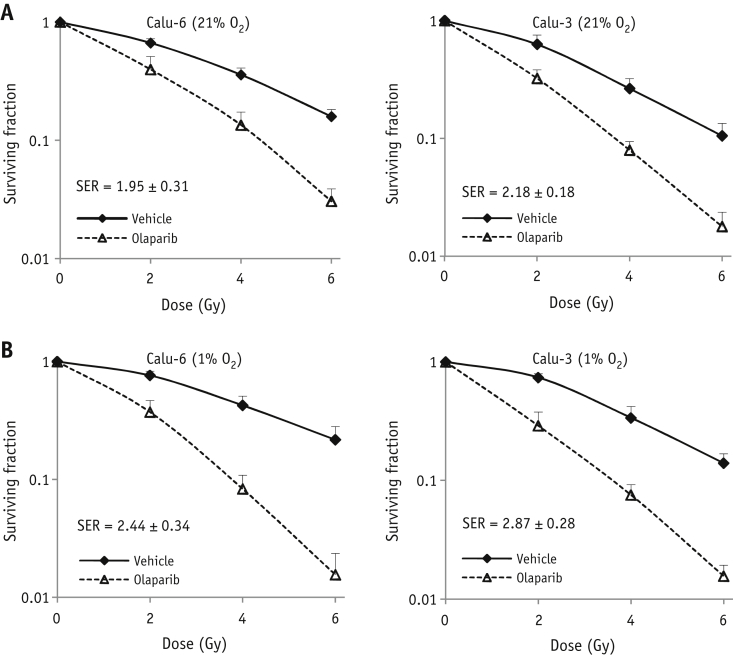
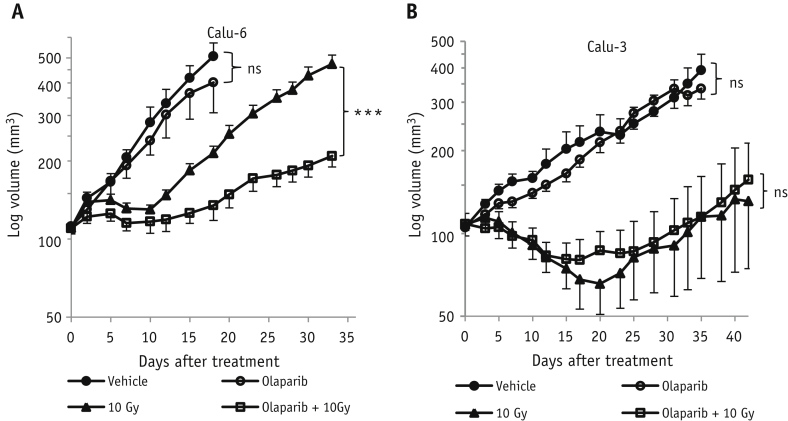
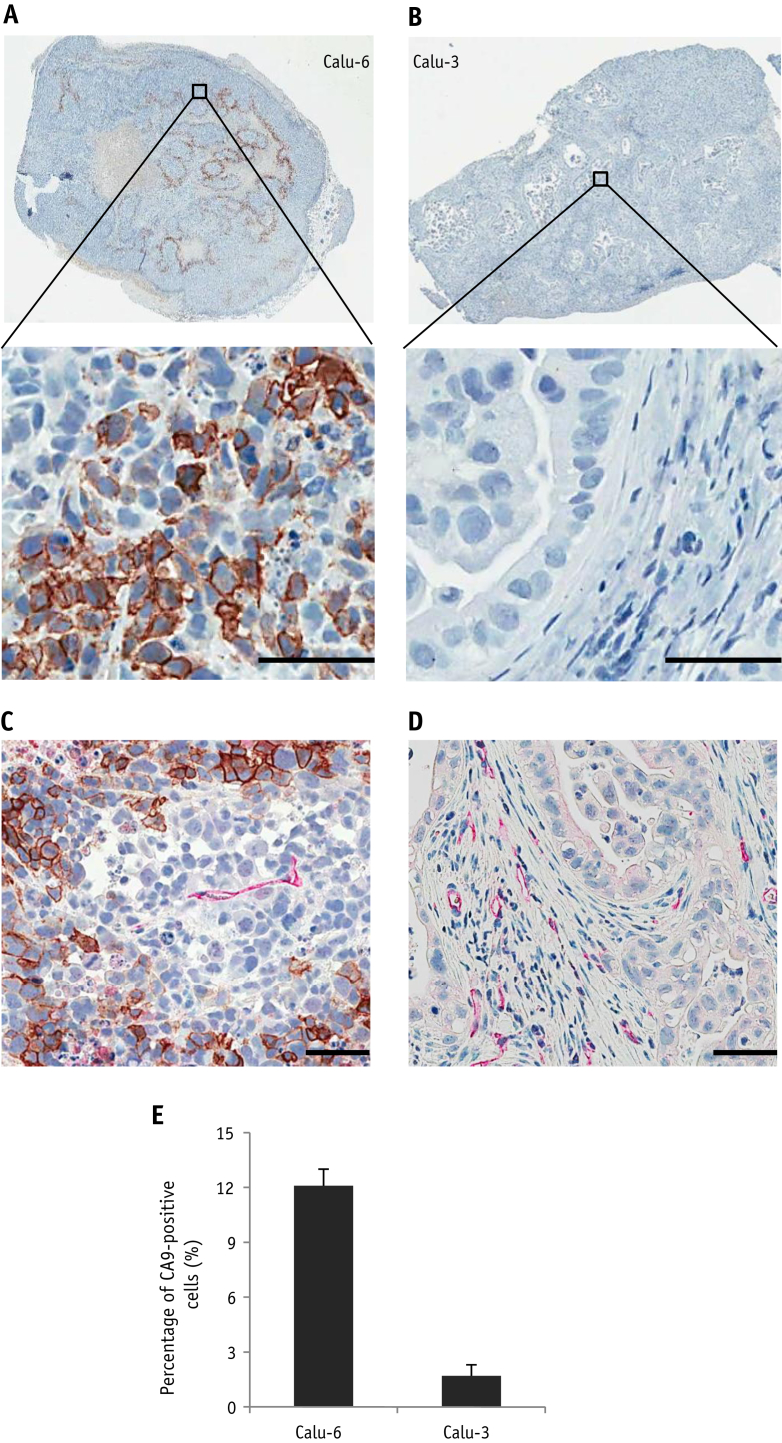
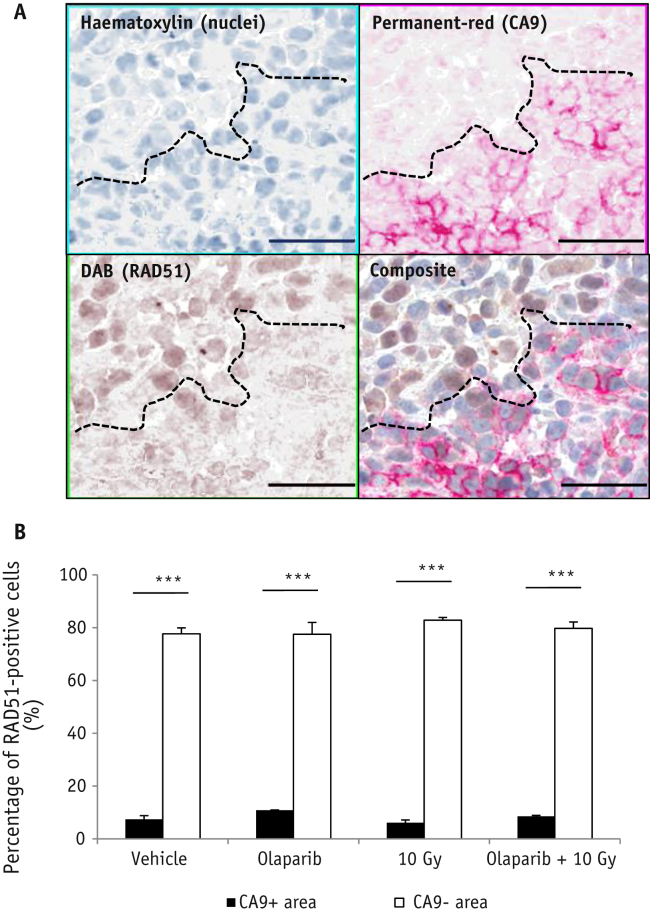
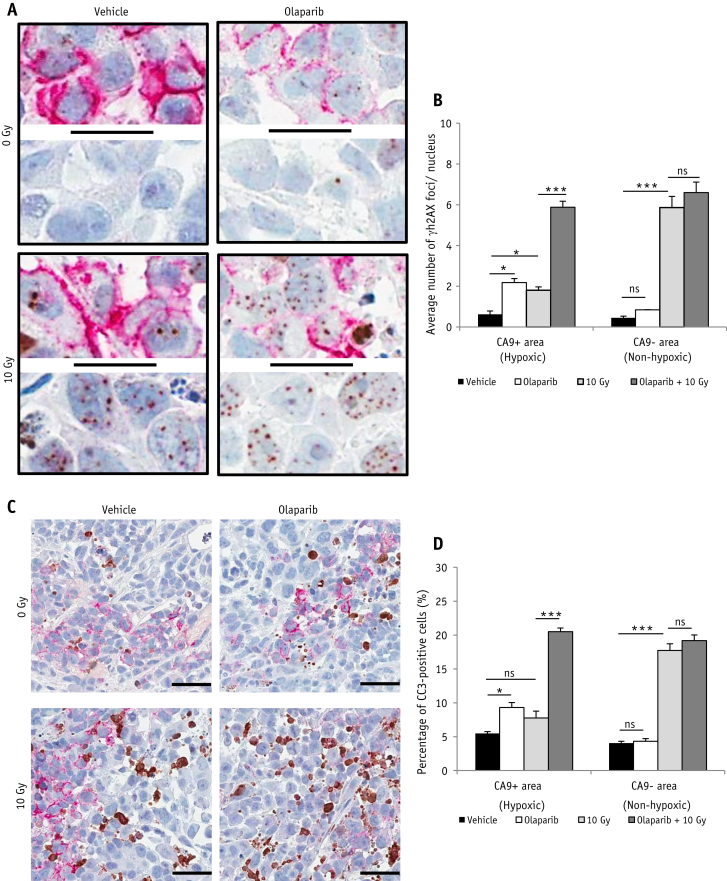
NSCLC Calu-6 and Calu-3 cells were irradiated in the presence of olaparib or vehicle under normoxic (21% O2) or hypoxic (1% O2) conditions. In vitro radiosensitivity was assessed by clonogenic survival assay and γH2AX foci assay. Established Calu-6 and Calu-3 subcutaneous xenografts were treated with olaparib (50 mg/kg, daily for 3 days), radiation (10 Gy), or both. Tumors (n=3/group) were collected 24 or 72 hours after the first treatment. Immunohistochemistry was performed to assess hypoxia (carbonic anhydrase IX [CA9]), vessels (CD31), DNA double strand breaks (DSB) (γH2AX), and apoptosis (cleaved caspase 3 [CC3]). The remaining xenografts (n=6/group) were monitored for tumor growth.
In vitro, olaparib showed a greater radiation-sensitizing effect in Calu-3 and Calu-6 cells in hypoxic conditions (1% O2). In vivo, Calu-3 tumors were well-oxygenated, whereas Calu-6 tumors had extensive regions of hypoxia associated with down-regulation of the homologous recombination protein RAD51. Olaparib treatment increased unrepaired DNA DSB (P<.001) and apoptosis (P<.001) in hypoxic cells of Calu-6 tumors following radiation, whereas it had no significant effect on radiation-induced DNA damage response in nonhypoxic cells of Calu-6 tumors or in the tumor cells of well-oxygenated Calu-3 tumors. Consequently, olaparib significantly increased radiation-induced growth inhibition in Calu-6 tumors (P<.001) but not in Calu-3 tumors.
Our data suggest that hypoxia potentiates the radiation-sensitizing effects of olaparib by contextual synthetic killing, and that tumor hypoxia may be a potential biomarker for selecting patients who may get the greatest benefit from the addition of olaparib to radiation therapy.
聚(ADP - 核糖)聚合酶(PARP)抑制剂在人非小细胞肺癌(NSCLC)及其他类型癌症的临床前模型中可增强放射治疗效果。然而,体内放射增敏的潜在机制尚未完全明确。在此,我们在人NSCLC异种移植模型中研究了缺氧对PARP抑制剂奥拉帕利放射增敏作用的影响。
NSCLC的Calu - 6和Calu - 3细胞在常氧(21% O₂)或低氧(1% O₂)条件下,于奥拉帕利或溶媒存在的情况下接受照射。通过克隆形成存活试验和γH2AX焦点试验评估体外放射敏感性。已建立的Calu - 6和Calu - 3皮下异种移植瘤分别接受奥拉帕利(50 mg/kg,每日给药3天)、放疗(10 Gy)或两者联合治疗。首次治疗后24或72小时收集肿瘤(每组n = 3)。进行免疫组织化学检测以评估缺氧情况(碳酸酐酶IX [CA9])、血管(CD31)、DNA双链断裂(DSB)(γH2AX)和凋亡(裂解的半胱天冬酶3 [CC3])。对其余异种移植瘤(每组n = 6)进行肿瘤生长监测。
在体外,奥拉帕利在低氧条件(1% O₂)下对Calu - 3和Calu - 6细胞显示出更大的放射增敏作用。在体内,Calu - 3肿瘤氧合良好,而Calu - 6肿瘤存在广泛的缺氧区域,且与同源重组蛋白RAD51的下调有关。奥拉帕利治疗使放疗后Calu - 6肿瘤低氧细胞中未修复的DNA DSB(P <.001)和凋亡(P <.001)增加,而对Calu - 6肿瘤非低氧细胞或氧合良好的Calu - 3肿瘤细胞中的放射诱导DNA损伤反应无显著影响。因此,奥拉帕利显著增强了放疗对Calu - 6肿瘤的生长抑制作用(P <.001),但对Calu - 3肿瘤无此作用。
我们的数据表明,缺氧通过情境性合成致死增强了奥拉帕利的放射增敏作用,且肿瘤缺氧可能是选择可能从放疗联合奥拉帕利中获益最大的患者的潜在生物标志物。