Flynn Kenneth M, Dowell Gabrielle, Johnson Thomas M, Koestler Benjamin J, Waters Christopher M, Cooper Vaughn S
Department of Molecular, Cellular, and Biomedical Sciences, University of New Hampshire, Durham, New Hampshire, USA.
Department of Microbiology and Molecular Genetics, Michigan State University, East Lansing, Michigan, USA.
J Bacteriol. 2016 Sep 9;198(19):2608-18. doi: 10.1128/JB.00048-16. Print 2016 Oct 1.
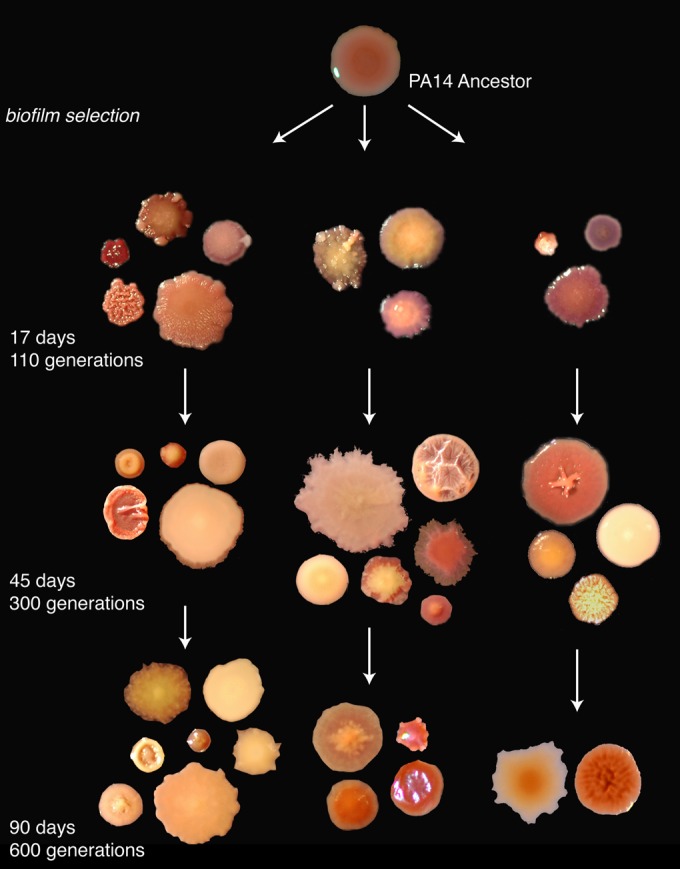
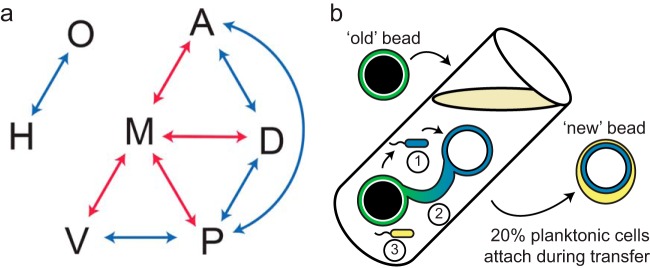
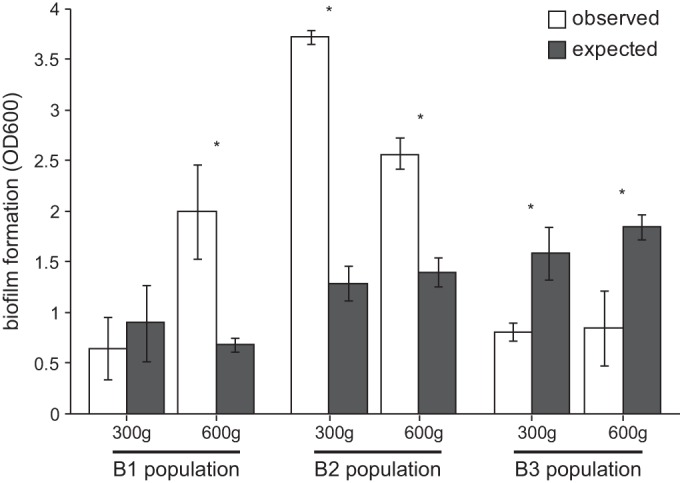
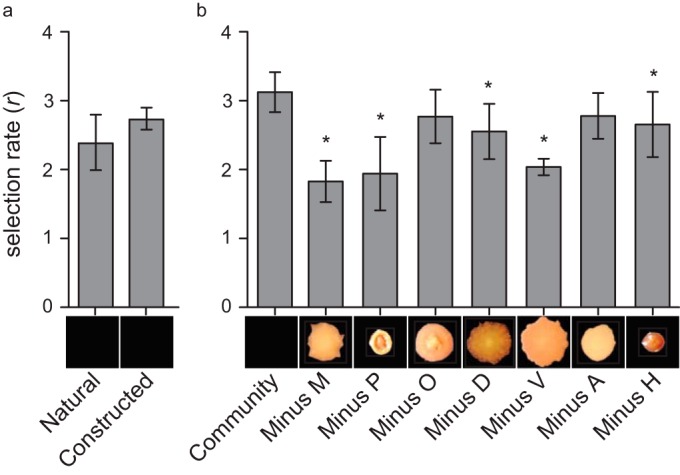
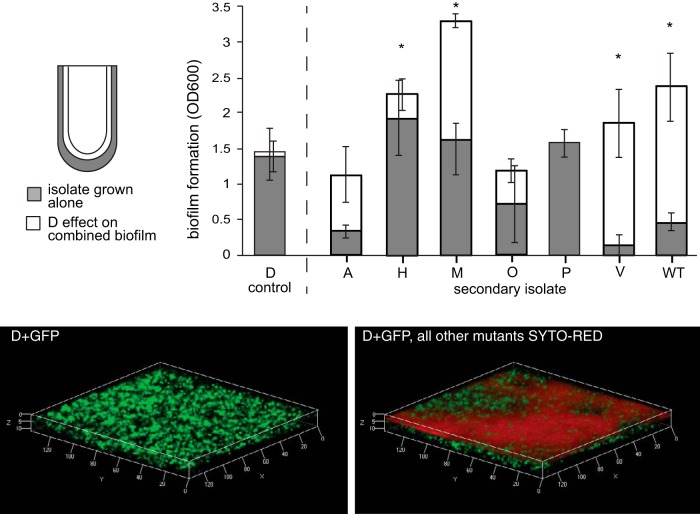
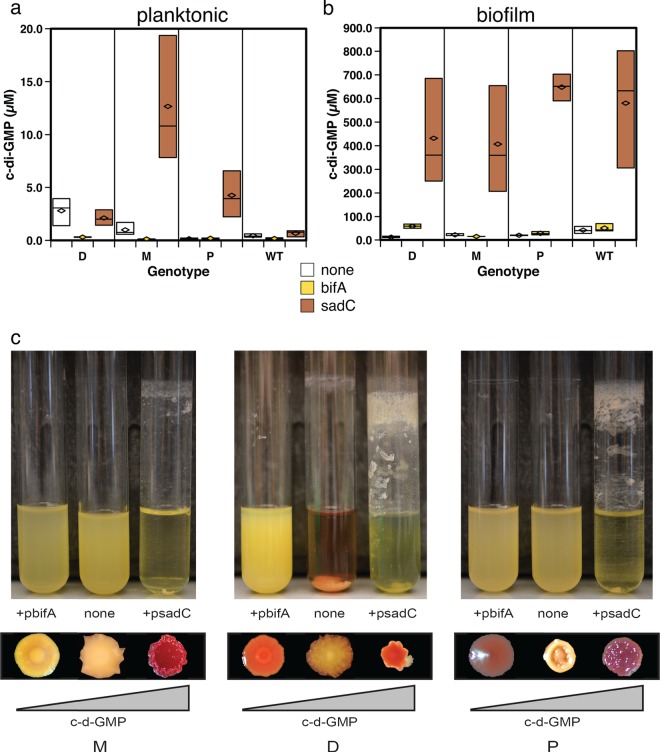
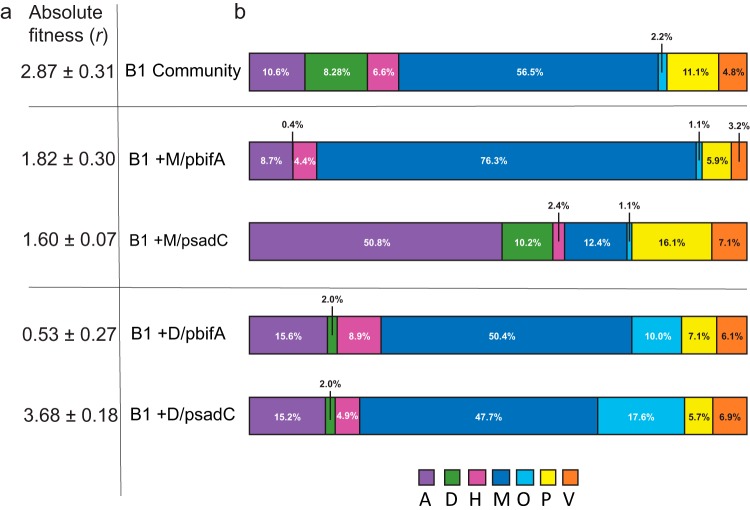
The ecological and evolutionary forces that promote and maintain diversity in biofilms are not well understood. To quantify these forces, three Pseudomonas aeruginosa populations were experimentally evolved from strain PA14 in a daily cycle of attachment, assembly, and dispersal for 600 generations. Each biofilm population evolved diverse colony morphologies and mutator genotypes defective in DNA mismatch repair. This diversity enhanced population fitness and biofilm output, owing partly to rare, early colonizing mutants that enhanced attachment of others. Evolved mutants exhibited various levels of the intracellular signal cyclic-di-GMP, which associated with their timing of adherence. Manipulating cyclic-di-GMP levels within individual mutants revealed a network of interactions in the population that depended on various attachment strategies related to this signal. Diversification in biofilms may therefore arise and be reinforced by initial colonists that enable community assembly.
How biofilm diversity assembles, evolves, and contributes to community function is largely unknown. This presents a major challenge for understanding evolution during chronic infections and during the growth of all surface-associated microbes. We used experimental evolution to probe these dynamics and found that diversity, partly related to altered cyclic-di-GMP levels, arose and persisted due to the emergence of ecological interdependencies related to attachment patterns. Clonal isolates failed to capture population attributes, which points to the need to account for diversity in infections. More broadly, this study offers an experimental framework for linking phenotypic variation to distinct ecological strategies in biofilms and for studying eco-evolutionary interactions.
促进和维持生物膜多样性的生态和进化力量尚未得到充分理解。为了量化这些力量,从PA14菌株实验性地进化出三个铜绿假单胞菌群体,使其在附着、组装和分散的每日循环中进化600代。每个生物膜群体都进化出了不同的菌落形态和DNA错配修复缺陷的突变基因型。这种多样性提高了群体适应性和生物膜产量,部分原因是罕见的早期定殖突变体增强了其他个体的附着。进化出的突变体表现出不同水平的细胞内信号环二鸟苷酸(cyclic-di-GMP),这与其黏附时间有关。在单个突变体内操纵环二鸟苷酸水平揭示了群体中的一个相互作用网络,该网络取决于与该信号相关的各种附着策略。因此,生物膜中的多样性可能由能够实现群落组装的初始定殖者产生并得到加强。
生物膜多样性如何组装、进化并对群落功能做出贡献在很大程度上尚不清楚。这对理解慢性感染期间以及所有与表面相关的微生物生长过程中的进化构成了重大挑战。我们使用实验进化来探究这些动态,发现部分与环二鸟苷酸水平改变相关的多样性因与附着模式相关的生态相互依赖性的出现而产生并持续存在。克隆分离株未能捕捉到群体属性,这表明在感染研究中需要考虑多样性。更广泛地说,这项研究提供了一个实验框架,用于将表型变异与生物膜中不同的生态策略联系起来,并用于研究生态进化相互作用。