Saeed Mesha, van Brakel Mandy, Zalba Sara, Schooten Erik, Rens Joost A P, Koning Gerben A, Debets Reno, Ten Hagen Timo L M
Laboratory of Experimental Surgical Oncology, Section Surgical Oncology, Department of Surgery, Erasmus MC, Rotterdam, the Netherlands.
Laboratory of Tumor Immunology, Department of Medical Oncology, Erasmus MC Cancer Institute, Rotterdam, the Netherlands.
Int J Nanomedicine. 2016 Mar 8;11:955-75. doi: 10.2147/IJN.S96123. eCollection 2016.
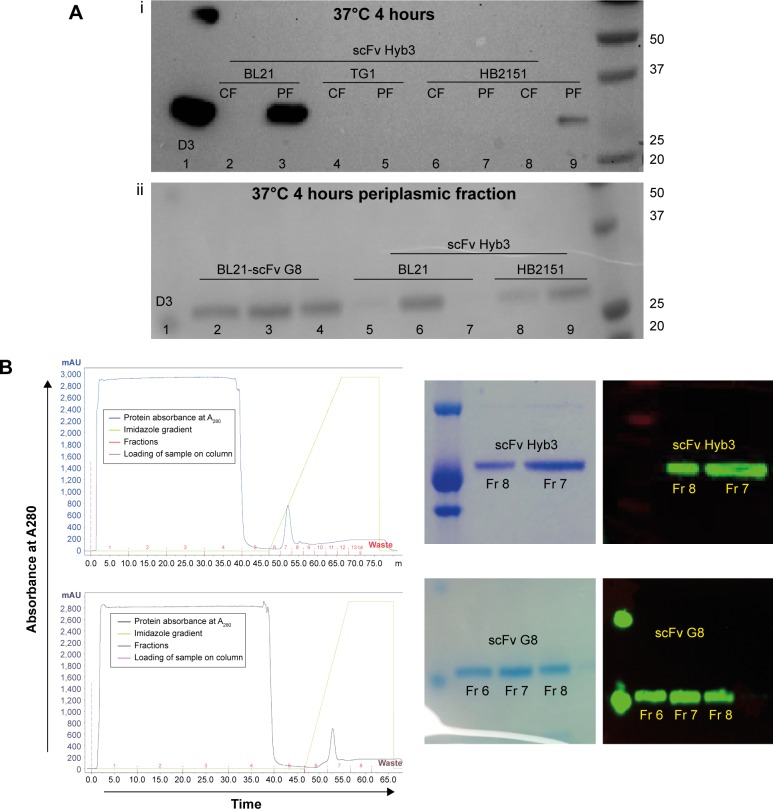
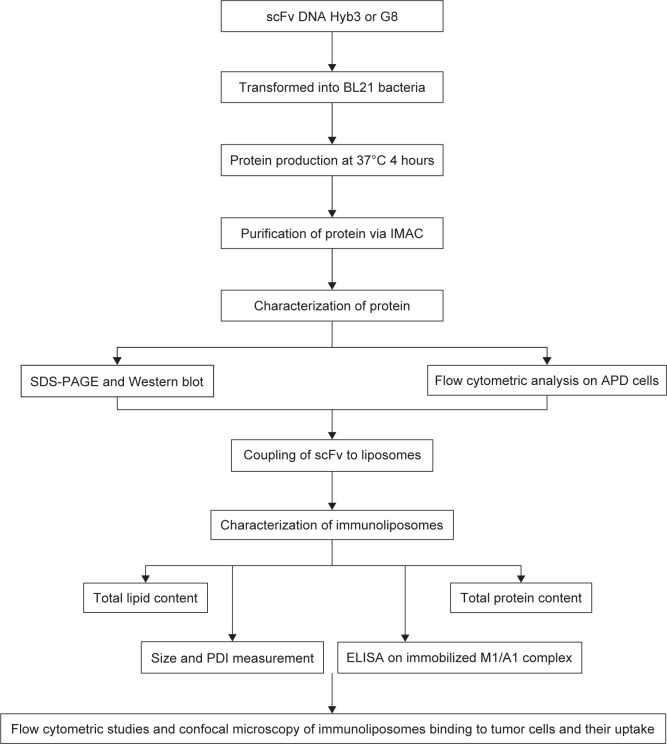
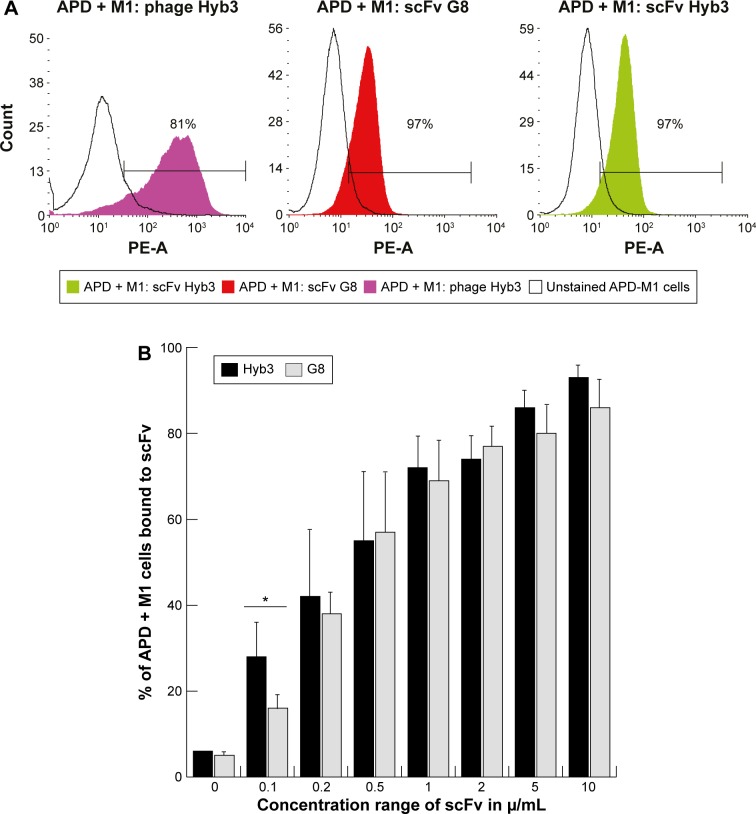
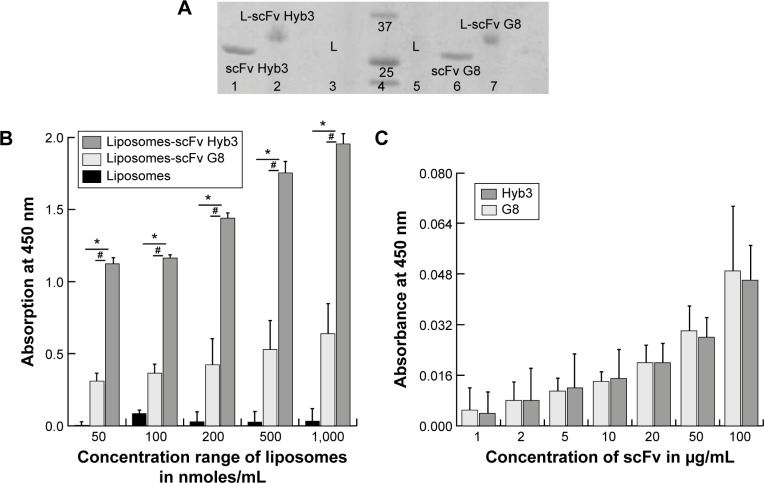
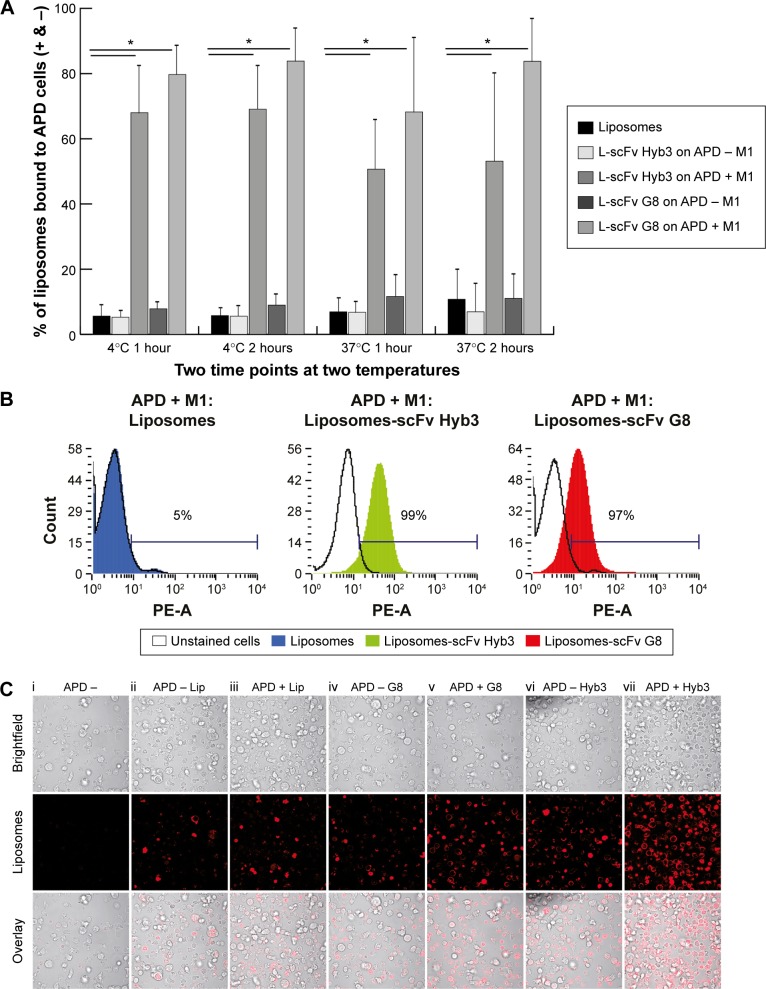
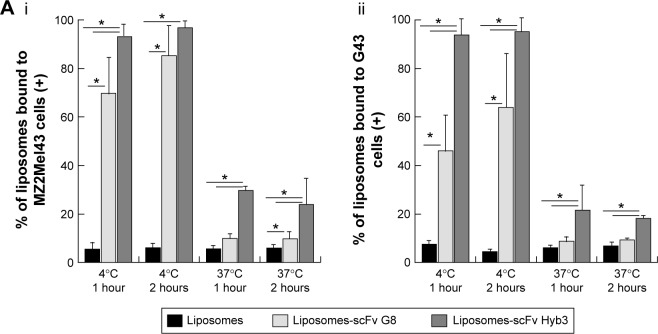
Therapy of melanoma using T-cells with genetically introduced T-cell receptors (TCRs) directed against a tumor-selective cancer testis antigen (CTA) NY-ESO1 demonstrated clear antitumor responses in patients without side effects. Here, we exploited the concept of TCR-mediated targeting through introduction of single-chain variable fragment (scFv) antibodies that mimic TCRs in binding major histocompatibility complex-restricted CTA. We produced scFv antibodies directed against Melanoma AntiGEn A1 (MAGE A1) presented by human leukocyte antigen A1 (HLA-A1), in short M1/A1, and coupled these TCR-like antibodies to liposomes to achieve specific melanoma targeting. Two anti-M1/A1 antibodies with different ligand-binding affinities were derived from a phage-display library and reformatted into scFvs with an added cysteine at their carboxyl termini. Protein production conditions, ie, bacterial strain, temperature, time, and compartments, were optimized, and following production, scFv proteins were purified by immobilized metal ion affinity chromatography. Batches of pure scFvs were validated for specific binding to M1/A1-positive B-cells by flow cytometry. Coupling of scFvs to liposomes was conducted by employing different conditions, and an optimized procedure was achieved. In vitro experiments with immunoliposomes demonstrated binding of M1/A1-positive B-cells as well as M1/A1-positive melanoma cells and internalization by these cells using flow cytometry and confocal microscopy. Notably, the scFv with nonenhanced affinity of M1/A1, but not the one with enhanced affinity, was exclusively bound to and internalized by melanoma tumor cells expressing M1/A1. Taken together, antigen-mediated targeting of tumor cells as well as promoting internalization of nanoparticles by these tumor cells is mediated by TCR-like scFv and can contribute to melanoma-specific targeting.
使用基因导入针对肿瘤选择性癌胚抗原(CTA)NY-ESO1的T细胞受体(TCR)的T细胞治疗黑色素瘤,在患者中显示出明显的抗肿瘤反应且无副作用。在此,我们通过引入模仿TCR结合主要组织相容性复合体限制的CTA的单链可变片段(scFv)抗体,利用TCR介导的靶向概念。我们制备了针对由人类白细胞抗原A1(HLA-A1)呈递的黑色素瘤抗原A1(MAGE A1)的scFv抗体,简称为M1/A1,并将这些类似TCR的抗体偶联到脂质体上以实现黑色素瘤的特异性靶向。从噬菌体展示文库中获得了两种具有不同配体结合亲和力的抗M1/A1抗体,并将其重新格式化为在羧基末端添加了半胱氨酸的scFv。优化了蛋白质生产条件,即细菌菌株、温度、时间和隔室,生产后,通过固定化金属离子亲和色谱法纯化scFv蛋白。通过流式细胞术验证了纯化的scFv批次与M1/A1阳性B细胞的特异性结合。采用不同条件将scFv偶联到脂质体上,并实现了优化程序。使用流式细胞术和共聚焦显微镜对免疫脂质体进行的体外实验表明,M1/A1阳性B细胞以及M1/A1阳性黑色素瘤细胞与免疫脂质体结合并被这些细胞内化。值得注意的是,具有非增强型M1/A1亲和力的scFv,而不是具有增强型亲和力的scFv,仅与表达M1/A1的黑色素瘤肿瘤细胞结合并被其内化。综上所述,抗原介导的肿瘤细胞靶向以及促进这些肿瘤细胞对纳米颗粒的内化是由类似TCR的scFv介导的,并且有助于黑色素瘤的特异性靶向。