Canella Richard Prazeres, de Alencar Paulo Gilberto Cimbalista, Ganev Gerson Gandhi, de Vincenzi Luiz Fernando
Orthopedist; Postgraduate of Hip and Knee Surgery from HC-UFPR. Preceptor of Medical Residence in Orthopedics and Traumatology and member of the Hip Surgery Group, HGCR, Florianópolis, SC.
MSc. Orthopedist and Head of the Hip and Knee Surgery Group, Hospital de Clínicas, UFPR, Curitiba, PR.
Rev Bras Ortop. 2015 Nov 17;45(3):279-85. doi: 10.1016/S2255-4971(15)30369-4. eCollection 2010 May-Jun.
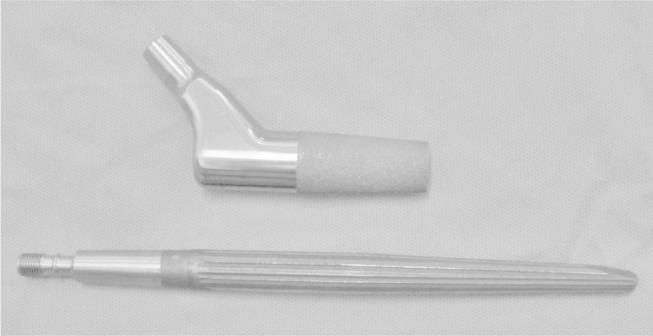
To evaluate the clinical and radiographic results from 30 cases of revision of total hip arthroplasty using a modular cementless distal fixation prosthesis: the ZMR(®) Hip System.
Between July 2005 and December 2008, 30 operations were performed, on 14 men and 14 women. Two male patients had bilateral surgery. The mean age was 59.2 years (29-81 years), with a mean follow-up of 24 months. The Paprosky classification was used for periprosthetic bone loss, and the Harris Hip Score (HHS) was used to evaluate clinical results. On radiographs, distal migration of the femoral stem was defined in accordance with Sporer. Proximal bone remodeling was classified using the Callaghan criteria.
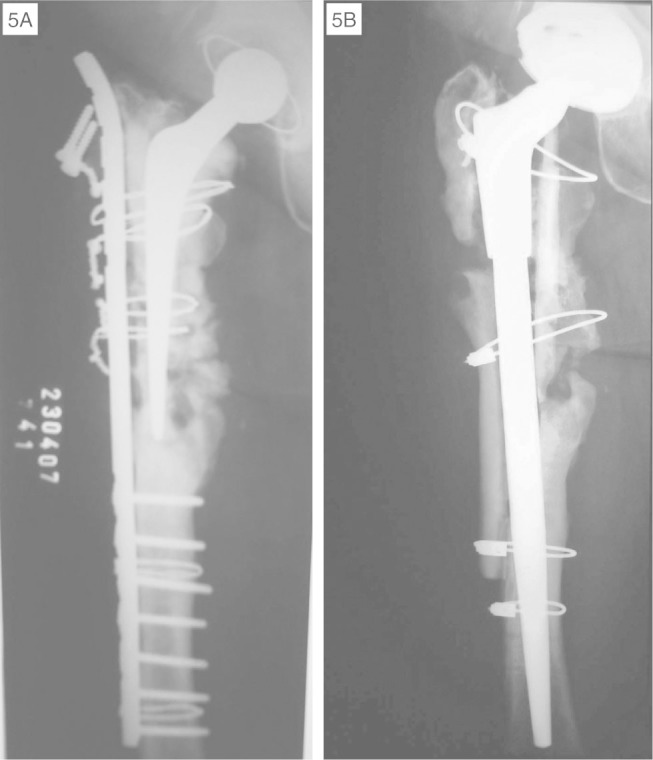
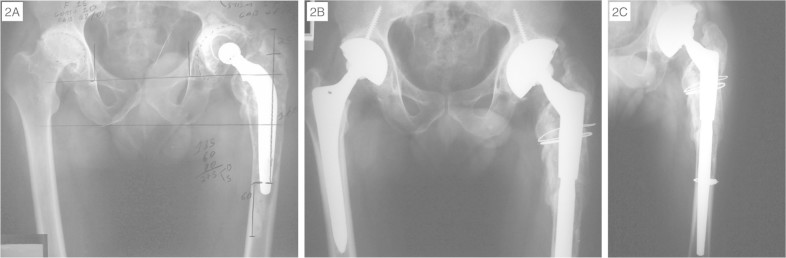
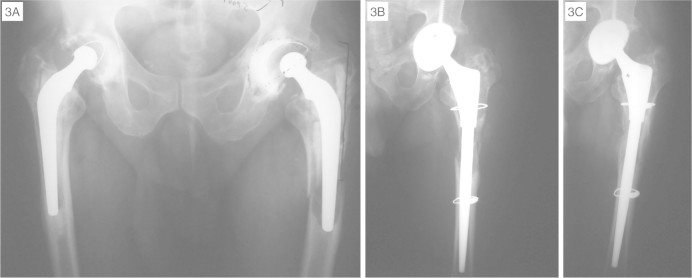
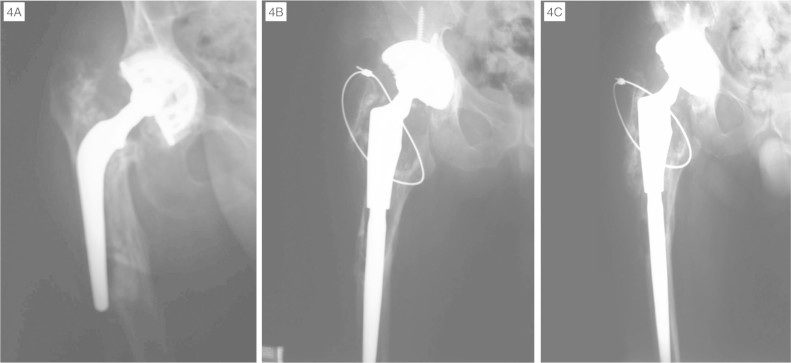
The mean preoperative HHS was 39, and there was a significant increase to 93 points in the final evaluation, which indicated excellent clinical results. No femoral stem migration greater than 5 mm (Sporer) was observed on radiographs, thus suggesting that all the femoral prostheses presented osseointegration and remained stable from the time of the surgery until the final evaluation. The proximal femoral remodeling was either type B or type C in 29 hips, according to Callaghan. Seven patients had complications, but without interfering with osseointegration of the femoral components.
Our results from revision of total hip arthroplasty using the ZMR(®) Hip System were extremely encouraging, and all the components became osseointegrated and remained fixed at the time of the final evaluation.
评估使用模块化非骨水泥远端固定假体ZMR(®)髋关节系统对30例全髋关节置换翻修术的临床和影像学结果。
2005年7月至2008年12月期间,共进行了30例手术,其中男性14例,女性14例。两名男性患者接受了双侧手术。平均年龄为59.2岁(29 - 81岁),平均随访24个月。采用Paprosky分类法评估假体周围骨丢失情况,使用Harris髋关节评分(HHS)评估临床结果。在X线片上,根据Sporer的标准定义股骨柄的远端移位。使用Callaghan标准对近端骨重塑进行分类。
术前HHS平均为39分,最终评估时显著提高至93分,表明临床结果优异。X线片上未观察到股骨柄移位大于5 mm(Sporer标准),这表明所有股骨假体均实现了骨整合,并且从手术时直至最终评估时均保持稳定。根据Callaghan标准,29个股骨近端重塑为B型或C型。7例患者出现并发症,但未影响股骨部件的骨整合。
我们使用ZMR(®)髋关节系统进行全髋关节置换翻修术的结果非常令人鼓舞,所有组件均实现了骨整合,并且在最终评估时保持固定。