Centre d'Ingénierie des Protéines, University of Liège, B6a, Quartier Agora, allée du six Août 11, 4000 Liège 1, Belgium.
Antibiotics (Basel). 2016 Feb 17;5(1):12. doi: 10.3390/antibiotics5010012.
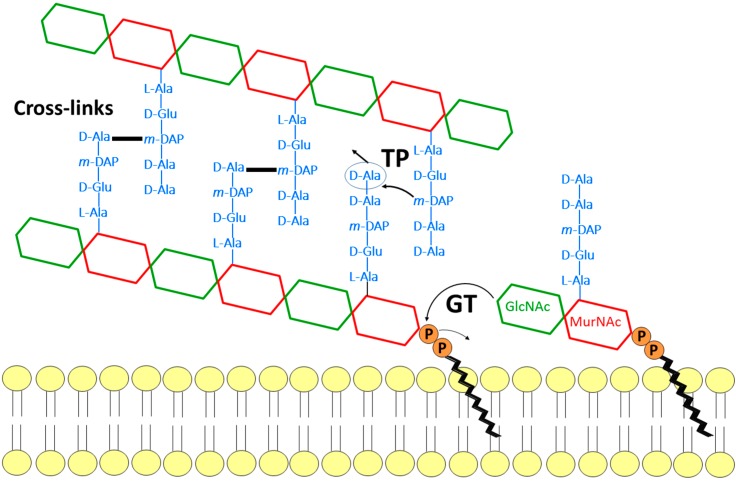
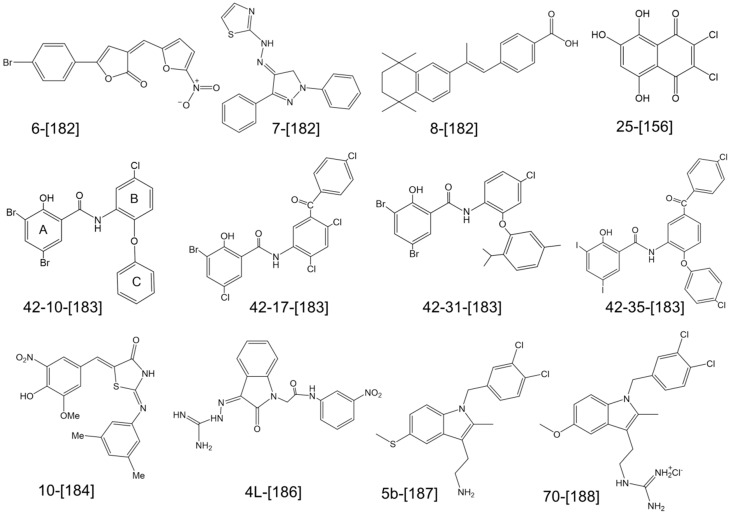
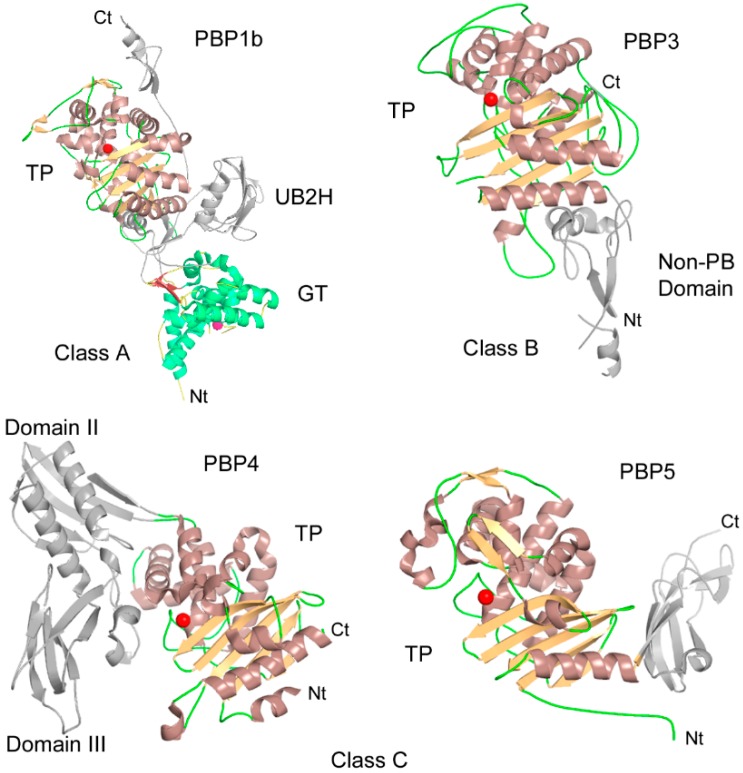
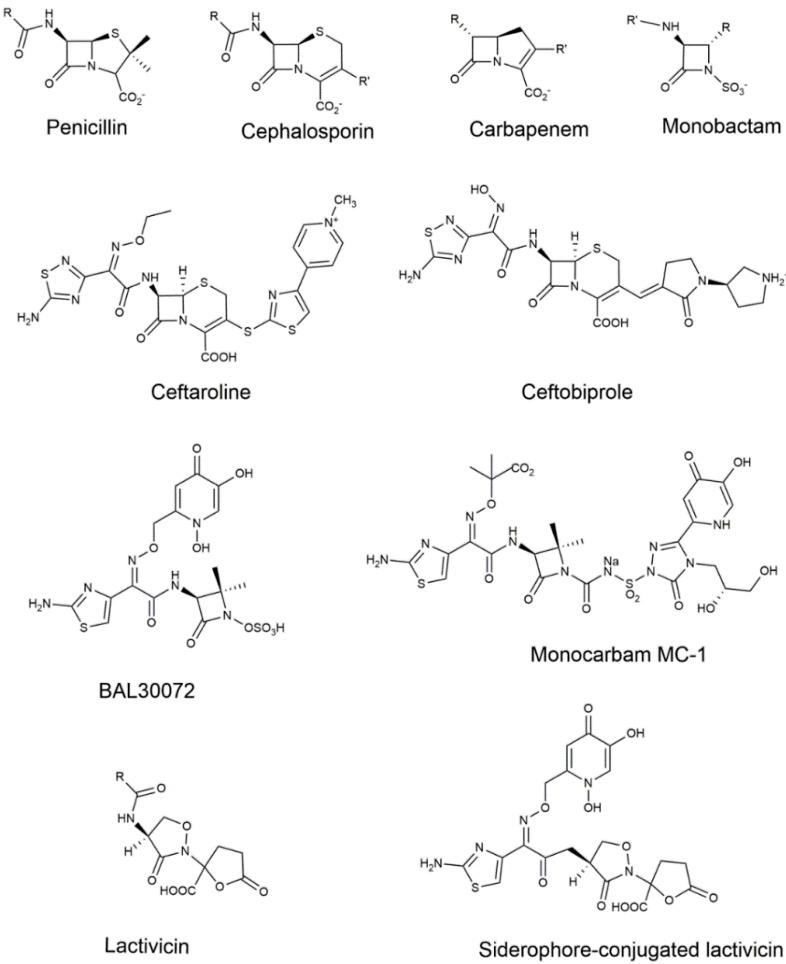
Peptidoglycan (PG) is an essential macromolecular sacculus surrounding most bacteria. It is assembled by the glycosyltransferase (GT) and transpeptidase (TP) activities of multimodular penicillin-binding proteins (PBPs) within multiprotein complex machineries. Both activities are essential for the synthesis of a functional stress-bearing PG shell. Although good progress has been made in terms of the functional and structural understanding of GT, finding a clinically useful antibiotic against them has been challenging until now. In contrast, the TP/PBP module has been successfully targeted by β-lactam derivatives, but the extensive use of these antibiotics has selected resistant bacterial strains that employ a wide variety of mechanisms to escape the lethal action of these antibiotics. In addition to traditional β-lactams, other classes of molecules (non-β-lactams) that inhibit PBPs are now emerging, opening new perspectives for tackling the resistance problem while taking advantage of these valuable targets, for which a wealth of structural and functional knowledge has been accumulated. The overall evidence shows that PBPs are part of multiprotein machineries whose activities are modulated by cofactors. Perturbation of these systems could lead to lethal effects. Developing screening strategies to take advantage of these mechanisms could lead to new inhibitors of PG assembly. In this paper, we present a general background on the GTs and TPs/PBPs, a survey of recent issues of bacterial resistance and a review of recent works describing new inhibitors of these enzymes.
肽聚糖 (PG) 是大多数细菌周围的必需大分子囊。它是由多模块青霉素结合蛋白 (PBP) 的糖基转移酶 (GT) 和转肽酶 (TP) 活性在多蛋白复合物机器中组装的。这两种活性对于合成功能强大的承受压力的 PG 壳都是必不可少的。尽管在 GT 的功能和结构理解方面取得了很好的进展,但迄今为止,寻找一种针对它们的临床有用的抗生素一直具有挑战性。相比之下,TP/PBP 模块已被β-内酰胺衍生物成功靶向,但这些抗生素的广泛使用已经选择了具有多种机制的耐药细菌菌株,这些机制可逃避这些抗生素的致命作用。除了传统的β-内酰胺类药物外,现在还出现了其他抑制 PBP 的分子类别(非β-内酰胺类),为解决耐药问题开辟了新的前景,同时利用了这些有价值的靶点,这些靶点积累了丰富的结构和功能知识。总体证据表明,PBP 是多蛋白机器的一部分,其活性受辅因子调节。这些系统的干扰可能导致致命影响。开发利用这些机制的筛选策略可能会导致新的 PG 组装抑制剂。在本文中,我们介绍了 GT 和 TP/PBP 的一般背景、细菌耐药的最新问题调查以及描述这些酶的新抑制剂的最新研究工作的综述。