de Souza Dziedzom K, Yirenkyi Eric, Otchere Joseph, Biritwum Nana-Kwadwo, Ameme Donne K, Sackey Samuel, Ahorlu Collins, Wilson Michael D
Parasitology Department, Noguchi Memorial Institute for Medical Research, University of Ghana, Accra, Ghana.
Ghana Field Epidemiology and Laboratory Training Programme, School of Public Health, University of Ghana, Accra, Ghana.
PLoS Negl Trop Dis. 2016 Mar 30;10(3):e0004590. doi: 10.1371/journal.pntd.0004590. eCollection 2016 Mar.
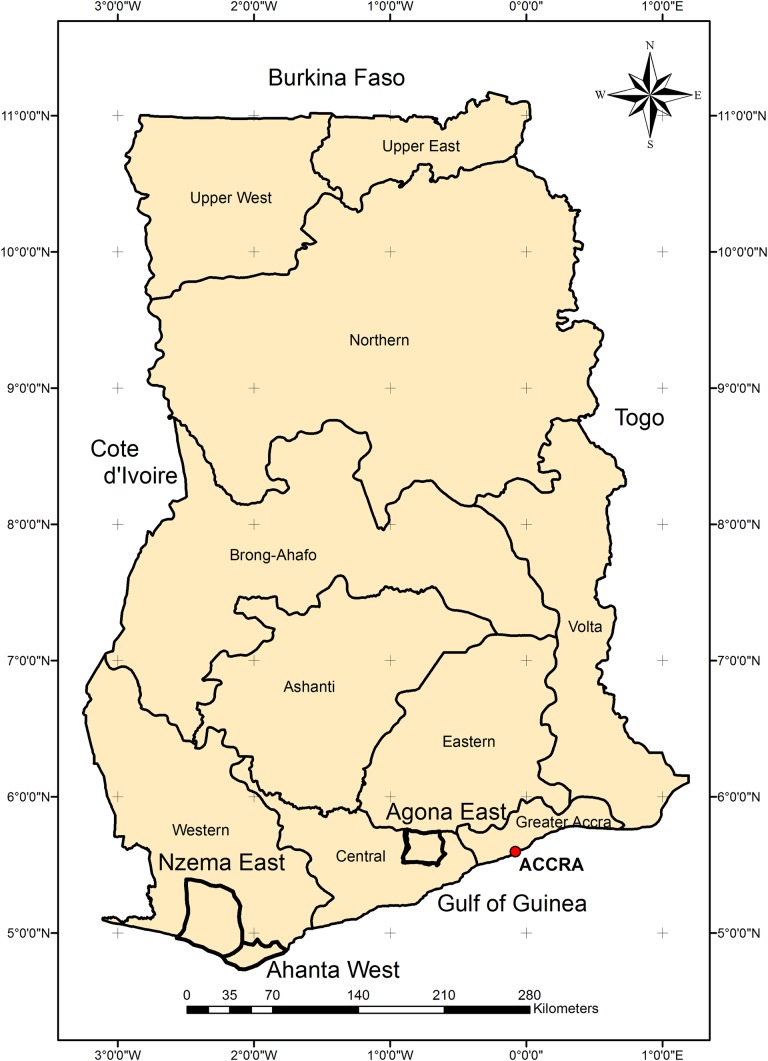
The activities of the Global Programme for the Elimination of Lymphatic Filariasis have been in operation since the year 2000, with Mass Drug Administration (MDA) undertaken yearly in disease endemic communities. Information collected during MDA-such as population demographics, age, sex, drugs used and remaining, and therapeutic and geographic coverage-can be used to assess the quality of the data reported. To assist country programmes in evaluating the information reported, the WHO, in collaboration with NTD partners, including ENVISION/RTI, developed an NTD Data Quality Assessment (DQA) tool, for use by programmes. This study was undertaken to evaluate the tool and assess the quality of data reported in some endemic communities in Ghana.
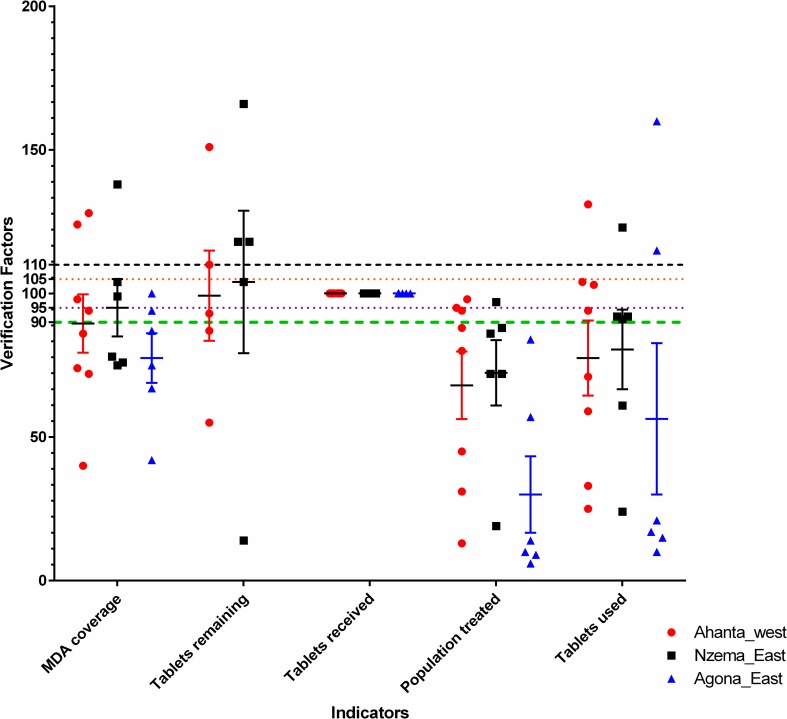
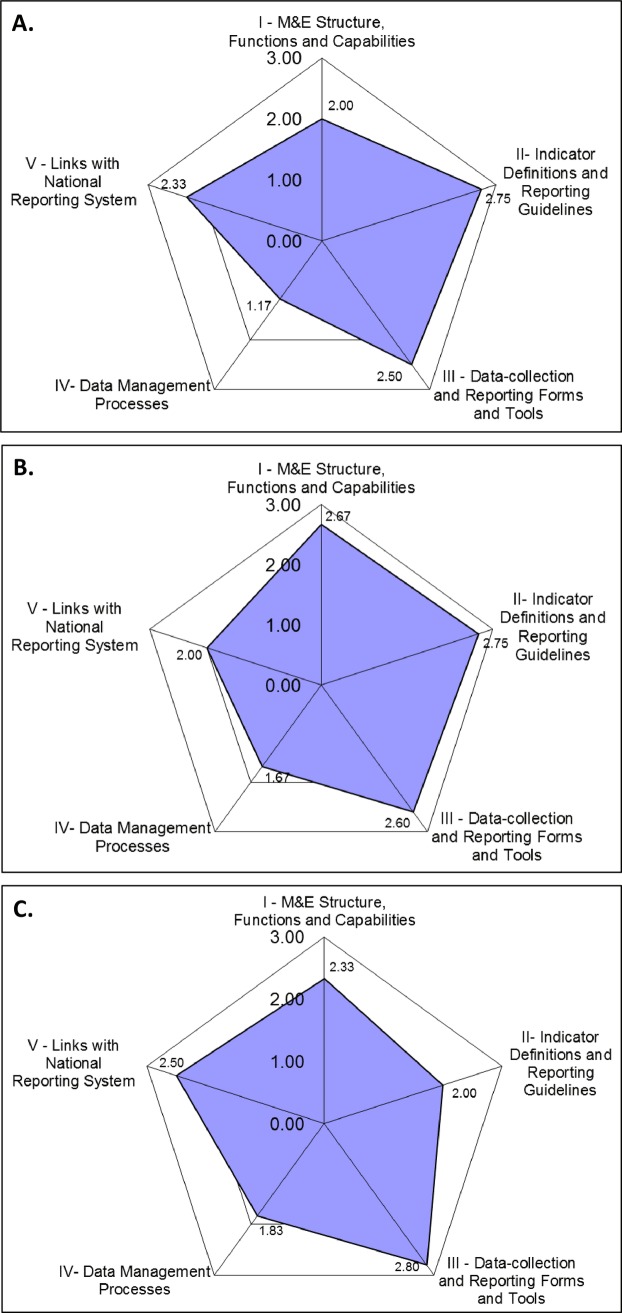
A cross sectional study, involving review of data registers and interview of drug distributors, disease control officers, and health information officers using the NTD DQA tool, was carried out in selected communities in three LF endemic Districts in Ghana. Data registers for service delivery points were obtained from District health office for assessment. The assessment verified reported results in comparison with recounted values for five indicators: number of tablets received, number of tablets used, number of tablets remaining, MDA coverage, and population treated. Furthermore, drug distributors, disease control officers, and health information officers (at the first data aggregation level), were interviewed, using the DQA tool, to determine the performance of the functional areas of the data management system.
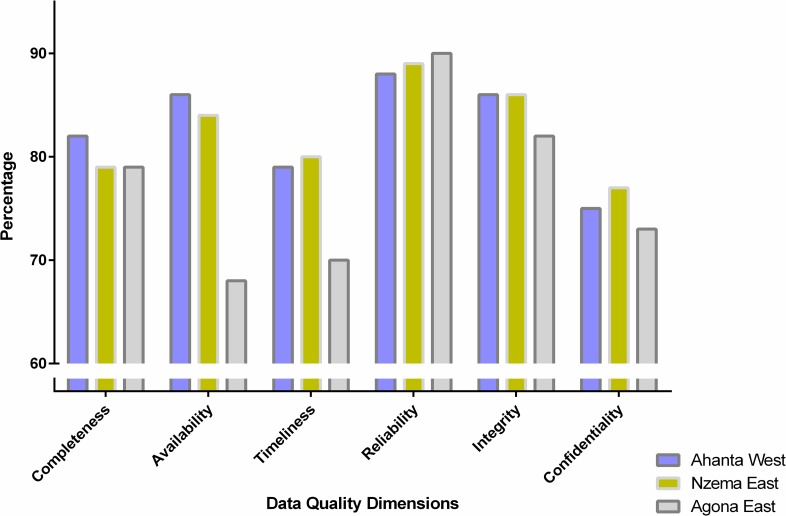
The results showed that over 60% of the data reported were inaccurate, and exposed the challenges and limitations of the data management system. The DQA tool is a very useful monitoring and evaluation (M&E) tool that can be used to elucidate and address data quality issues in various NTD control programmes.
全球消除淋巴丝虫病规划自2000年起开展活动,每年在疾病流行社区进行群体服药(MDA)。在群体服药期间收集的信息,如人口统计学数据、年龄、性别、所用药物及剩余药物、治疗和地理覆盖范围等,可用于评估所报告数据的质量。为协助各国规划评估所报告的信息,世卫组织与包括ENVISION/RTI在内的被忽视热带病伙伴合作,开发了一种被忽视热带病数据质量评估(DQA)工具,供各规划使用。本研究旨在评估该工具,并评估加纳一些流行社区所报告数据的质量。
在加纳三个淋巴丝虫病流行区的选定社区开展了一项横断面研究,使用NTD DQA工具审查数据登记册并访谈药品分发商、疾病控制官员和卫生信息官员。从区卫生办公室获取服务提供点的数据登记册进行评估。该评估将报告结果与五个指标的重新统计值进行比较以核实报告结果,这五个指标为:收到的药片片数、使用的药片片数、剩余的药片片数、群体服药覆盖率和接受治疗的人数。此外,使用DQA工具对药品分发商、疾病控制官员和卫生信息官员(在第一个数据汇总层面)进行访谈,以确定数据管理系统各功能领域的表现。
结果显示,所报告数据中超过60%不准确,并暴露了数据管理系统的挑战和局限性。DQA工具是一种非常有用的监测和评价(M&E)工具,可用于阐明和解决各种被忽视热带病控制规划中的数据质量问题。