Martínez-Pérez Carlos, Ward Carol, Turnbull Arran K, Mullen Peter, Cook Graeme, Meehan James, Jarman Edward J, Thomson Patrick I T, Campbell Colin J, McPhail Donald, Harrison David J, Langdon Simon P
Division of Pathology Laboratories, Institute of Genetics and Molecular Medicine, University of Edinburgh, Western General Hospital, Edinburgh EH4 2XU, UK.
School of Medicine, University of St Andrews, St Andrews KY16 9TF, UK.
Br J Cancer. 2016 Apr 12;114(8):905-16. doi: 10.1038/bjc.2016.6. Epub 2016 Mar 31.
The natural polyphenol myricetin induces cell cycle arrest and apoptosis in preclinical cancer models. We hypothesised that myricetin-derived flavonoids with enhanced redox properties, improved cell uptake and mitochondrial targeting might have increased potential as antitumour agents.
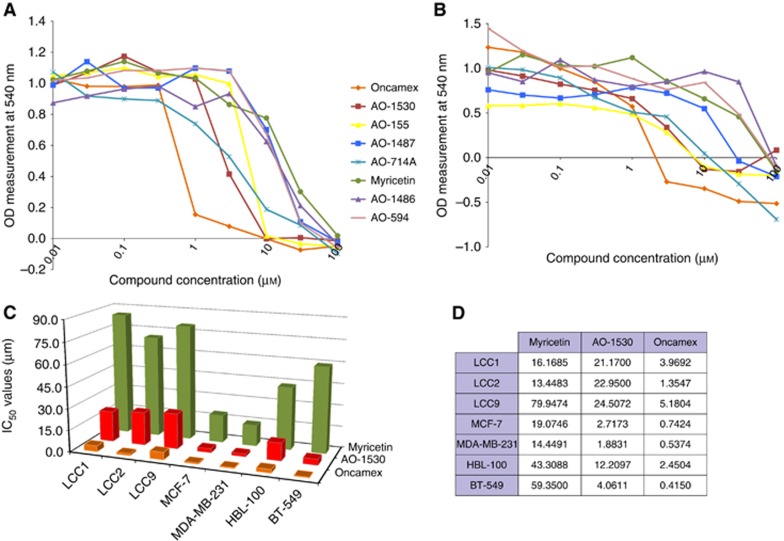
We studied the effect of a second-generation flavonoid analogue Oncamex in a panel of seven breast cancer cell lines, applying western blotting, gene expression analysis, fluorescence microscopy and immunohistochemistry of xenograft tissue to investigate its mechanism of action.
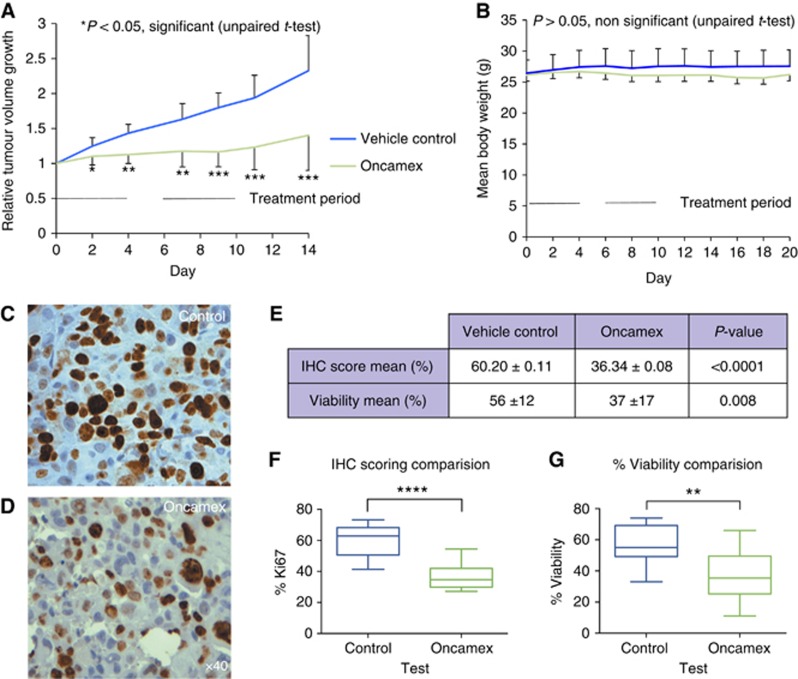
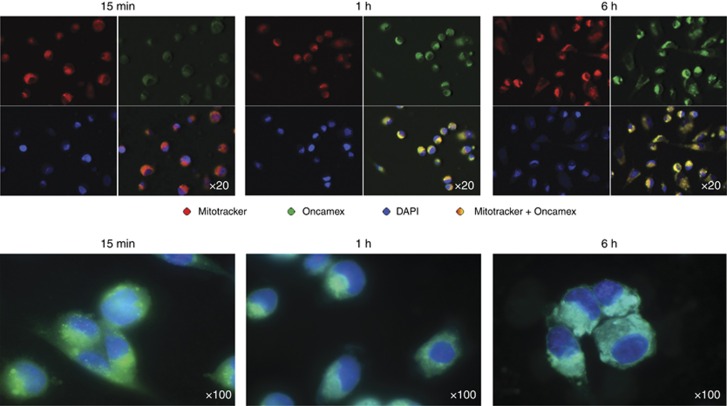
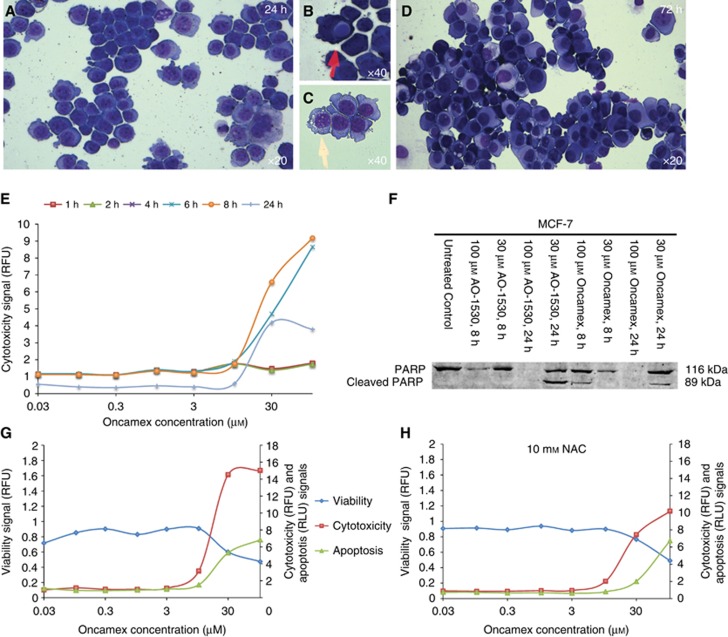
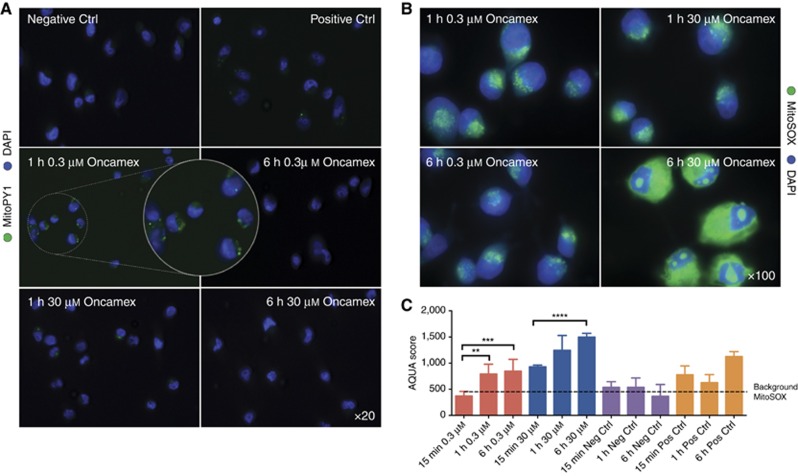
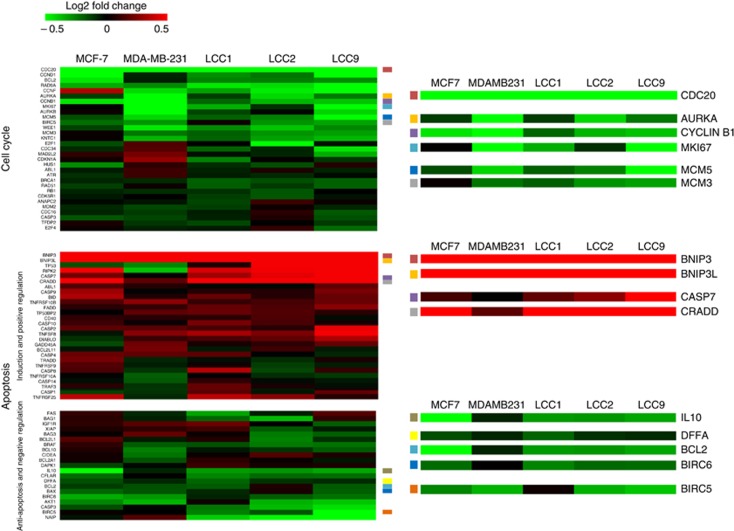
Proliferation assays showed that Oncamex treatment for 8 h reduced cell viability and induced cytotoxicity and apoptosis, concomitant with increased caspase activation. Microarray analysis showed that Oncamex was associated with changes in the expression of genes controlling cell cycle and apoptosis. Fluorescence microscopy showed the compound's mitochondrial targeting and reactive oxygen species-modulating properties, inducing superoxide production at concentrations associated with antiproliferative effects. A preliminary in vivo study in mice implanted with the MDA-MB-231 breast cancer xenograft showed that Oncamex inhibited tumour growth, reducing tissue viability and Ki-67 proliferation, with no signs of untoward effects on the animals.
Oncamex is a novel flavonoid capable of specific mitochondrial delivery and redox modulation. It has shown antitumour activity in preclinical models of breast cancer, supporting the potential of this prototypic candidate for its continued development as an anticancer agent.
天然多酚杨梅素在临床前癌症模型中可诱导细胞周期停滞和凋亡。我们推测,具有增强氧化还原特性、改善细胞摄取和线粒体靶向性的杨梅素衍生类黄酮可能具有更大的抗肿瘤药物潜力。
我们研究了第二代类黄酮类似物Oncamex对一组七种乳腺癌细胞系的作用,应用蛋白质印迹法、基因表达分析、荧光显微镜检查和异种移植组织的免疫组织化学来研究其作用机制。
增殖试验表明,Oncamex处理8小时可降低细胞活力,诱导细胞毒性和凋亡,并伴有半胱天冬酶激活增加。微阵列分析表明,Oncamex与控制细胞周期和凋亡的基因表达变化有关。荧光显微镜检查显示该化合物的线粒体靶向性和活性氧调节特性,在与抗增殖作用相关的浓度下诱导超氧化物产生。对植入MDA-MB-231乳腺癌异种移植物的小鼠进行的初步体内研究表明,Oncamex可抑制肿瘤生长,降低组织活力和Ki-67增殖,且对动物没有不良影响的迹象。
Oncamex是一种新型类黄酮,能够特异性地递送至线粒体并调节氧化还原。它在乳腺癌临床前模型中显示出抗肿瘤活性,支持了这种原型候选物作为抗癌药物继续开发的潜力。