de Brito Silvana Rossy, da Silva Aleksandra do Socorro, Cruz Adejard Gaia, Monteiro Maurílio de Abreu, Vijaykumar Nandamudi Lankalapalli, da Silva Marcelino Silva, Costa João Crisóstomo Weyl Albuquerque, Francês Carlos Renato Lisboa
Cyberspace Institute, Federal Rural University of Amazon, Pará, Brazil.
Institute of Applied Social Sciences, Federal University of Pará, Pará, Brazil.
PLoS One. 2016 Apr 1;11(4):e0152655. doi: 10.1371/journal.pone.0152655. eCollection 2016.
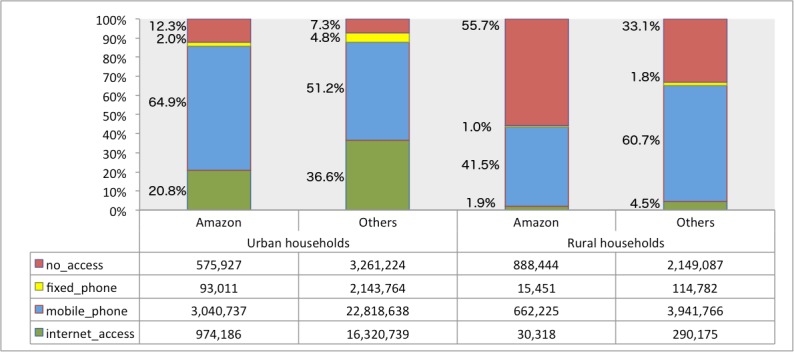
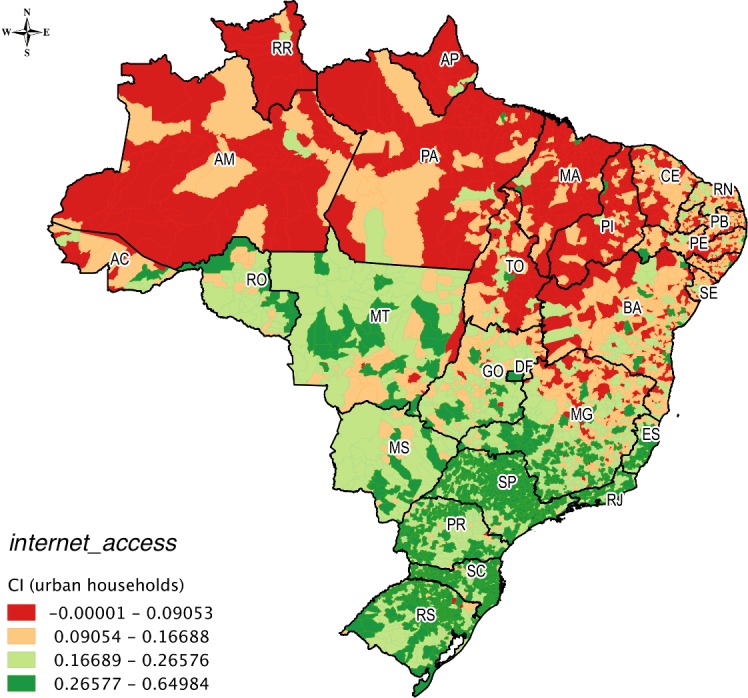
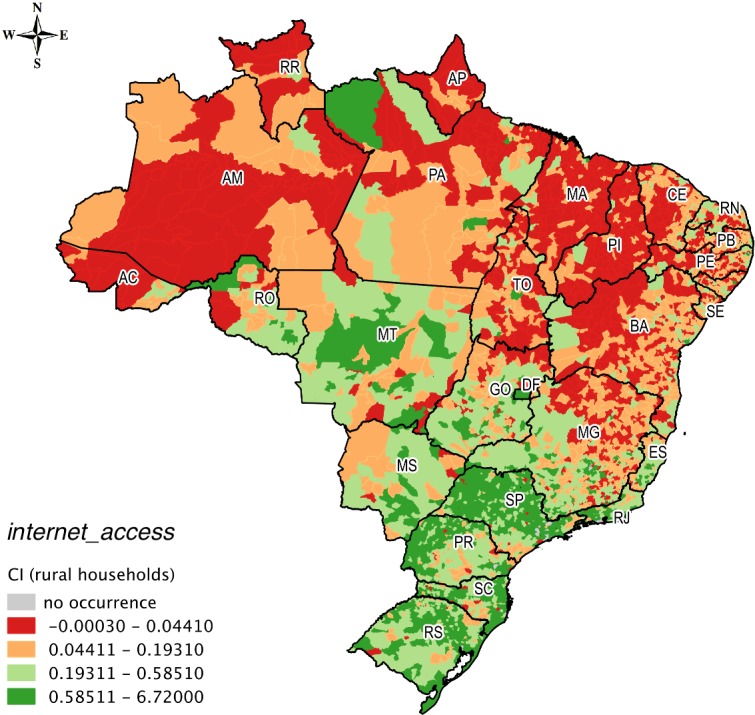
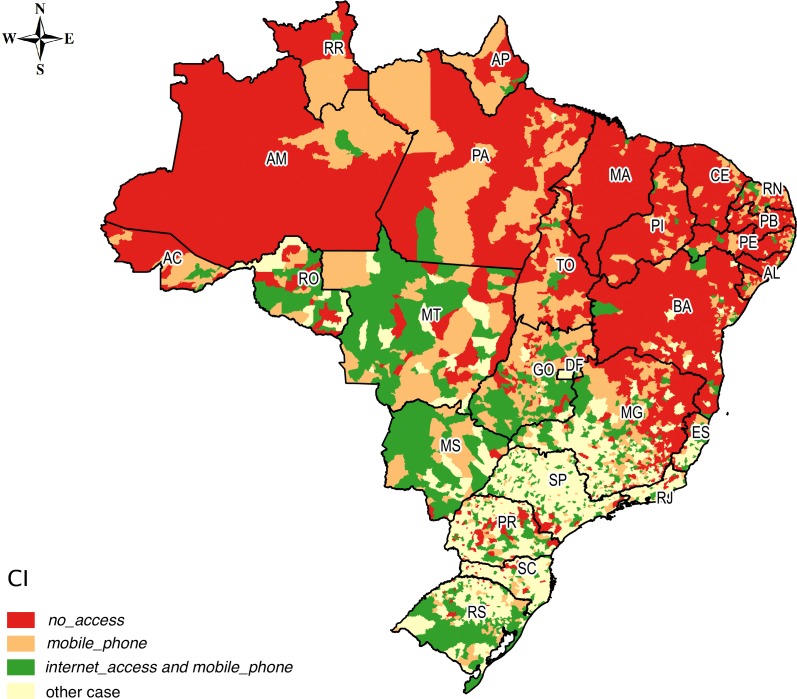
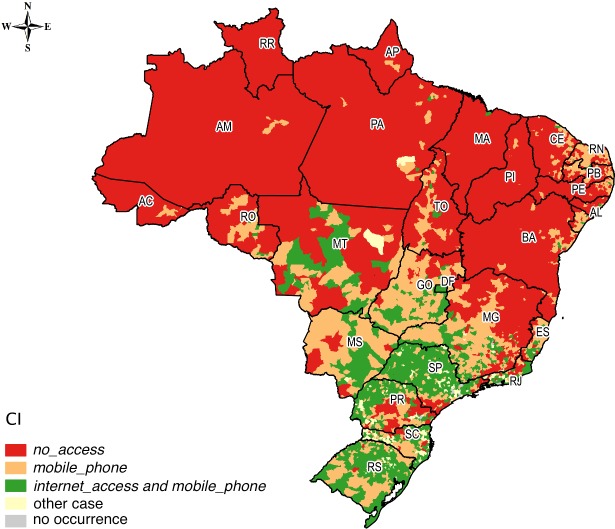
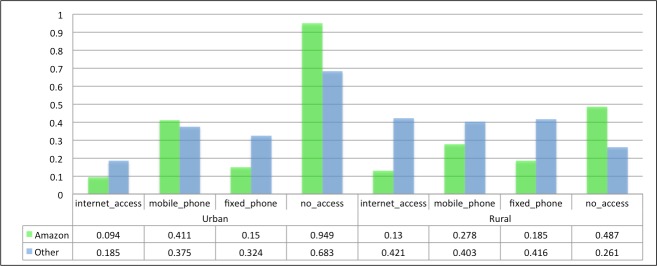
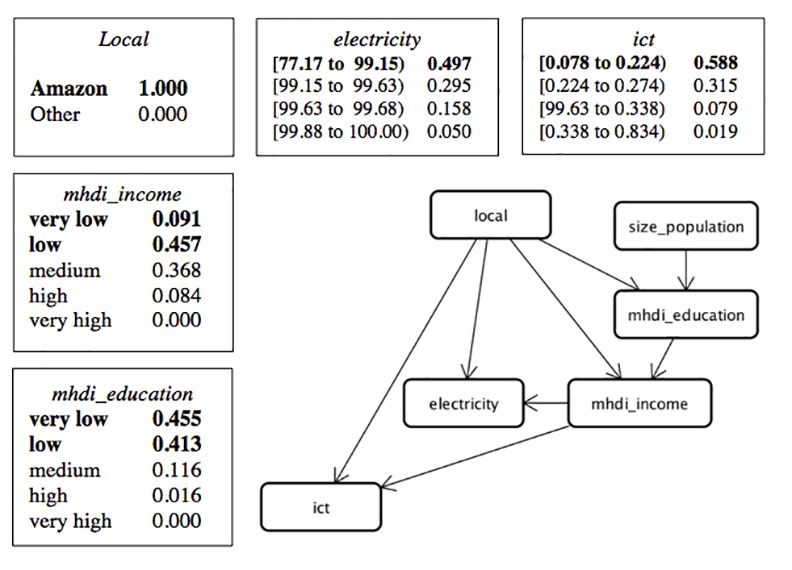
This study fills demand for data on access and use of information and communication technologies (ICT) in the Brazilian legal Amazon, a region of localities with identical economic, political, and social problems. We use the 2010 Brazilian Demographic Census to compile data on urban and rural households (i) with computers and Internet access, (ii) with mobile phones, and (iii) with fixed phones. To compare the concentration of access to ICT in the municipalities of the Brazilian Amazon with other regions of Brazil, we use a concentration index to quantify the concentration of households in the following classes: with computers and Internet access, with mobile phones, with fixed phones, and no access. These data are analyzed along with municipal indicators on income, education, electricity, and population size. The results show that for urban households, the average concentration in the municipalities of the Amazon for computers and Internet access and for fixed phones is lower than in other regions of the country; meanwhile, that for no access and mobile phones is higher than in any other region. For rural households, the average concentration in the municipalities of the Amazon for computers and Internet access, mobile phones, and fixed phones is lower than in any other region of the country; meanwhile, that for no access is higher than in any other region. In addition, the study shows that education and income are determinants of inequality in accessing ICT in Brazilian municipalities and that the existence of electricity in rural households is directly associated with the ownership of ICT resources.
本研究满足了获取巴西合法亚马逊地区信息通信技术(ICT)使用和接入数据的需求,该地区存在相同的经济、政治和社会问题。我们利用2010年巴西人口普查数据,汇编了关于城乡家庭的以下数据:(i)拥有电脑和互联网接入的家庭;(ii)拥有手机的家庭;(iii)拥有固定电话的家庭。为了比较巴西亚马逊地区各市与巴西其他地区在ICT接入方面的集中程度,我们使用一个集中指数来量化家庭在以下类别中的集中程度:拥有电脑和互联网接入、拥有手机、拥有固定电话以及无接入。这些数据与各市的收入、教育、电力和人口规模指标一同进行分析。结果显示,对于城市家庭而言,亚马逊地区各市在电脑和互联网接入以及固定电话方面的平均集中程度低于该国其他地区;与此同时,在无接入和手机方面的平均集中程度高于其他任何地区。对于农村家庭,亚马逊地区各市在电脑和互联网接入、手机以及固定电话方面的平均集中程度低于该国其他任何地区;与此同时,在无接入方面的平均集中程度高于其他任何地区。此外,研究表明,教育和收入是巴西各市在ICT接入方面不平等的决定因素,并且农村家庭通电情况与ICT资源拥有情况直接相关。