Gorai Amit Kr, Tchounwou Paul B, Tuluri Francis
Department of Mining Engineering, National Institute of Technology, Rourkela, Odisha 769008, India.
NIH/NIMHD RCMI Center for Environmental Health, College of Science, Engineering and Technology, Jackson State University, Jackson, MS 39217, USA.
Int J Environ Res Public Health. 2016 Mar 29;13(4):378. doi: 10.3390/ijerph13040378.
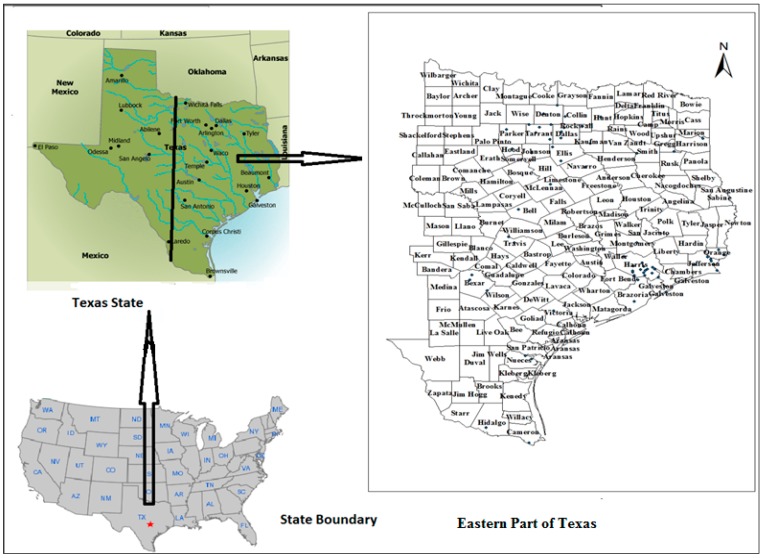
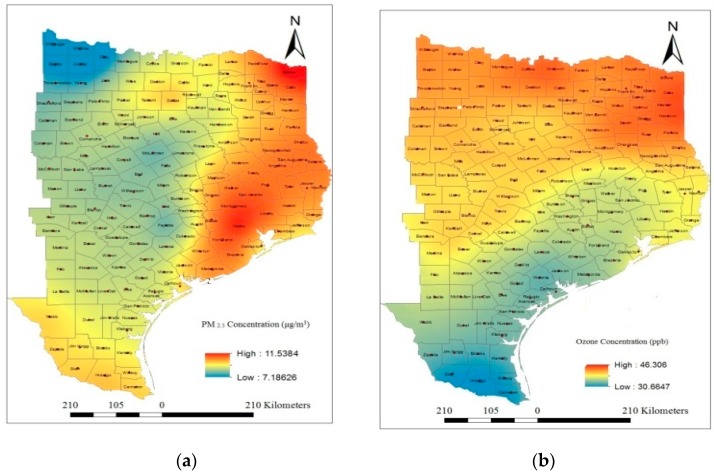
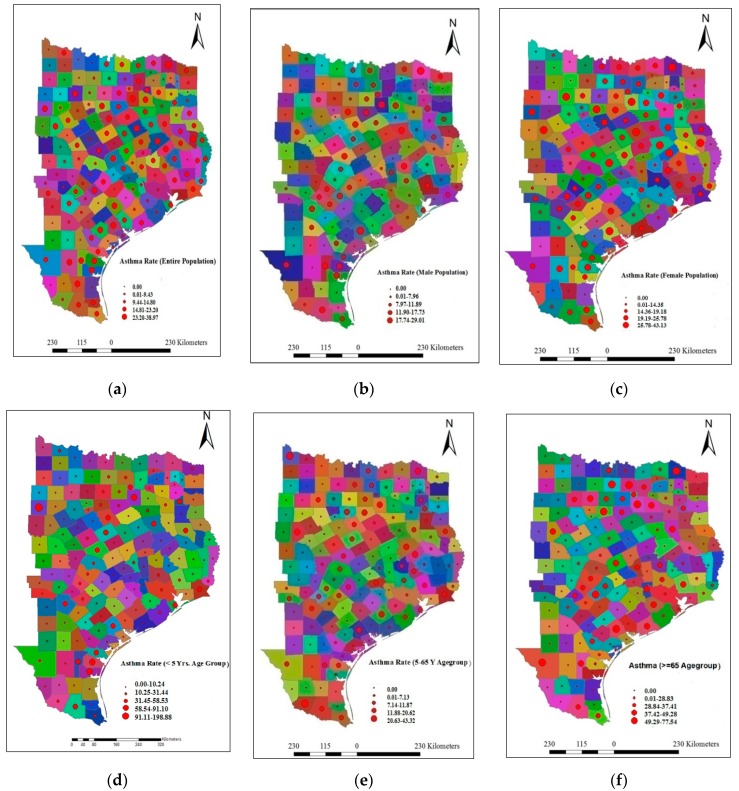
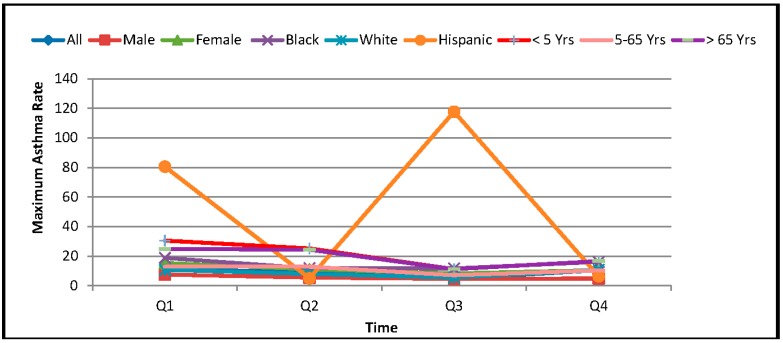
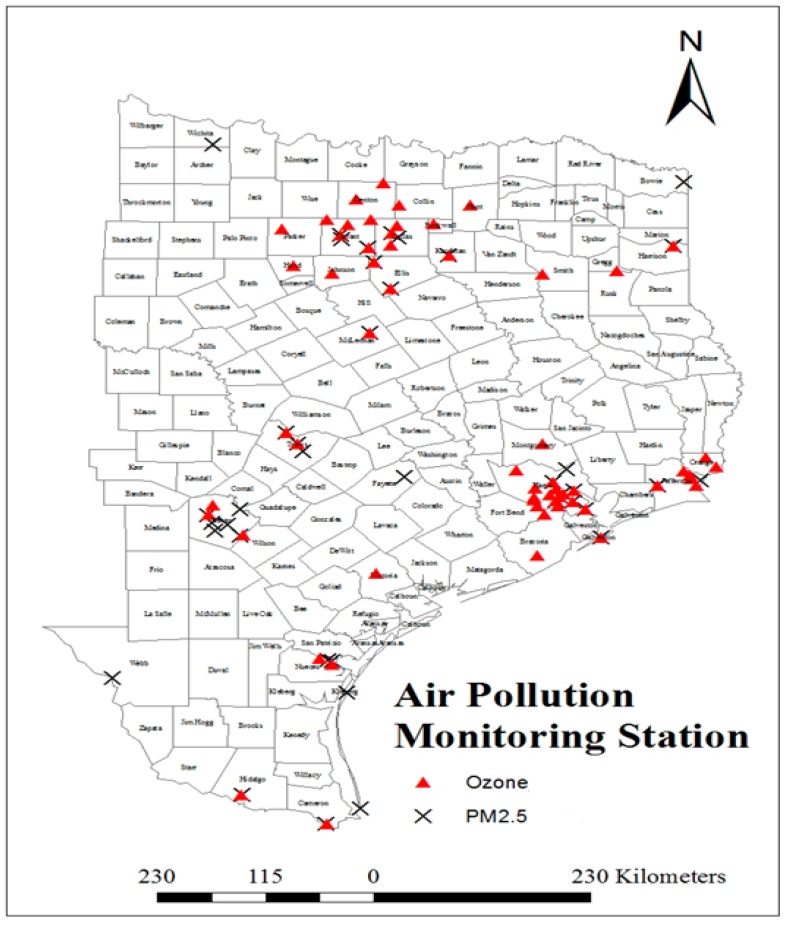
Air pollution has been an on-going research focus due to its detrimental impact on human health. However, its specific effects on asthma prevalence in different age groups, genders and races are not well understood. Thus, the present study was designed to examine the association between selected air pollutants and asthma prevalence in different population groups during 2010 in the eastern part of Texas, USA.The pollutants considered were particulate matter (PM2.5 with an aerodynamic diameter less than 2.5 micrometers) and surface ozone. The population groups were categorized based on age, gender, and race. County-wise asthma hospital discharge data for different age, gender, and racial groups were obtained from Texas Asthma Control Program, Office of Surveillance, Evaluation and Research, Texas Department of State Health Services. The annual means of the air pollutants were obtained from the United States Environmental Protection Agency (U.S. EPA)'s air quality system data mart program. Pearson correlation analyzes were conducted to examine the relationship between the annual mean concentrations of pollutants and asthma discharge rates (ADR) for different age groups, genders, and races. The results reveal that there is no significant association or relationship between ADR and exposure of air pollutants (PM2.5, and O₃). The study results showed a positive correlation between PM2.5 and ADR and a negative correlation between ADR and ozone in most of the cases. These correlations were not statistically significant, and can be better explained by considering the local weather conditions. The research findings facilitate identification of hotspots for controlling the most affected populations from further environmental exposure to air pollution, and for preventing or reducing the health impacts.
空气污染因其对人类健康的有害影响一直是持续的研究重点。然而,其对不同年龄组、性别和种族哮喘患病率的具体影响尚未得到充分了解。因此,本研究旨在调查2010年美国得克萨斯州东部不同人群中选定空气污染物与哮喘患病率之间的关联。所考虑的污染物为颗粒物(空气动力学直径小于2.5微米的细颗粒物PM2.5)和地面臭氧。人群根据年龄、性别和种族进行分类。不同年龄、性别和种族组的逐县哮喘住院出院数据来自得克萨斯州卫生服务部监测、评估和研究办公室的得克萨斯哮喘控制项目。空气污染物的年平均值来自美国环境保护局(U.S. EPA)的空气质量系统数据集市项目。进行了Pearson相关性分析,以研究不同年龄组、性别和种族的污染物年平均浓度与哮喘出院率(ADR)之间的关系。结果显示,ADR与空气污染物(PM2.5和O₃)暴露之间没有显著关联或关系。研究结果表明,在大多数情况下,PM2.5与ADR呈正相关,ADR与臭氧呈负相关。这些相关性在统计学上不显著,考虑当地天气条件可以更好地解释。研究结果有助于确定热点地区,以控制最易受空气污染进一步环境暴露影响的人群,并预防或减少健康影响。