Ranjbar Benyamin, Krogh Louise Bechmann, Laursen Maria Bach, Primo Maria Nascimento, Marques Sara Correia, Dybkær Karen, Mikkelsen Jacob Giehm
Department of Biomedicine, Aarhus University, Aarhus, Denmark.
Department of Hematology, Aalborg University Hospital, Aalborg, Denmark.
PLoS One. 2016 Apr 5;11(4):e0153069. doi: 10.1371/journal.pone.0153069. eCollection 2016.
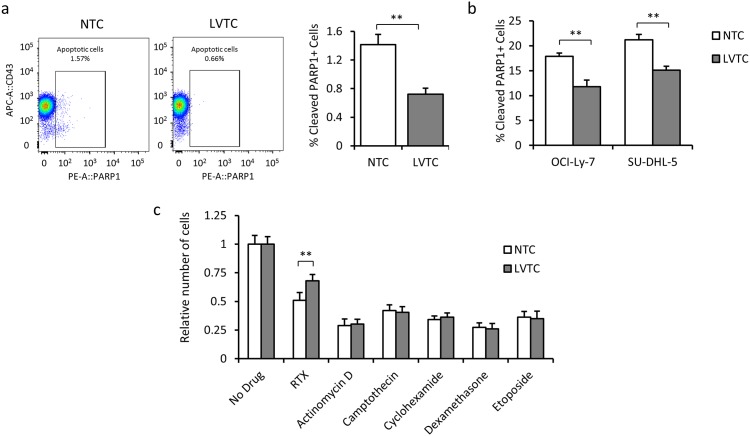
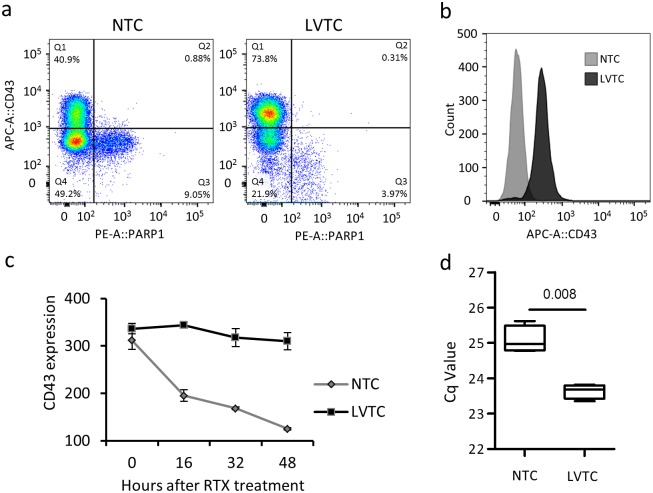
Diffuse large B-cell lymphoma (DLBCL) is characterized by great genetic and clinical heterogeneity which complicates prognostic prediction and influences treatment efficacy. The most common regimen, R-CHOP, consists of a combination of anthracycline- and immuno-based drugs including Rituximab. It remains elusive how and to which extent genetic variability impacts the response and potential tolerance to R-CHOP. Hence, an improved understanding of mechanisms leading to drug tolerance in B-cells is crucial, and modelling by genetic intervention directly in B-cells is fundamental in such investigations. Lentivirus-based gene vectors are widely used gene vehicles, which in B-cells are an attractive alternative to potentially toxic transfection-based methodologies. Here, we investigate the use of VSV-G-pseudotyped lentiviral vectors in B-cells for exploring the impact of microRNAs on tolerance to Rituximab. Notably, we find that robust lentiviral transduction of cancerous B-cell lines markedly and specifically enhances the resistance of transduced germinal center B-cells (GCBs) to Rituximab. Although Rituximab works partially through complement-mediated cell lysis, increased tolerance is not achieved through effects of lentiviral transduction on cell death mediated by complement. Rather, reduced levels of PARP1 and persistent high levels of CD43 in Rituximab-treated GCBs demonstrate anti-apoptotic effects of lentiviral transduction that may interfere with the outcome and interpretation of Rituximab tolerance studies. Our findings stress that caution should be exercised exploiting lentiviral vectors in studies of tolerance to therapeutics in DLBCL. Importantly, however, we demonstrate the feasibility of using the lentiviral gene delivery platform in studies addressing the impact of specific microRNAs on Rituximab responsiveness.
弥漫性大B细胞淋巴瘤(DLBCL)具有高度的遗传和临床异质性,这使得预后预测变得复杂,并影响治疗效果。最常用的方案R-CHOP由包括利妥昔单抗在内的蒽环类和免疫药物联合组成。目前尚不清楚遗传变异如何以及在多大程度上影响对R-CHOP的反应和潜在耐受性。因此,更好地理解导致B细胞产生药物耐受性的机制至关重要,而直接在B细胞中进行基因干预建模是此类研究的基础。基于慢病毒的基因载体是广泛使用的基因载体,在B细胞中,它是潜在有毒的基于转染方法的有吸引力的替代方案。在这里,我们研究了VSV-G假型慢病毒载体在B细胞中的应用,以探索微小RNA对利妥昔单抗耐受性的影响。值得注意的是,我们发现癌性B细胞系的强大慢病毒转导显著且特异性地增强了转导的生发中心B细胞(GCB)对利妥昔单抗的抗性。尽管利妥昔单抗部分通过补体介导的细胞裂解起作用,但慢病毒转导对补体介导的细胞死亡的影响并未导致耐受性增加。相反,在利妥昔单抗处理的GCB中,PARP1水平降低和CD43持续高水平表明慢病毒转导具有抗凋亡作用,这可能会干扰利妥昔单抗耐受性研究的结果和解释。我们的研究结果强调,在DLBCL治疗耐受性研究中使用慢病毒载体时应谨慎。然而,重要的是,我们证明了在研究特定微小RNA对利妥昔单抗反应性的影响时,使用慢病毒基因递送平台的可行性。