Ferenczi Emily A, Vierock Johannes, Atsuta-Tsunoda Kyoko, Tsunoda Satoshi P, Ramakrishnan Charu, Gorini Christopher, Thompson Kimberly, Lee Soo Yeun, Berndt Andre, Perry Chelsey, Minniberger Sonja, Vogt Arend, Mattis Joanna, Prakash Rohit, Delp Scott, Deisseroth Karl, Hegemann Peter
Bioengineering, Stanford University, 318 Campus Drive, Stanford, CA 94305, USA.
Neurosciences, Stanford University, 318 Campus Drive, Stanford, CA 94305, USA.
Sci Rep. 2016 Apr 5;6:23947. doi: 10.1038/srep23947.
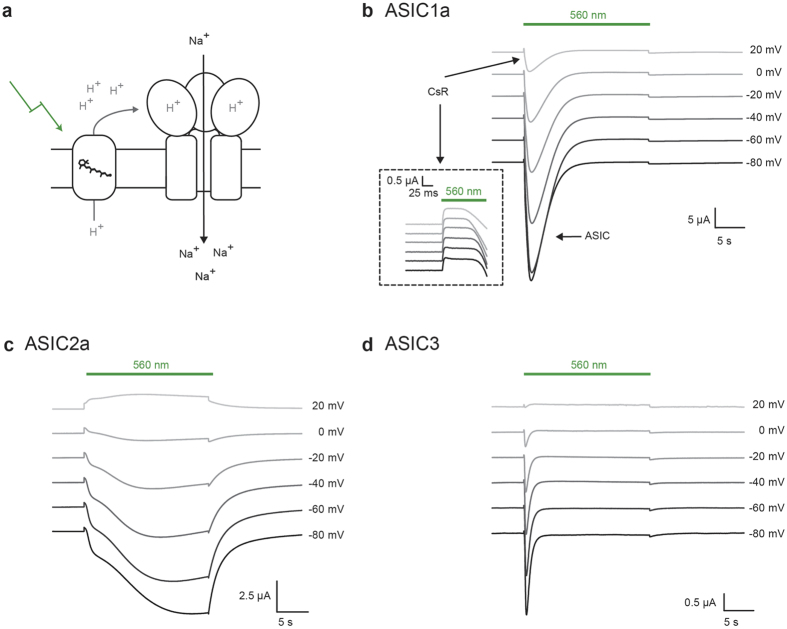
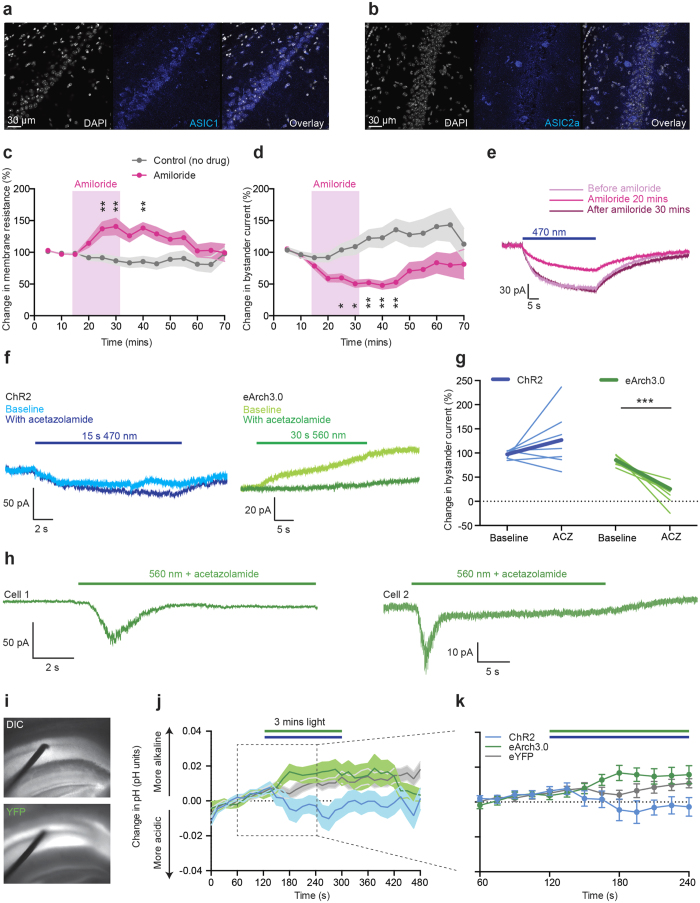
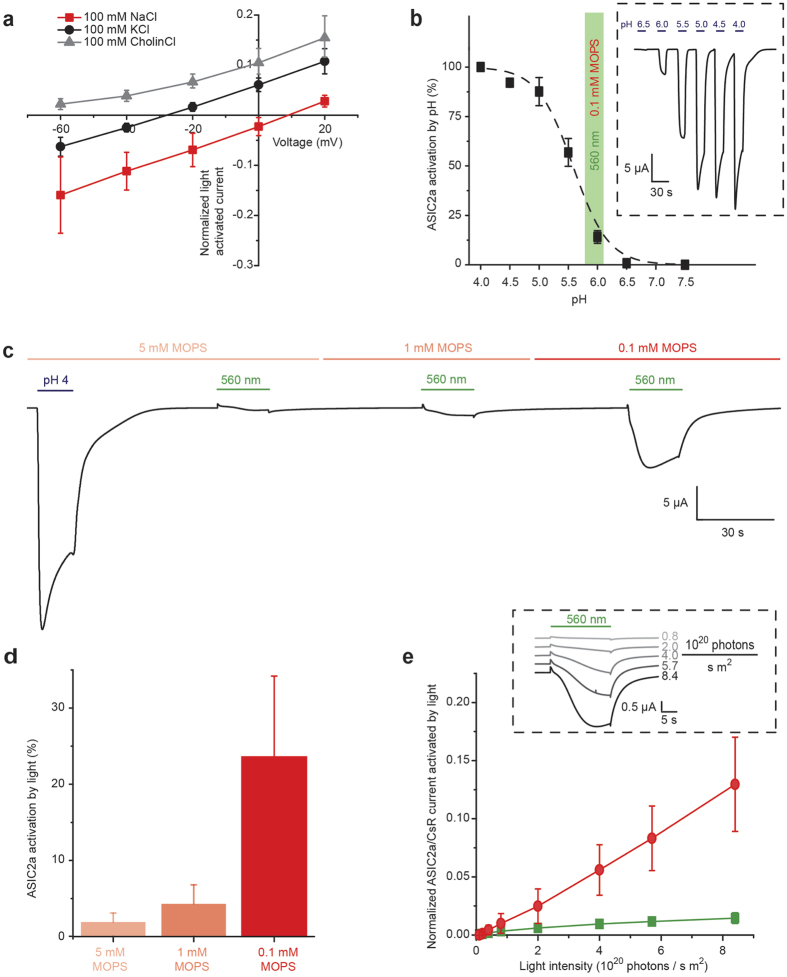
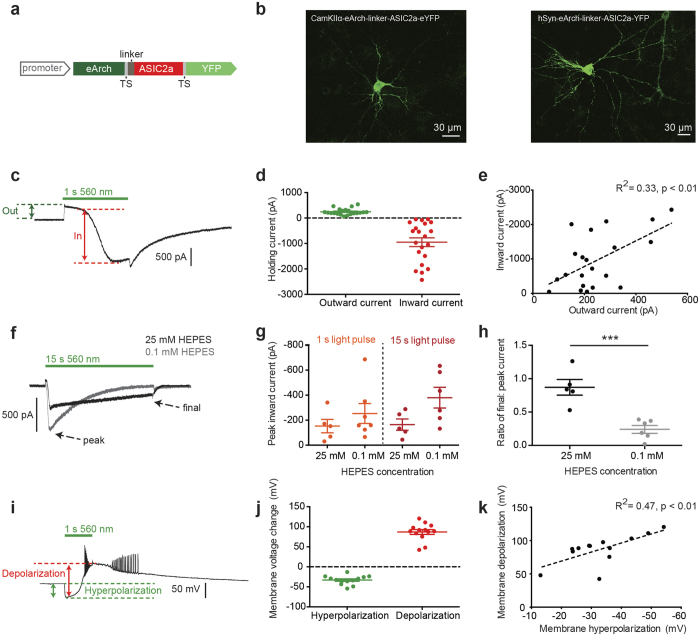
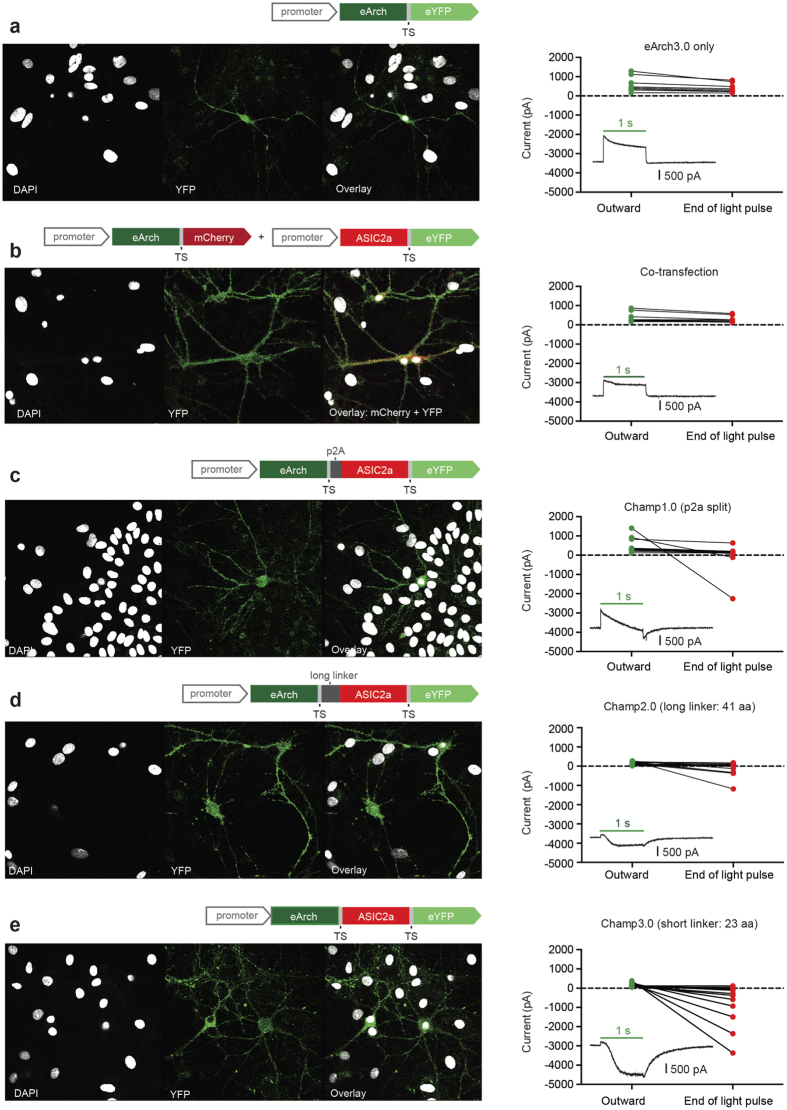
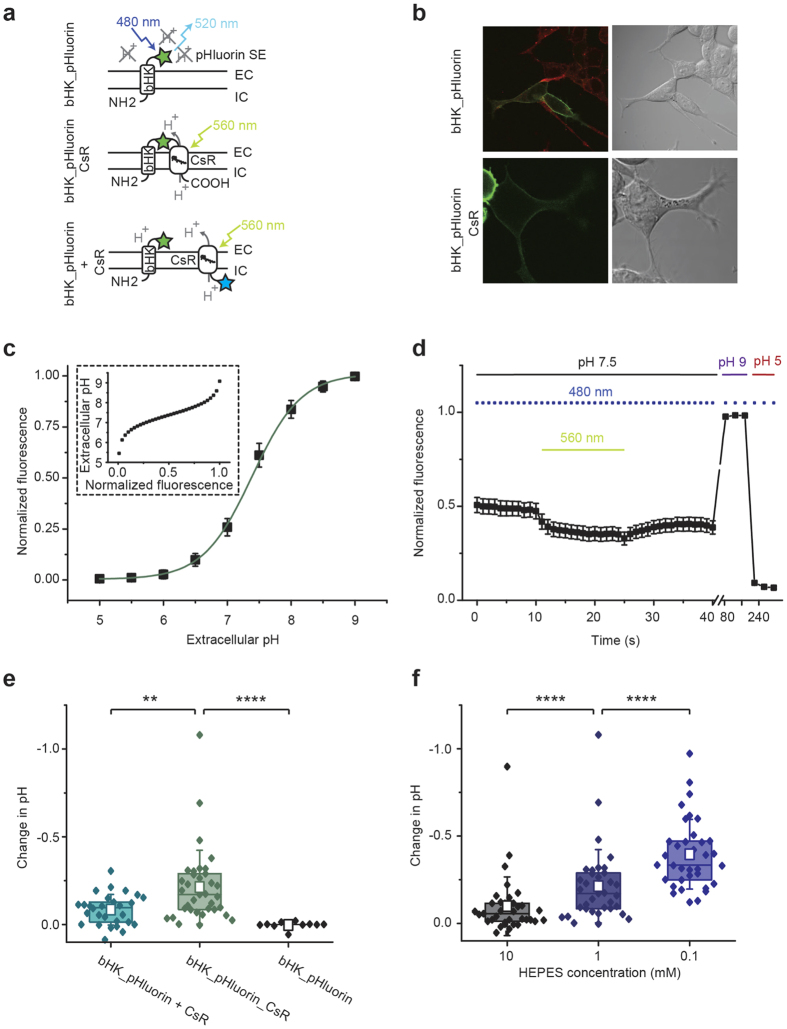
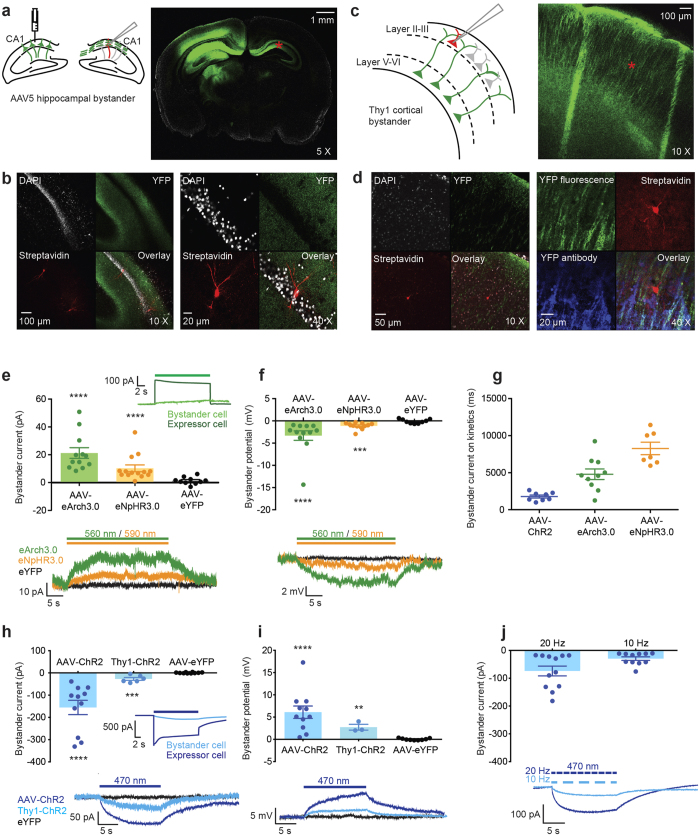
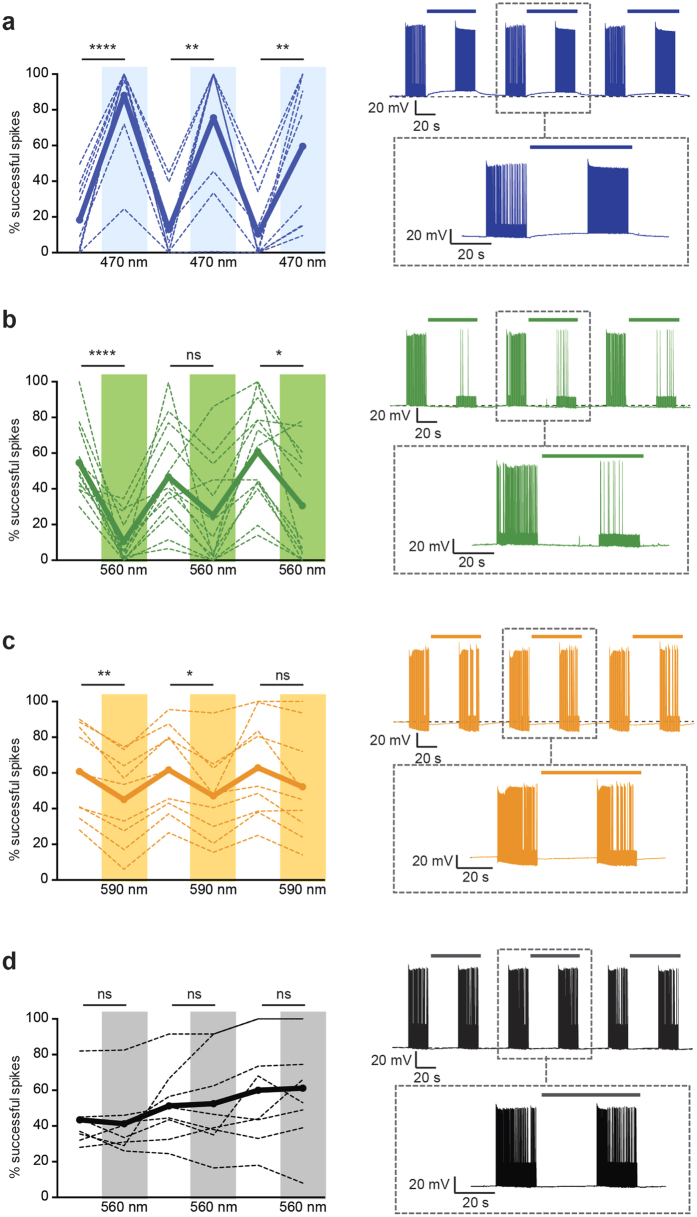
The extracellular ionic environment in neural tissue has the capacity to influence, and be influenced by, natural bouts of neural activity. We employed optogenetic approaches to control and investigate these interactions within and between cells, and across spatial scales. We began by developing a temporally precise means to study microdomain-scale interactions between extracellular protons and acid-sensing ion channels (ASICs). By coupling single-component proton-transporting optogenetic tools to ASICs to create two-component optogenetic constructs (TCOs), we found that acidification of the local extracellular membrane surface by a light-activated proton pump recruited a slow inward ASIC current, which required molecular proximity of the two components on the membrane. To elicit more global effects of activity modulation on 'bystander' neurons not under direct control, we used densely-expressed depolarizing (ChR2) or hyperpolarizing (eArch3.0, eNpHR3.0) tools to create a slow non-synaptic membrane current in bystander neurons, which matched the current direction seen in the directly modulated neurons. Extracellular protons played contributory role but were insufficient to explain the entire bystander effect, suggesting the recruitment of other mechanisms. Together, these findings present a new approach to the engineering of multicomponent optogenetic tools to manipulate ionic microdomains, and probe the complex neuronal-extracellular space interactions that regulate neural excitability.
神经组织中的细胞外离子环境能够影响神经活动的自然发作,并受其影响。我们采用光遗传学方法来控制和研究细胞内、细胞间以及跨空间尺度的这些相互作用。我们首先开发了一种时间精确的方法来研究细胞外质子与酸敏感离子通道(ASICs)之间的微域尺度相互作用。通过将单组分质子转运光遗传学工具与ASICs偶联以创建双组分光遗传学构建体(TCOs),我们发现光激活的质子泵使局部细胞外膜表面酸化会引发缓慢的内向ASIC电流,这需要膜上两种组分的分子接近。为了引发活动调节对未直接受控的“旁观者”神经元的更全局影响,我们使用密集表达的去极化(ChR2)或超极化(eArch3.0、eNpHR3.0)工具在旁观者神经元中产生缓慢的非突触膜电流,这与直接调节的神经元中看到的电流方向相匹配。细胞外质子起到了一定作用,但不足以解释整个旁观者效应,这表明还招募了其他机制。总之,这些发现为工程化多组分光遗传学工具以操纵离子微域,并探究调节神经兴奋性的复杂神经元 - 细胞外空间相互作用提供了一种新方法。