Ang W W, Sabharwal S, Johannsson H, Bhattacharya R, Gupte C M
Imperial College London, South Kensington Campus, London, SW7 2AZ, UK.
Imperial College Healthcare NHS Trust, Department of Orthopaedics, The Bays, South Wharf Road, St Mary's Hospital, London, W2 1NY, UK.
Ann Med Surg (Lond). 2016 Mar 5;7:24-9. doi: 10.1016/j.amsu.2016.03.001. eCollection 2016 May.
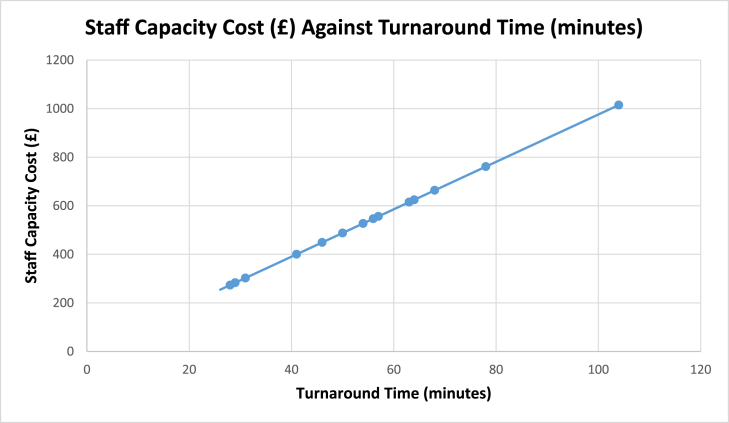
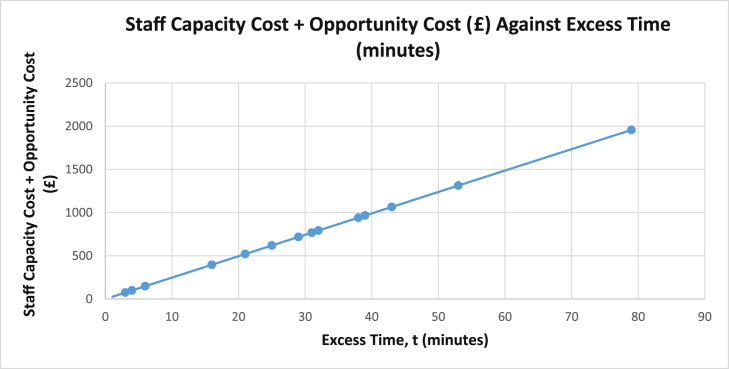
The National Health Service (NHS) is currently facing a financial crisis with a projected deficit of £2billion by the end of financial year 2015/16. As operating rooms (OR) are one of the costliest components in secondary care, improving theatre efficiency should be at the forefront of efforts to improve health service efficiency. The objectives of this study were to characterize the causes of trauma OR delays and to estimate the cost of this inefficiency. A 1-month prospective single-centre study in St. Mary's Hospital. Turnaround time (TT) was used as the surrogate parameter to measure theatre efficiency. Factors including patient age, ASA score and presence of surgical and anaesthetic consultant were evaluated to identify positive or negative associations with theatre delays. Inefficiency cost was calculated by multiplying the time wasted with staff capacity costs and opportunity costs, found to be £24.77/minute. The commonest causes for increased TT were delays in sending for patients (50%) and problems with patient transport to the OR (31%). 461 min of delay was observed in 12 days, equivalent to loss of £951.58/theatre/day. Non-statistically significant trends were seen between length of delays and advancing patient age, ASA score and absence of either a senior clinician or an anaesthetic consultant. Interestingly, the trend was not as strong for absence of an anaesthetic consultant. This study found delays in operating TT to represent a sizable cost, with potential efficiency savings based on TT of £347,327/theatre/year. Further study of a larger sample is warranted to better evaluate the identified trends.
英国国民医疗服务体系(NHS)目前正面临财务危机,预计到2015/16财政年度末将出现20亿英镑的赤字。由于手术室是二级医疗中成本最高的组成部分之一,提高手术室效率应成为提高医疗服务效率努力的首要任务。本研究的目的是确定创伤手术室延迟的原因,并估算这种低效率造成的成本。在圣玛丽医院进行了为期1个月的前瞻性单中心研究。周转时间(TT)被用作衡量手术室效率的替代参数。评估了包括患者年龄、美国麻醉医师协会(ASA)评分以及外科和麻醉科会诊医生在场情况等因素,以确定与手术室延迟的正相关或负相关关系。通过将浪费的时间与工作人员能力成本和机会成本相乘来计算低效率成本,发现为24.77英镑/分钟。TT增加的最常见原因是患者送检延迟(50%)和患者转运至手术室出现问题(31%)。在12天内观察到461分钟的延迟,相当于每天每个手术室损失951.58英镑。延迟时间与患者年龄增长、ASA评分以及高级临床医生或麻醉科会诊医生不在场之间存在非统计学显著趋势。有趣的是,麻醉科会诊医生不在场的趋势不那么明显。本研究发现,手术TT延迟造成了相当大的成本,基于TT每年每个手术室可能节省效率成本347,327英镑。有必要对更大样本进行进一步研究,以更好地评估所确定的趋势。