Copiello Sergio
University IUAV of Venice, Department of Design and Planning, Venice, Italy.
MethodsX. 2016 Mar 11;3:195-204. doi: 10.1016/j.mex.2016.03.003. eCollection 2016.
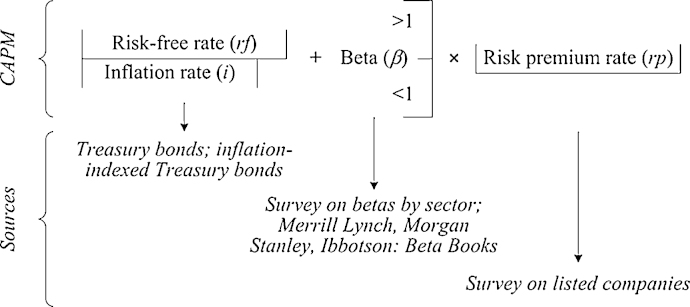
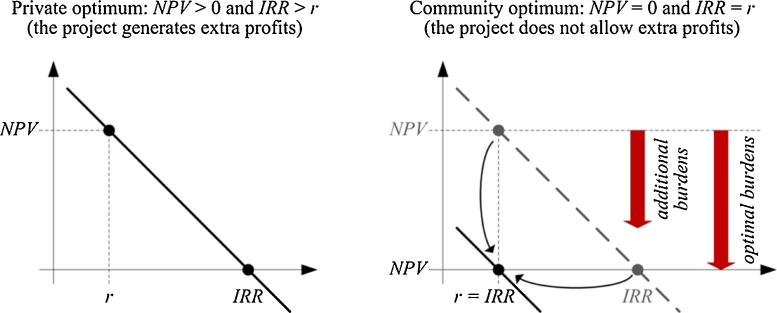
The Discounted Cash Flow method is a long since well-known tool to assess the feasibility of investment projects, as the background which shapes a broad range of techniques, from the Cost-Benefit Analysis up to the Life-Cycle Cost Analysis. Its rationale lies in the comparison of deferred values, only once they have been discounted back to the present. The DCF variant proposed here fits into a specific application field. It is well-suited to the evaluations required in order to structure equitable transactions under the umbrella of Public-Private Partnership. •The discount rate relies upon the concept of expected return on equity, instead than on those of weighted average cost of capital, although the latter is the most common reference within the scope of real estate investment valuation.•Given a feasible project, whose Net Present Value is more than satisfactory, we aim to identify the amount of the additional burdens that could be charged to the project, under the condition of keeping the same economically viable.•The DCF variant essentially deals with an optimization problem, which can be solved by means of simple one-shot equations, derived from financial mathematics, or through iterative calculations if additional constraints must be considered.
现金流折现法是一种早已广为人知的评估投资项目可行性的工具,它是塑造从成本效益分析到生命周期成本分析等广泛技术的背景。其基本原理在于比较递延价值,且只有在将它们折现回当前时才进行比较。这里提出的现金流折现变体适用于特定的应用领域。它非常适合在公私合营框架下构建公平交易所需的评估。•折现率依赖于股权预期回报的概念,而非加权平均资本成本的概念,尽管后者是房地产投资估值范围内最常见的参考指标。•给定一个可行项目,其净现值令人满意,我们旨在确定在保持经济可行性不变的情况下,可以向该项目收取的额外负担金额。•现金流折现变体本质上处理的是一个优化问题,可以通过源自金融数学的简单一次性方程来解决,或者在必须考虑额外约束条件时通过迭代计算来解决。