Lu Qiongshi, Powles Ryan Lee, Wang Qian, He Beixin Julie, Zhao Hongyu
Department of Biostatistics, Yale School of Public Health, New Haven, Connecticut, United States of America.
Program of Computational Biology and Bioinformatics, Yale University, New Haven, Connecticut, United States of America.
PLoS Genet. 2016 Apr 8;12(4):e1005947. doi: 10.1371/journal.pgen.1005947. eCollection 2016 Apr.
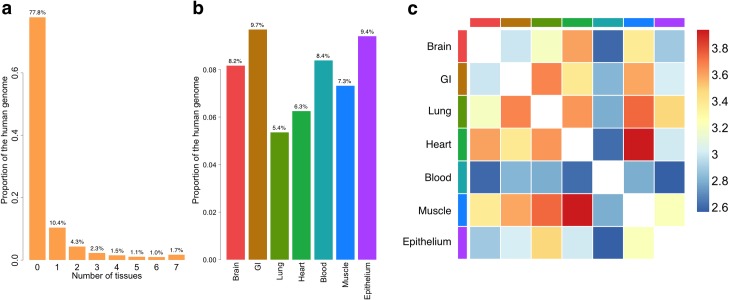
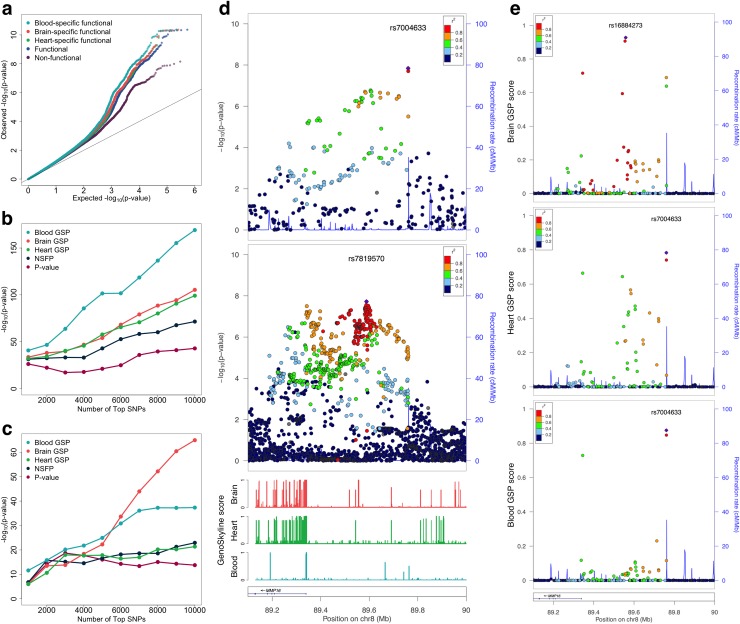
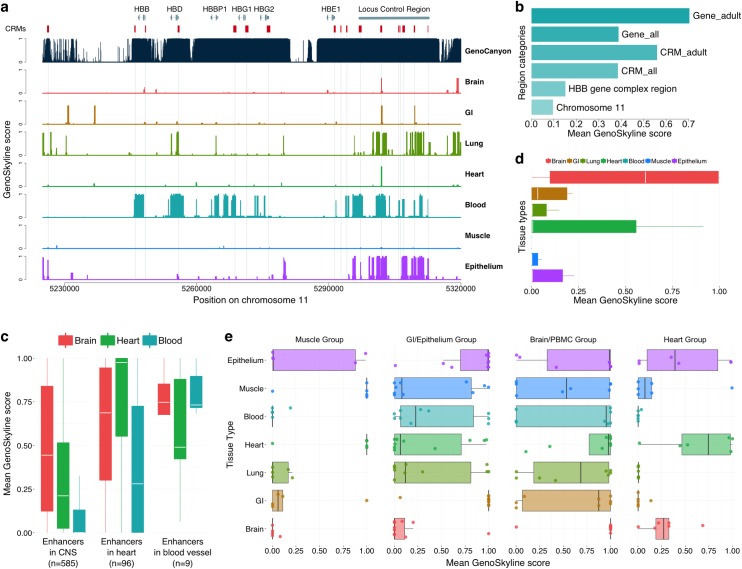
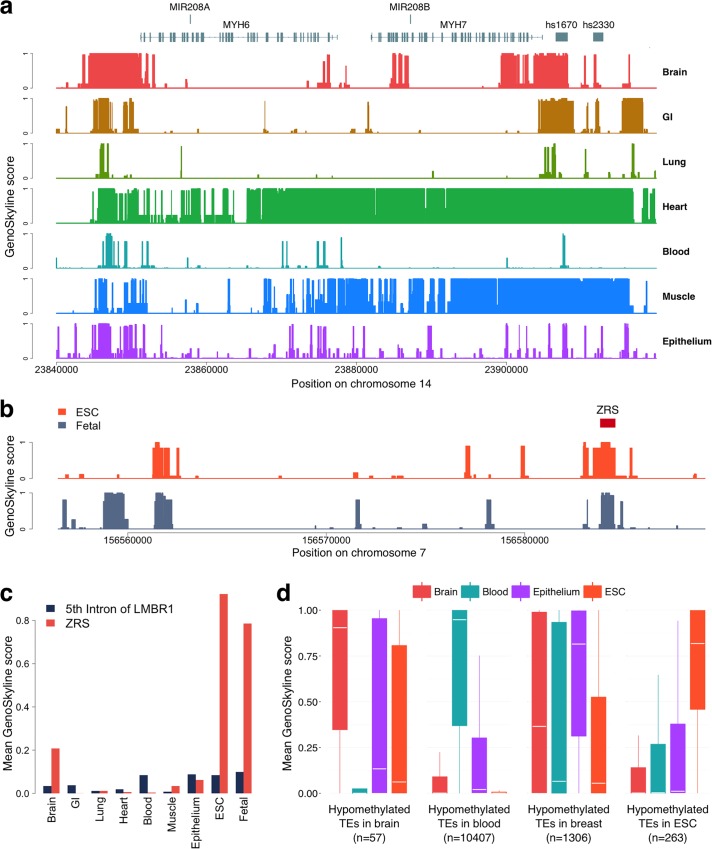
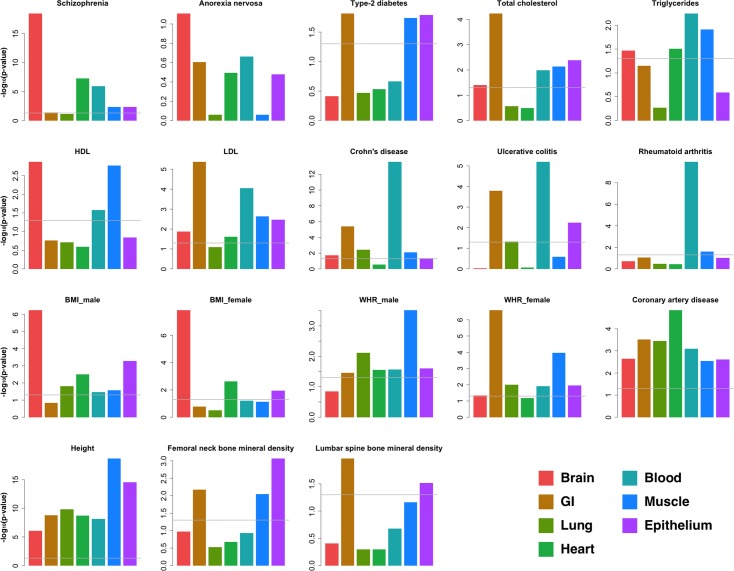
Extensive efforts have been made to understand genomic function through both experimental and computational approaches, yet proper annotation still remains challenging, especially in non-coding regions. In this manuscript, we introduce GenoSkyline, an unsupervised learning framework to predict tissue-specific functional regions through integrating high-throughput epigenetic annotations. GenoSkyline successfully identified a variety of non-coding regulatory machinery including enhancers, regulatory miRNA, and hypomethylated transposable elements in extensive case studies. Integrative analysis of GenoSkyline annotations and results from genome-wide association studies (GWAS) led to novel biological insights on the etiologies of a number of human complex traits. We also explored using tissue-specific functional annotations to prioritize GWAS signals and predict relevant tissue types for each risk locus. Brain and blood-specific annotations led to better prioritization performance for schizophrenia than standard GWAS p-values and non-tissue-specific annotations. As for coronary artery disease, heart-specific functional regions was highly enriched of GWAS signals, but previously identified risk loci were found to be most functional in other tissues, suggesting a substantial proportion of still undetected heart-related loci. In summary, GenoSkyline annotations can guide genetic studies at multiple resolutions and provide valuable insights in understanding complex diseases. GenoSkyline is available at http://genocanyon.med.yale.edu/GenoSkyline.
人们已经通过实验和计算方法做出了广泛努力来理解基因组功能,但准确注释仍然具有挑战性,尤其是在非编码区域。在本论文中,我们介绍了GenoSkyline,这是一个通过整合高通量表观遗传注释来预测组织特异性功能区域的无监督学习框架。在大量案例研究中,GenoSkyline成功识别出了多种非编码调控机制,包括增强子、调控性微小RNA和低甲基化转座元件。对GenoSkyline注释与全基因组关联研究(GWAS)结果的综合分析,为许多人类复杂性状的病因带来了新的生物学见解。我们还探索了使用组织特异性功能注释来对GWAS信号进行优先级排序,并预测每个风险位点的相关组织类型。与标准GWAS p值和非组织特异性注释相比,大脑和血液特异性注释在精神分裂症的优先级排序表现上更优。至于冠状动脉疾病,心脏特异性功能区域高度富集GWAS信号,但之前确定的风险位点在其他组织中功能最强,这表明仍有相当一部分与心脏相关的位点未被发现。总之,GenoSkyline注释可以在多个分辨率上指导遗传研究,并为理解复杂疾病提供有价值的见解。GenoSkyline可在http://genocanyon.med.yale.edu/GenoSkyline获取。