Department of Population Health Sciences, University of Wisconsin-Madison, Madison, WI, USA.
Wisconsin Alzheimer's Disease Research Center, University of Wisconsin-Madison, Madison, WI, USA.
J Alzheimers Dis. 2023;92(2):395-409. doi: 10.3233/JAD-220599.
Our understanding of the pathophysiology underlying Alzheimer's disease (AD) has benefited from genomic analyses, including those that leverage polygenic risk score (PRS) models of disease. The use of functional annotation has been able to improve the power of genomic models.
We sought to leverage genomic functional annotations to build tissue-specific AD PRS models and study their relationship with AD and its biomarkers.
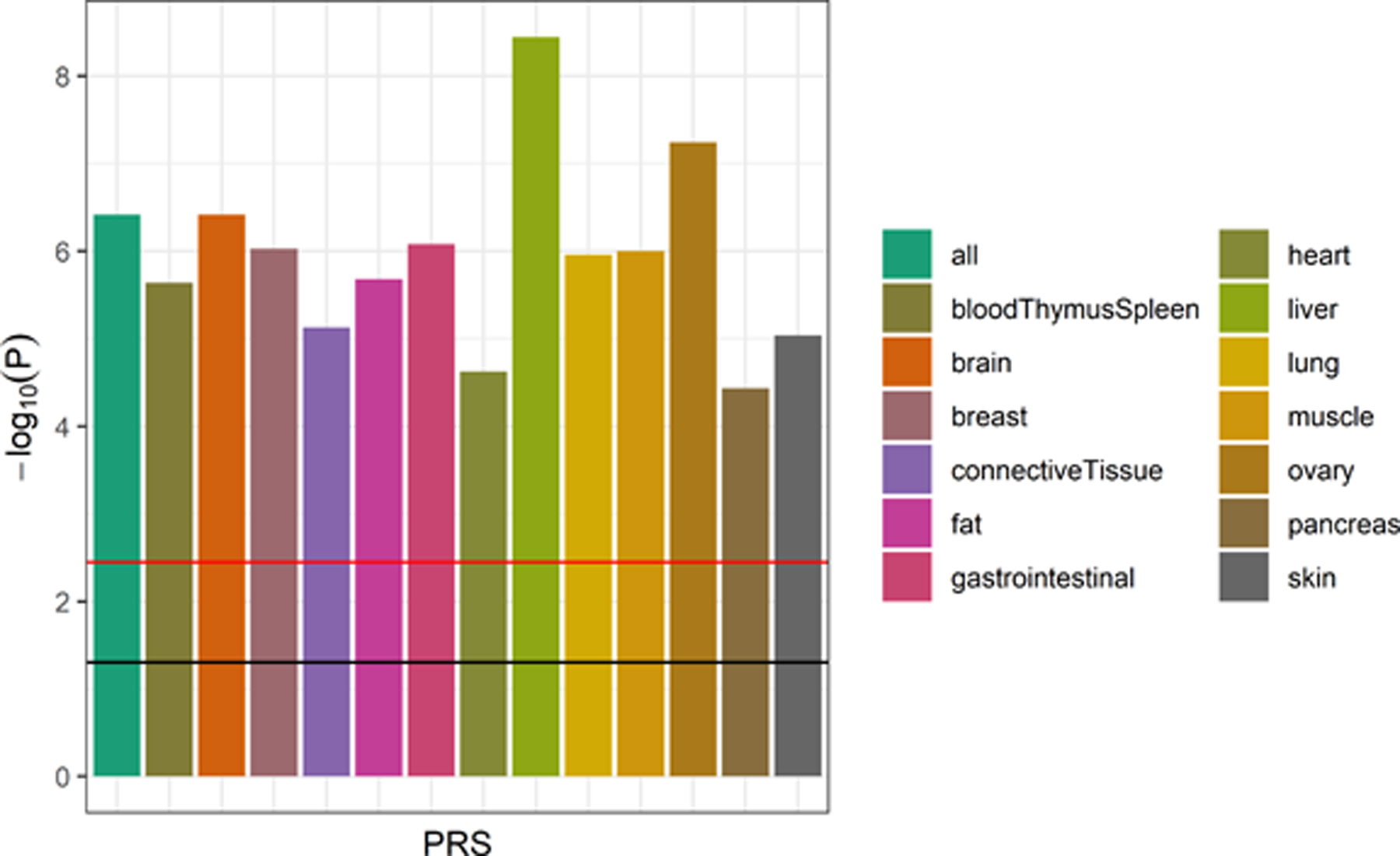
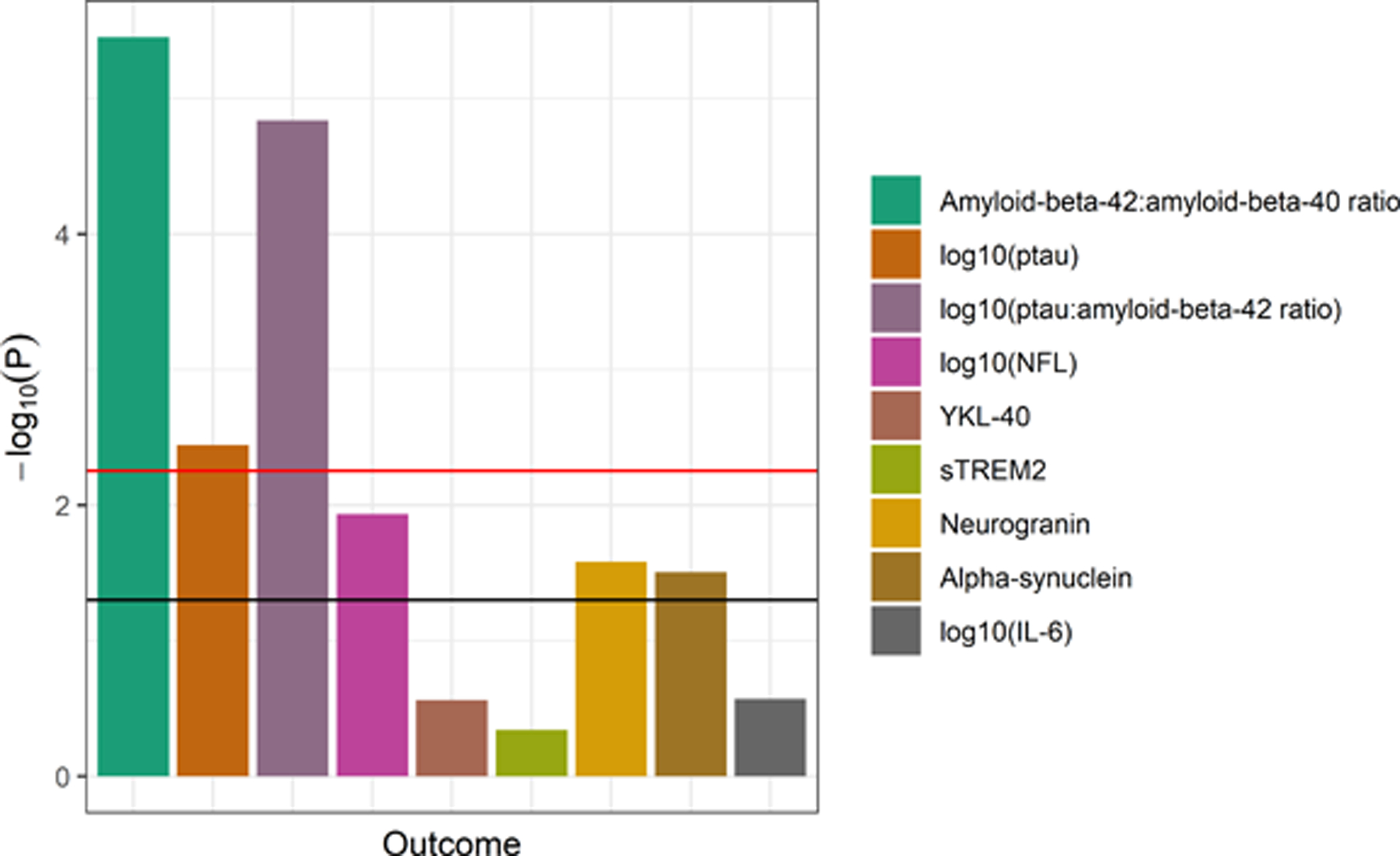
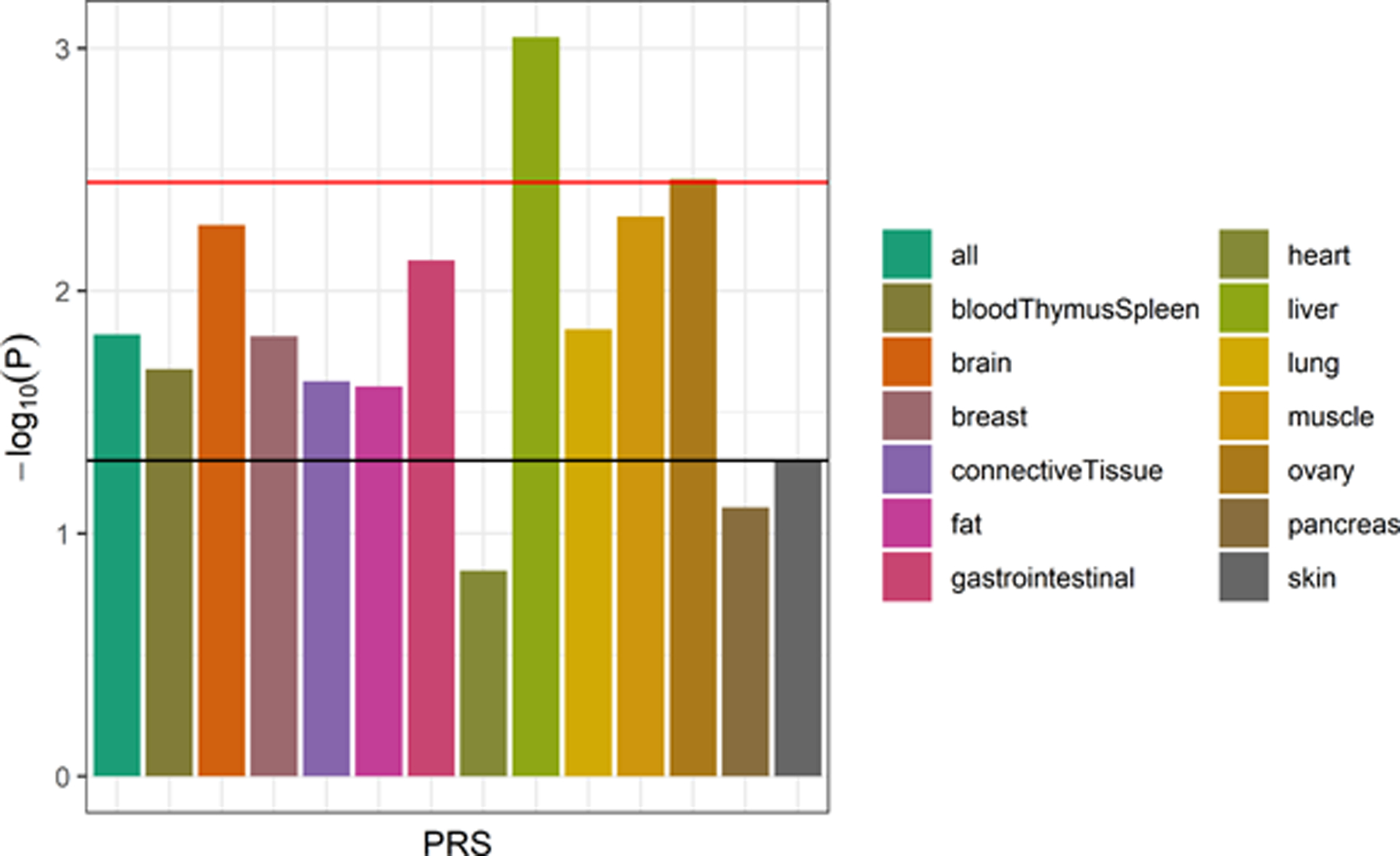
We built 13 tissue-specific AD PRS and studied the scores' relationships with AD diagnosis, cerebrospinal fluid (CSF) amyloid, CSF tau, and other CSF biomarkers in two longitudinal cohort studies of AD.
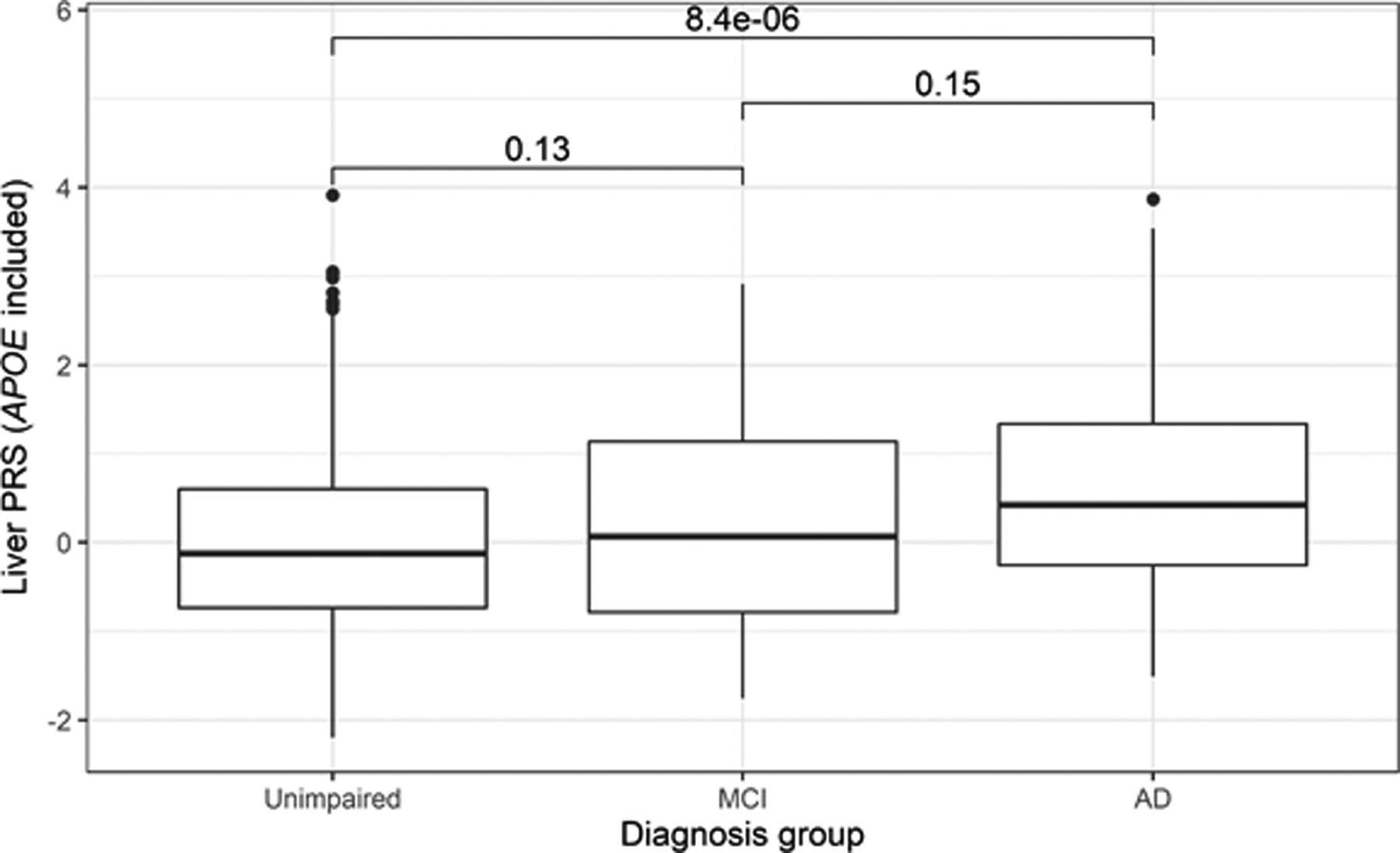
The AD PRS model that was most predictive of AD diagnosis (even without APOE) was the liver AD PRS: n = 1,115; odds ratio = 2.15 (1.67-2.78), p = 3.62×10⁻⁹. The liver AD PRS was also statistically significantly associated with cerebrospinal fluid biomarker evidence of amyloid-β (Aβ42:Aβ40 ratio, p = 3.53×10⁻⁶) and the phosphorylated tau:amyloid-β ratio (p = 1.45×10⁻⁵).
These findings provide further evidence of the role of the liver-functional genome in AD and the benefits of incorporating functional annotation into genomic research.
我们对阿尔茨海默病(AD)病理生理学的理解受益于基因组分析,包括利用疾病多基因风险评分(PRS)模型进行的分析。功能注释的使用能够提高基因组模型的效力。
我们试图利用基因组功能注释来构建组织特异性 AD PRS 模型,并研究它们与 AD 及其生物标志物的关系。
我们构建了 13 种组织特异性 AD PRS,并在两项 AD 的纵向队列研究中研究了这些评分与 AD 诊断、脑脊液(CSF)淀粉样蛋白、CSF tau 和其他 CSF 生物标志物之间的关系。
最能预测 AD 诊断的 AD PRS 模型(即使不考虑 APOE)是肝脏 AD PRS:n=1115;优势比=2.15(1.67-2.78),p=3.62×10⁻⁹。肝脏 AD PRS 与脑脊液生物标志物淀粉样蛋白-β(Aβ42:Aβ40 比值,p=3.53×10⁻⁶)和磷酸化 tau:淀粉样蛋白-β比值(p=1.45×10⁻⁵)也存在统计学显著相关性。
这些发现进一步证明了肝脏功能基因组在 AD 中的作用,以及将功能注释纳入基因组研究的益处。