Drygala Frank, Korablev Nikolay, Ansorge Hermann, Fickel Joerns, Isomursu Marja, Elmeros Morten, Kowalczyk Rafał, Baltrunaite Laima, Balciauskas Linas, Saarma Urmas, Schulze Christoph, Borkenhagen Peter, Frantz Alain C
Musée National d'Histoire Naturelle, Luxembourg.
Velikie Luki State Agricultural Academy, Velikie Luki, Russia.
PLoS One. 2016 Apr 11;11(4):e0153098. doi: 10.1371/journal.pone.0153098. eCollection 2016.
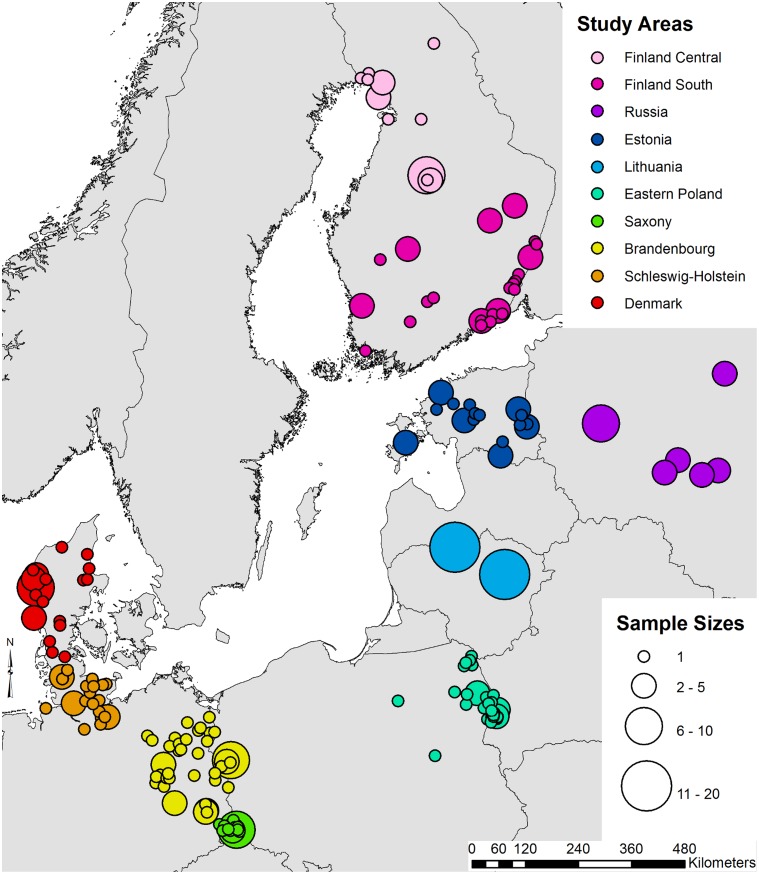
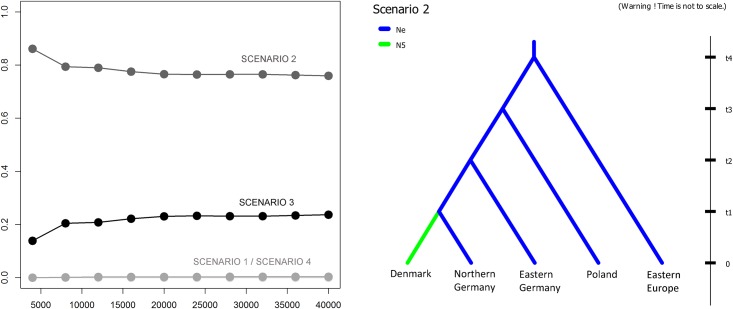
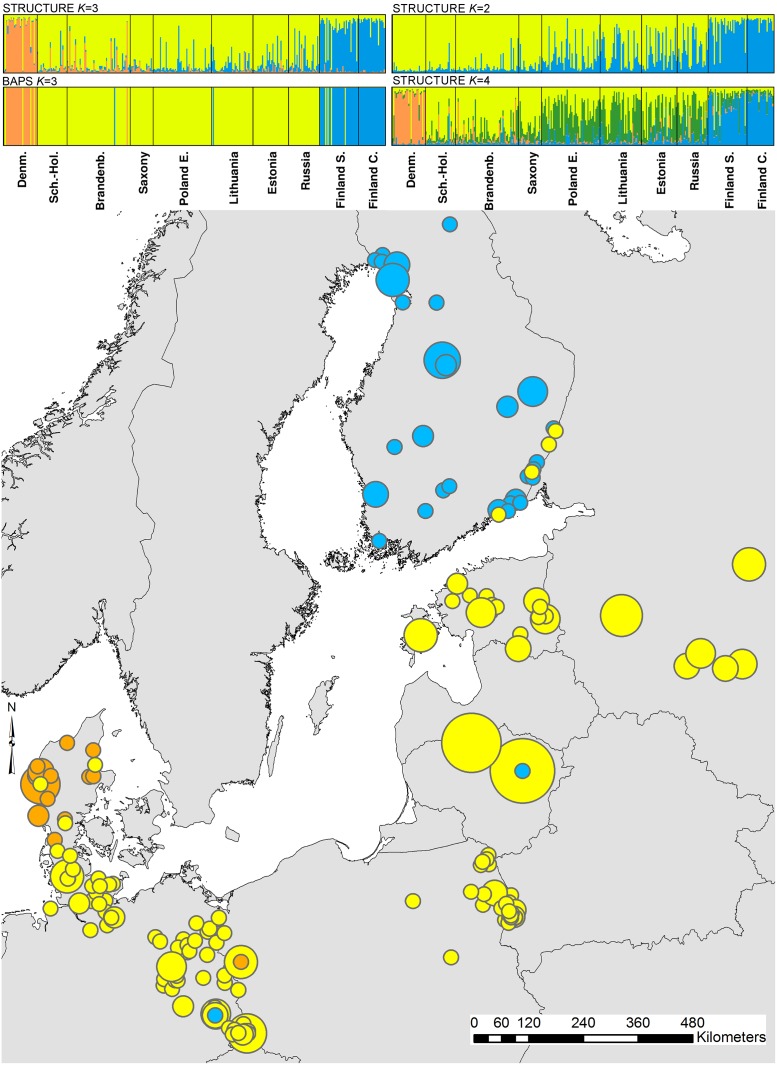
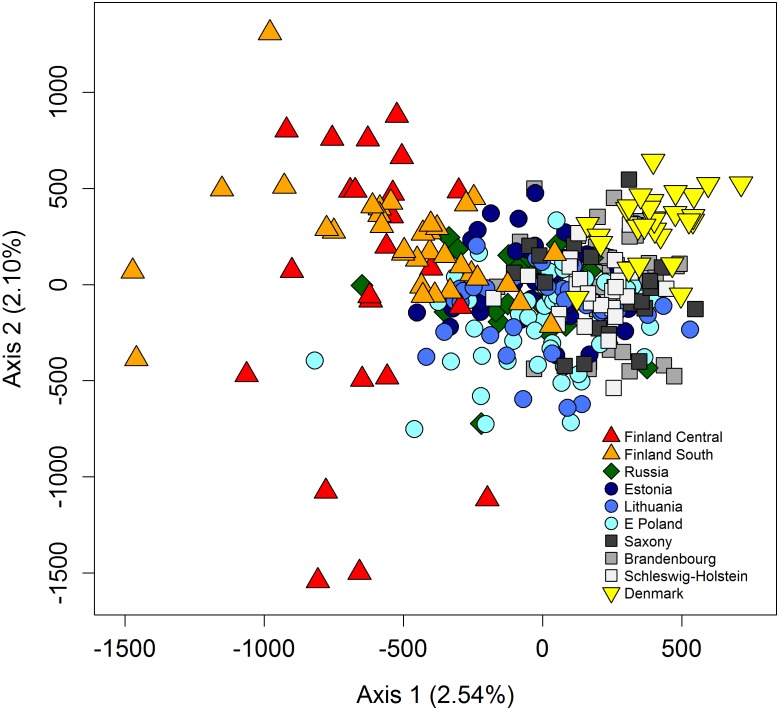
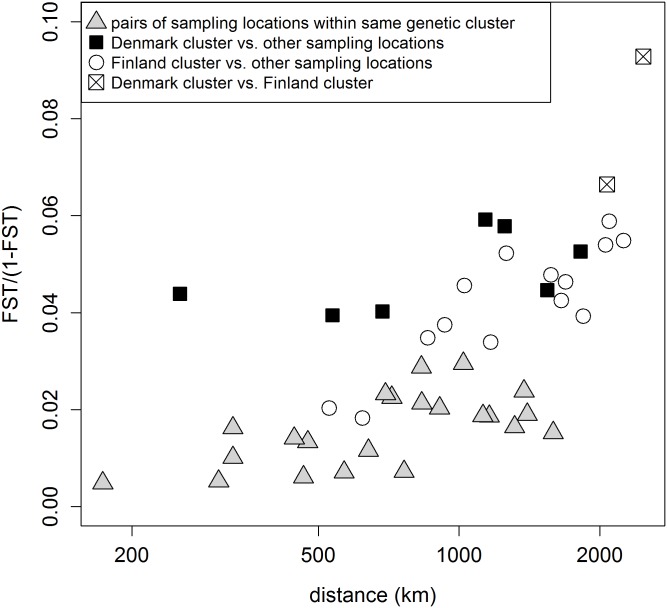
The extent of gene flow during the range expansion of non-native species influences the amount of genetic diversity retained in expanding populations. Here, we analyse the population genetic structure of the raccoon dog (Nyctereutes procyonoides) in north-eastern and central Europe. This invasive species is of management concern because it is highly susceptible to fox rabies and an important secondary host of the virus. We hypothesized that the large number of introduced animals and the species' dispersal capabilities led to high population connectivity and maintenance of genetic diversity throughout the invaded range. We genotyped 332 tissue samples from seven European countries using 16 microsatellite loci. Different algorithms identified three genetic clusters corresponding to Finland, Denmark and a large 'central' population that reached from introduction areas in western Russia to northern Germany. Cluster assignments provided evidence of long-distance dispersal. The results of an Approximate Bayesian Computation analysis supported a scenario of equal effective population sizes among different pre-defined populations in the large central cluster. Our results are in line with strong gene flow and secondary admixture between neighbouring demes leading to reduced genetic structuring, probably a result of its fairly rapid population expansion after introduction. The results presented here are remarkable in the sense that we identified a homogenous genetic cluster inhabiting an area stretching over more than 1500km. They are also relevant for disease management, as in the event of a significant rabies outbreak, there is a great risk of a rapid virus spread among raccoon dog populations.
外来物种扩散过程中的基因流动程度会影响扩张种群中保留的遗传多样性数量。在此,我们分析了欧洲东北部和中部貉(Nyctereutes procyonoides)的种群遗传结构。这种入侵物种备受管理关注,因为它对狐狂犬病高度易感,且是该病毒的重要中间宿主。我们推测,大量引入的动物以及该物种的扩散能力导致了较高的种群连通性,并在整个入侵范围内维持了遗传多样性。我们使用16个微卫星位点对来自七个欧洲国家的332个组织样本进行了基因分型。不同算法识别出了三个遗传簇,分别对应芬兰、丹麦以及一个从俄罗斯西部的引入区域延伸至德国北部的大型“中部”种群。聚类分析结果证明了长距离扩散的存在。近似贝叶斯计算分析结果支持了大型中部簇中不同预定义种群间有效种群大小相等的情况。我们的结果与相邻种群间强烈的基因流动和二次混合相一致,这导致了遗传结构的减少,这可能是其引入后种群相当快速扩张的结果。我们在此呈现的结果很显著,因为我们识别出了一个居住在超过1500公里区域的同质遗传簇。它们对于疾病管理也具有相关性,因为在狂犬病大规模爆发的情况下,病毒在貉种群中快速传播的风险很大。