Zhang Cong-En, Niu Ming, Li Rui-Yu, Feng Wu-Wen, Ma Xiao, Dong Qin, Ma Zhi-Jie, Li Guang-Quan, Meng Ya-Kun, Wang Ya, Yin Ping, He Lan-Zhi, Li Yu-Meng, Tan Peng, Zhao Yan-Ling, Wang Jia-Bo, Dong Xiao-Ping, Xiao Xiao-He
College of Pharmacy, Chengdu University of Traditional Chinese MedicineChengdu, China; China Military Institute of Chinese Medicine, 302 Military HospitalBeijing, China.
China Military Institute of Chinese Medicine, 302 Military Hospital Beijing, China.
Front Pharmacol. 2016 Mar 31;7:85. doi: 10.3389/fphar.2016.00085. eCollection 2016.
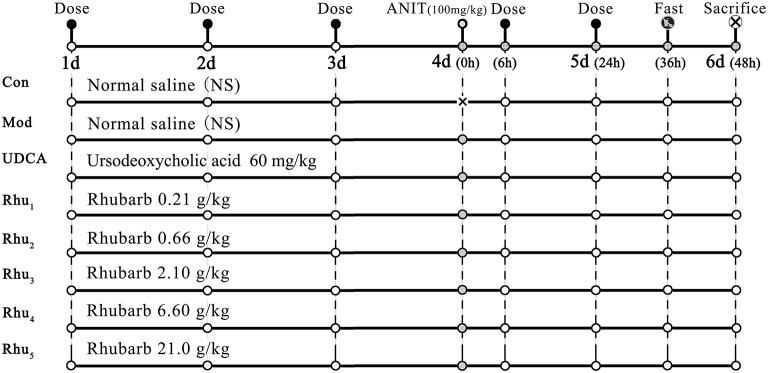
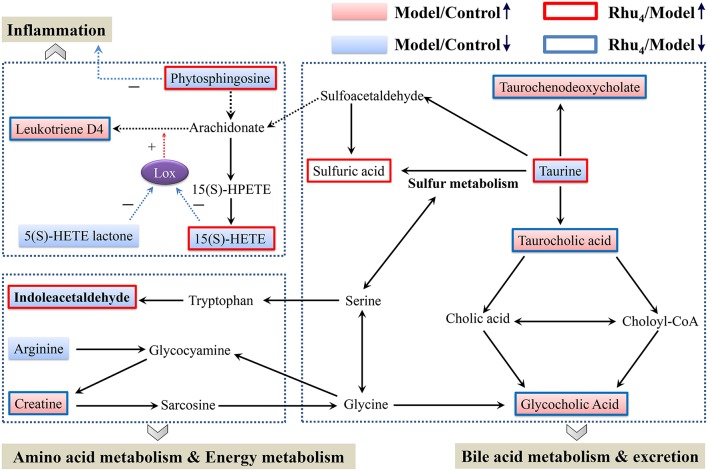
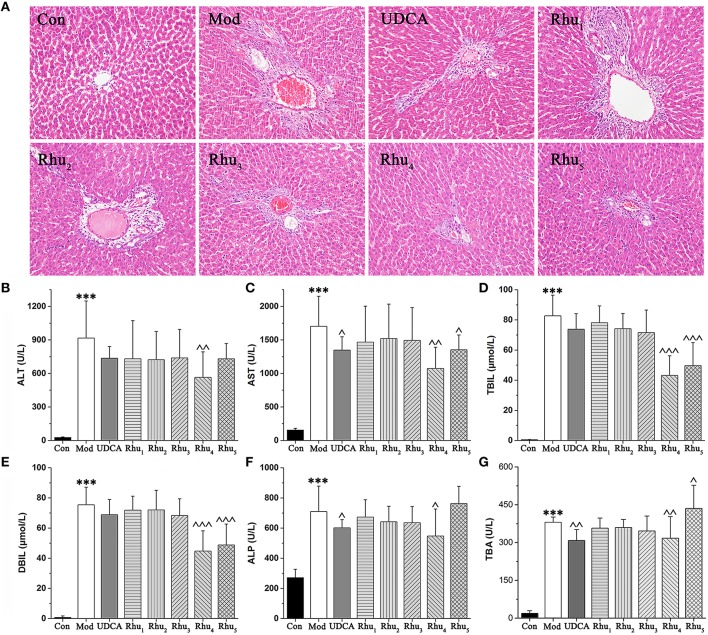
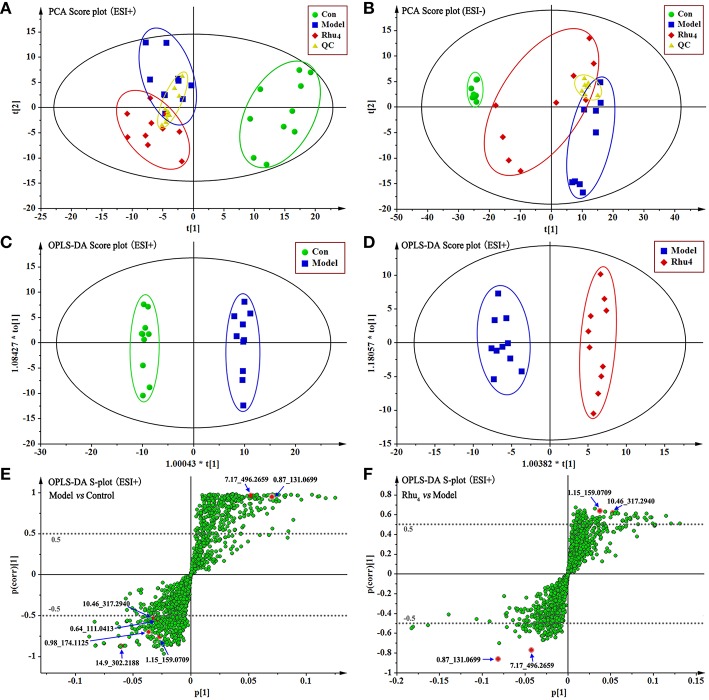
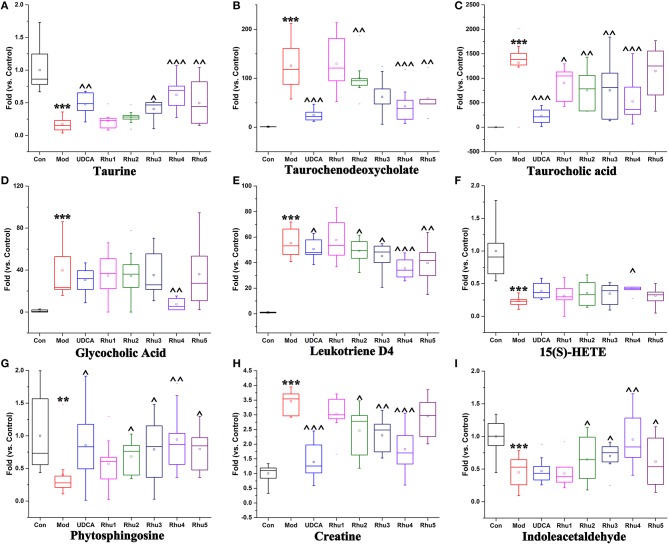
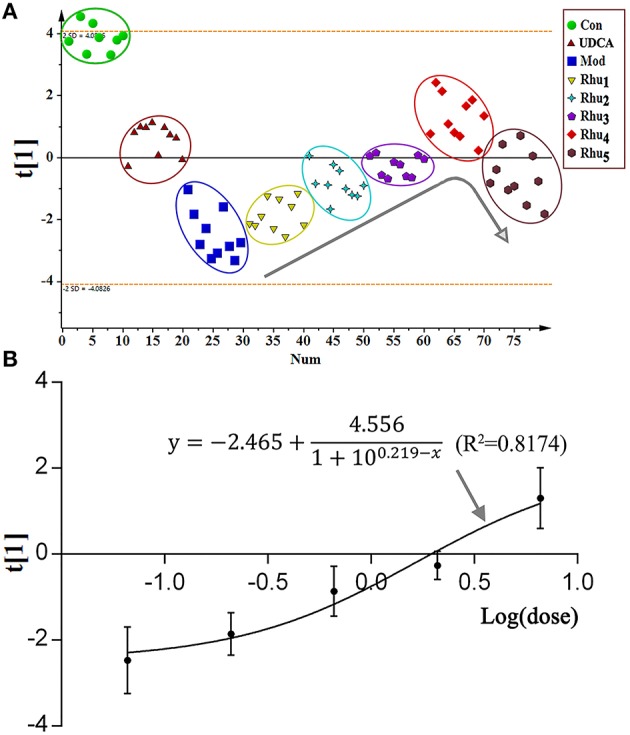
Cholestasis is a serious manifestation of liver diseases with limited therapies. Rhubarb, a widely used herbal medicine, has been frequently used at a relatively large dose for treating cholestasis. However, whether large doses are optimal and the therapeutic mechanism remain unclear. To explore these questions, the anti-cholestatic effect of five doses of rhubarb (0.21, 0.66, 2.10, 6.60, and 21.0 g/kg) in an alpha-naphthylisothiocyanate (ANIT)-induced rat model of cholestasis was examined by histopathology and serum biochemistry. A dose-dependent anti-cholestatic effect of rhubarb (0.21-6.6 g/kg) was observed, and an overdose of 21.0 g/kg showed a poor effect. LC-MS-based untargeted metabolomics together with pathway analysis were further applied to characterize the metabolic alterations induced by the different rhubarb doses. Altogether, 13 biomarkers were identified. The dose-response curve based on nine important biomarkers indicated that doses in the 0.42-6.61 g/kg range (EC20-EC80 range, corresponding to 4.00-62.95 g in the clinic) were effective for cholestasis treatment. The pathway analysis showed that bile acid metabolism and excretion, inflammation and amino acid metabolism were altered by rhubarb in a dose-dependent manner and might be involved in the dose-response relationship and therapeutic mechanism of rhubarb for cholestasis treatment.
胆汁淤积是肝脏疾病的一种严重表现,治疗方法有限。大黄是一种广泛使用的草药,经常以相对较大的剂量用于治疗胆汁淤积。然而,大剂量是否最佳以及治疗机制仍不清楚。为了探究这些问题,通过组织病理学和血清生物化学方法,研究了五剂大黄(0.21、0.66、2.10、6.60和21.0克/千克)在α-萘异硫氰酸酯(ANIT)诱导的大鼠胆汁淤积模型中的抗胆汁淤积作用。观察到大黄(0.21 - 6.6克/千克)具有剂量依赖性的抗胆汁淤积作用,而21.0克/千克的过量剂量效果不佳。基于液相色谱-质谱联用的非靶向代谢组学以及通路分析进一步用于表征不同大黄剂量诱导的代谢变化。总共鉴定出13种生物标志物。基于9种重要生物标志物的剂量-反应曲线表明,0.42 - 6.61克/千克范围内的剂量(EC20 - EC80范围,相当于临床中的4.00 - 62.95克)对胆汁淤积治疗有效。通路分析表明,大黄以剂量依赖性方式改变胆汁酸代谢和排泄以及炎症和氨基酸代谢,这可能与大黄治疗胆汁淤积的剂量-反应关系和治疗机制有关。