Zhang Xiaohan, Choi Bo-Gil, Kim Kyeong-Man
Pharmacology Laboratory, College of Pharmacy, Chonnam National University, Gwangju 61186, Republic of Korea.
Medicinal Chemistry Laboratory, College of Pharmacy, Chonnam National University, Gwangju 61186, Republic of Korea.
Biomol Ther (Seoul). 2016 Sep 1;24(5):517-22. doi: 10.4062/biomolther.2015.198.
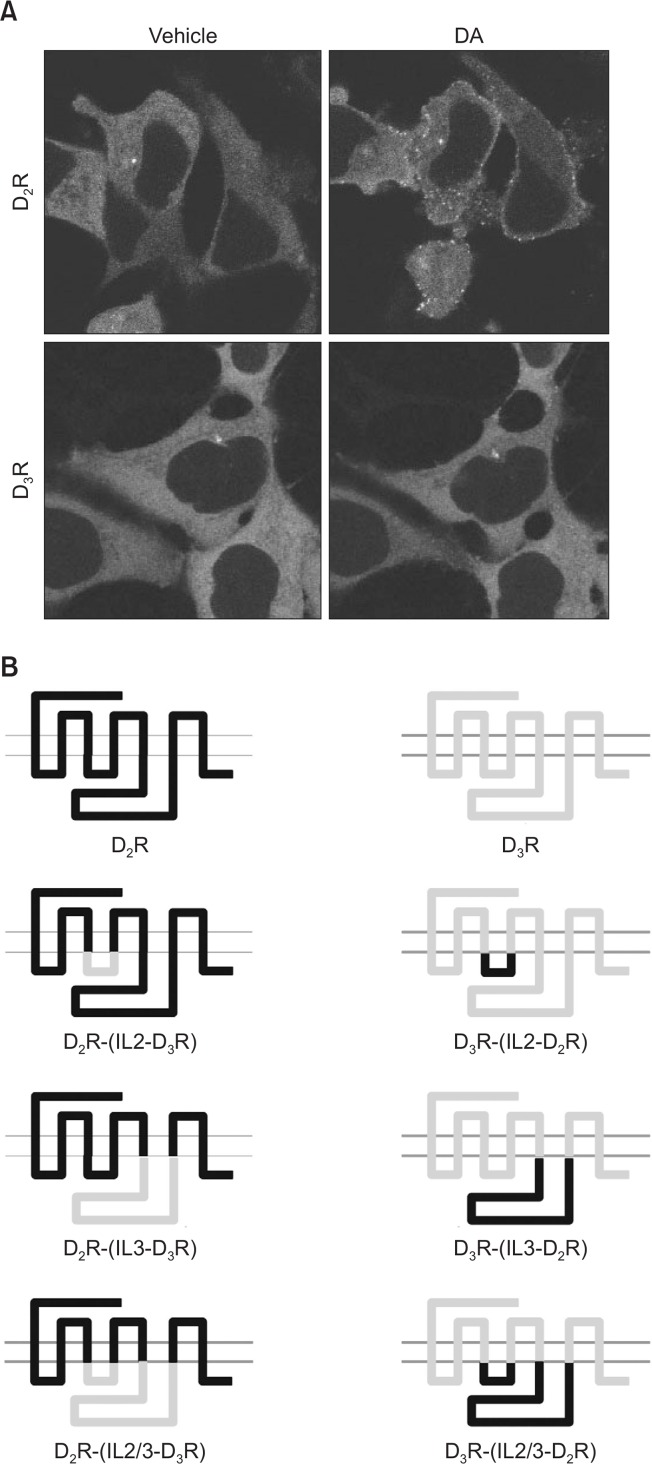
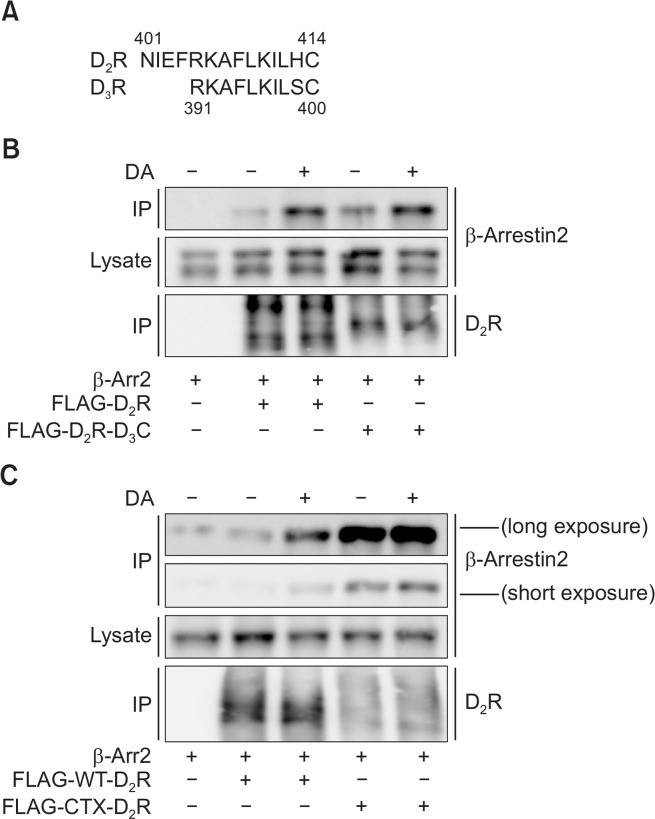
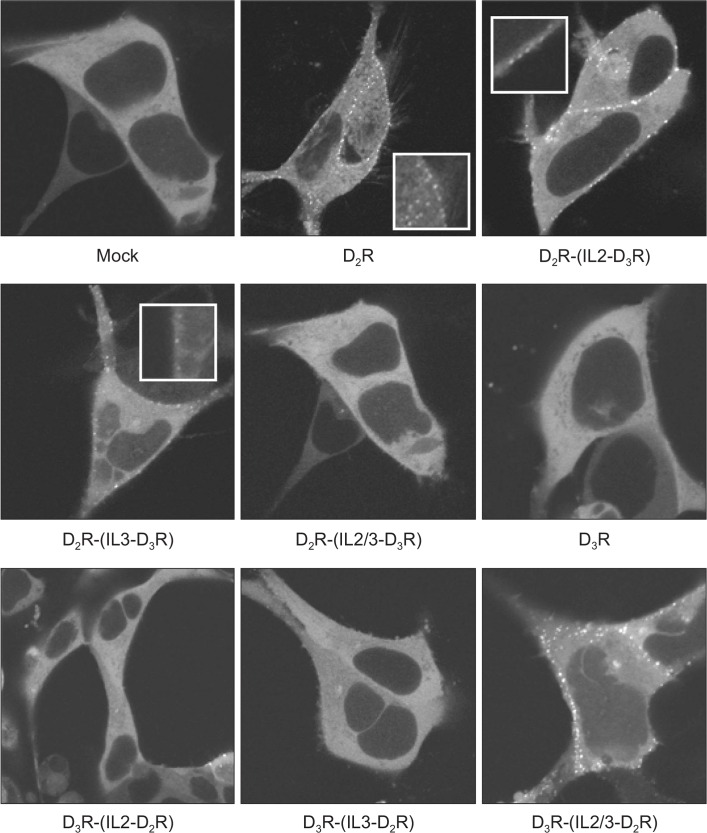
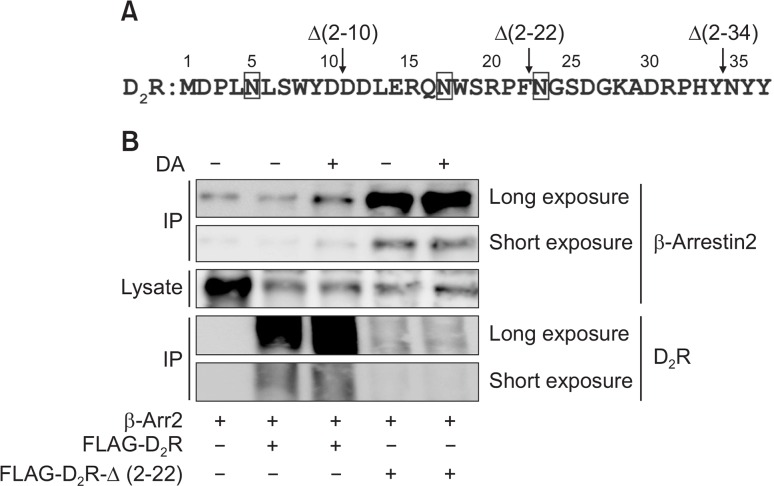
β-Arrestins are one of the protein families that interact with G protein-coupled receptors (GPCRs). The roles of β-arrestins are multifaceted, as they mediate different processes including receptor desensitization, endocytosis, and G protein-independent signaling. Thus, determining the GPCR regions involved in the interactions with β-arrestins would be a preliminary step in understanding the molecular mechanisms involved in the selective direction of each function. In the current study, we determined the roles of the N-terminus, intracellular loops, and C-terminal tail of a representative GPCR in the interaction with β-arrestin2. For this, we employed dopamine D₂ and D₃ receptors (D₂R and D₃R, respectively), since they display distinct agonist-induced interactions with β-arrestins. Our results showed that the second and third intracellular loops of D₂R are involved in the agonist-induced translocation of β-arrestins toward plasma membranes. In contrast, the N- and C-termini of D₂R exerted negative effects on the basal interaction with β-arrestins.
β-抑制蛋白是与G蛋白偶联受体(GPCR)相互作用的蛋白家族之一。β-抑制蛋白的作用是多方面的,因为它们介导不同的过程,包括受体脱敏、内吞作用和G蛋白非依赖性信号传导。因此,确定与β-抑制蛋白相互作用的GPCR区域将是理解每个功能的选择性方向所涉及分子机制的第一步。在当前研究中,我们确定了代表性GPCR的N端、细胞内环和C端尾巴在与β-抑制蛋白2相互作用中的作用。为此,我们使用了多巴胺D₂和D₃受体(分别为D₂R和D₃R),因为它们表现出与β-抑制蛋白不同的激动剂诱导相互作用。我们的结果表明,D₂R的第二和第三细胞内环参与了激动剂诱导的β-抑制蛋白向质膜的转位。相反,D₂R的N端和C端对与β-抑制蛋白的基础相互作用产生负面影响。