Zhang Xiaohan, Kim Kyeong-Man
Pharmacology Laboratory, College of Pharmacy, Chonnam National University, Gwangju 61186, Republic of Korea.
Biomol Ther (Seoul). 2017 Jan 1;25(1):26-43. doi: 10.4062/biomolther.2016.186.
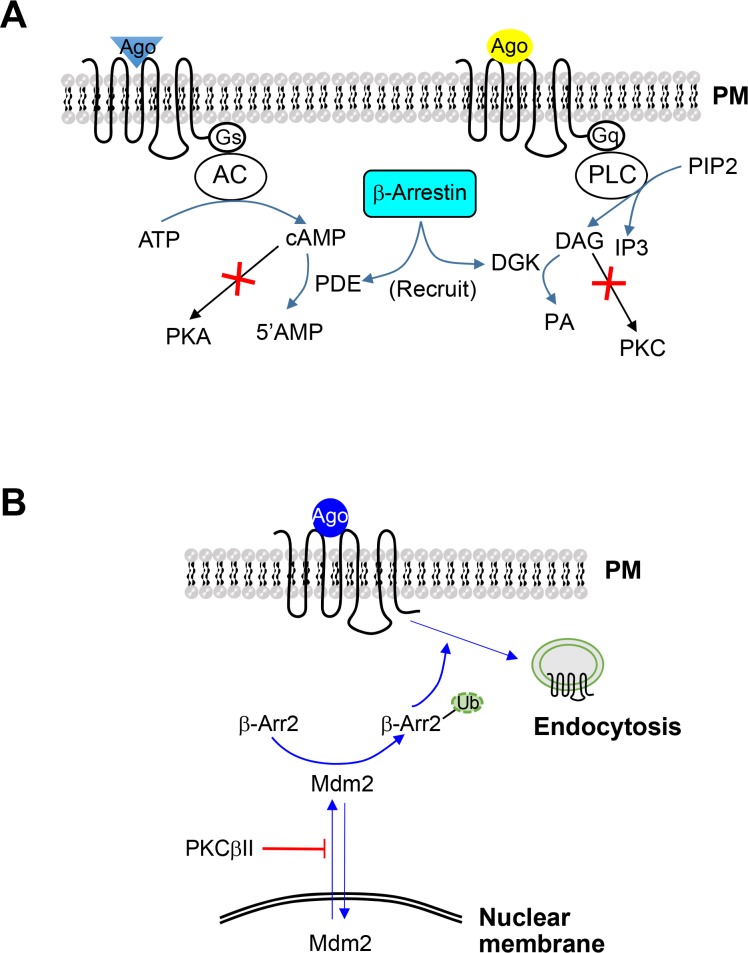
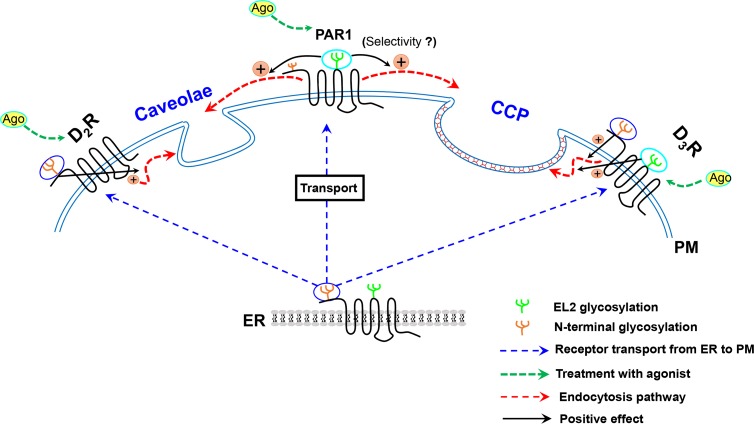
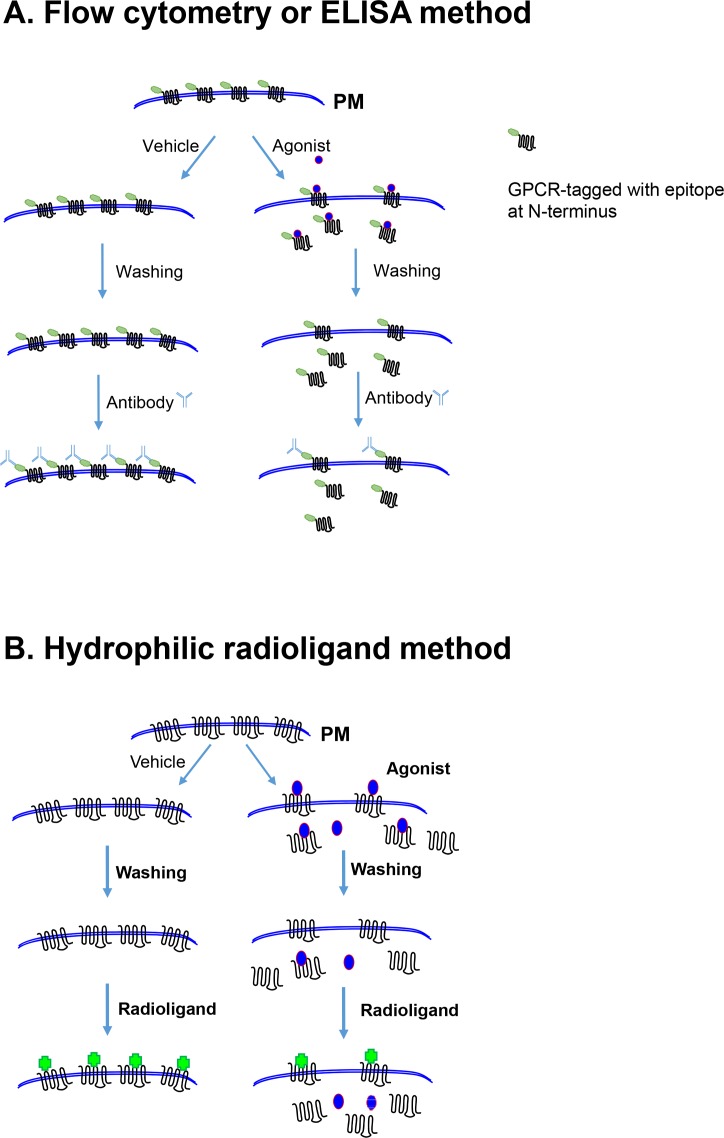
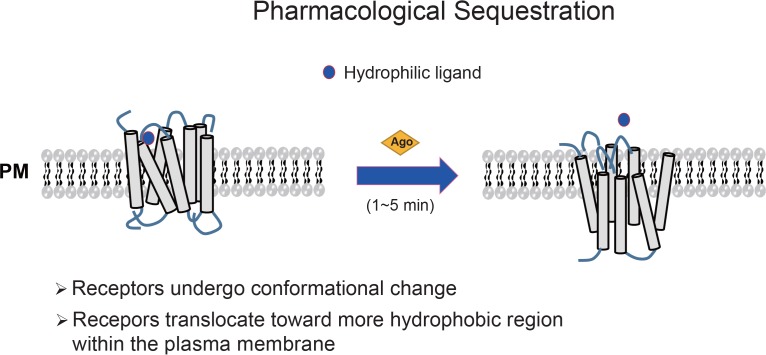
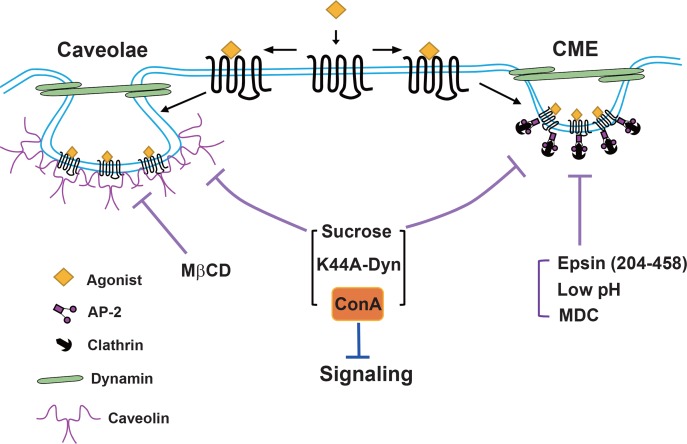
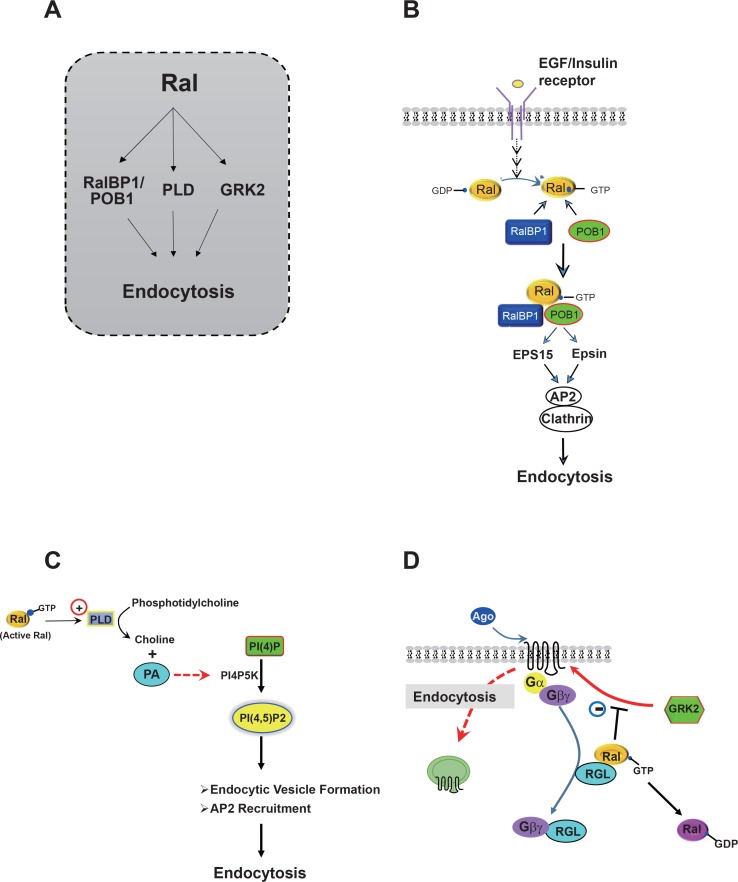
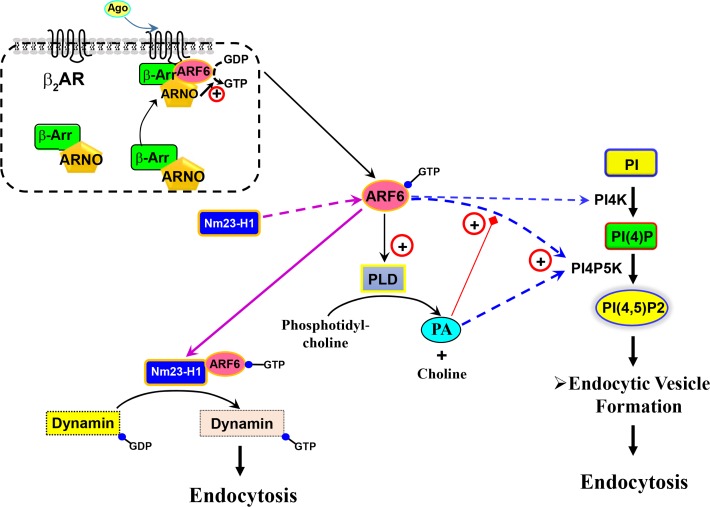
Endocytosis is a process by which cells absorb extracellular materials via the inward budding of vesicles formed from the plasma membrane. Receptor-mediated endocytosis is a highly selective process where receptors with specific binding sites for extracellular molecules internalize via vesicles. G protein-coupled receptors (GPCRs) are the largest single family of plasma-membrane receptors with more than 1000 family members. But the molecular mechanisms involved in the regulation of GPCRs are believed to be highly conserved. For example, receptor phosphorylation in collaboration with b-arrestins plays major roles in desensitization and endocytosis of most GPCRs. Nevertheless, a number of subsequent studies showed that GPCR regulation, such as that by endocytosis, occurs through various pathways with a multitude of cellular components and processes. This review focused on i) functional interactions between homologous and heterologous pathways, ii) methodologies applied for determining receptor endocytosis, iii) experimental tools to determine specific endocytic routes, iv) roles of small guanosine triphosphate-binding proteins in GPCR endocytosis, and v) role of post-translational modification of the receptors in endocytosis.
内吞作用是细胞通过质膜形成的囊泡向内出芽来吸收细胞外物质的过程。受体介导的内吞作用是一个高度选择性的过程,其中具有细胞外分子特异性结合位点的受体通过囊泡内化。G蛋白偶联受体(GPCRs)是质膜受体中最大的单一家族,有超过1000个家族成员。但据信参与GPCRs调节的分子机制高度保守。例如,受体磷酸化与β-抑制蛋白协同作用在大多数GPCRs的脱敏和内吞作用中起主要作用。然而,随后的一些研究表明,GPCRs的调节,如通过内吞作用的调节,是通过各种途径发生的,涉及众多细胞成分和过程。本综述重点关注:i)同源和异源途径之间的功能相互作用;ii)用于确定受体内吞作用的方法;iii)确定特定内吞途径的实验工具;iv)小GTP结合蛋白在GPCR内吞作用中的作用;v)受体翻译后修饰在内吞作用中的作用。