Domeier Phillip P, Chodisetti Sathi Babu, Soni Chetna, Schell Stephanie L, Elias Melinda J, Wong Eric B, Cooper Timothy K, Kitamura Daisuke, Rahman Ziaur S M
Department of Microbiology and Immunology, Pennsylvania State University College of Medicine, Hershey, PA 17033.
Department of Comparative Medicine, Pennsylvania State University College of Medicine, Hershey, PA 17033 Department of Pathology, Pennsylvania State University College of Medicine, Hershey, PA 17033.
J Exp Med. 2016 May 2;213(5):715-32. doi: 10.1084/jem.20151722. Epub 2016 Apr 11.
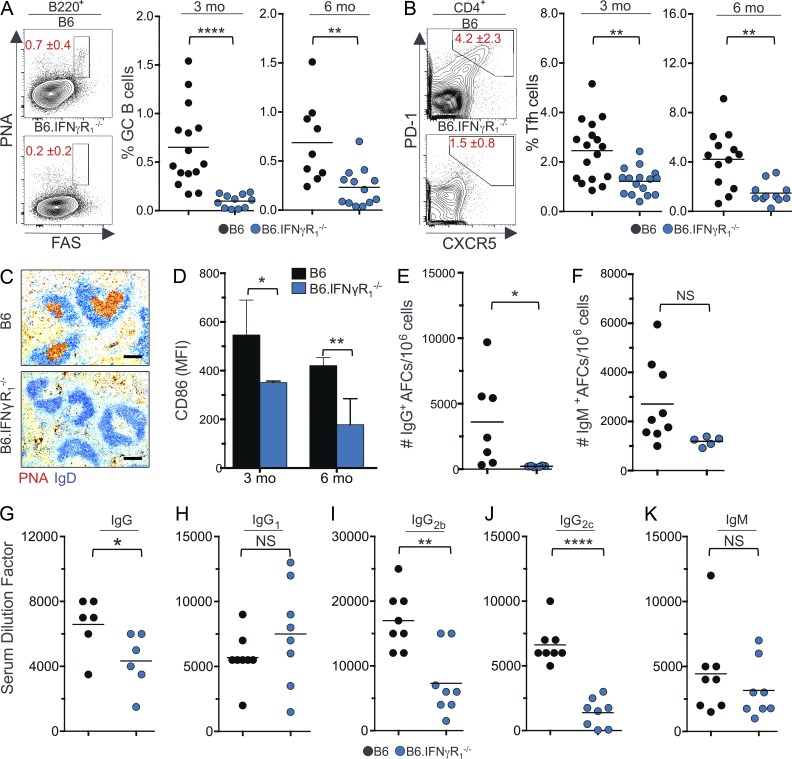
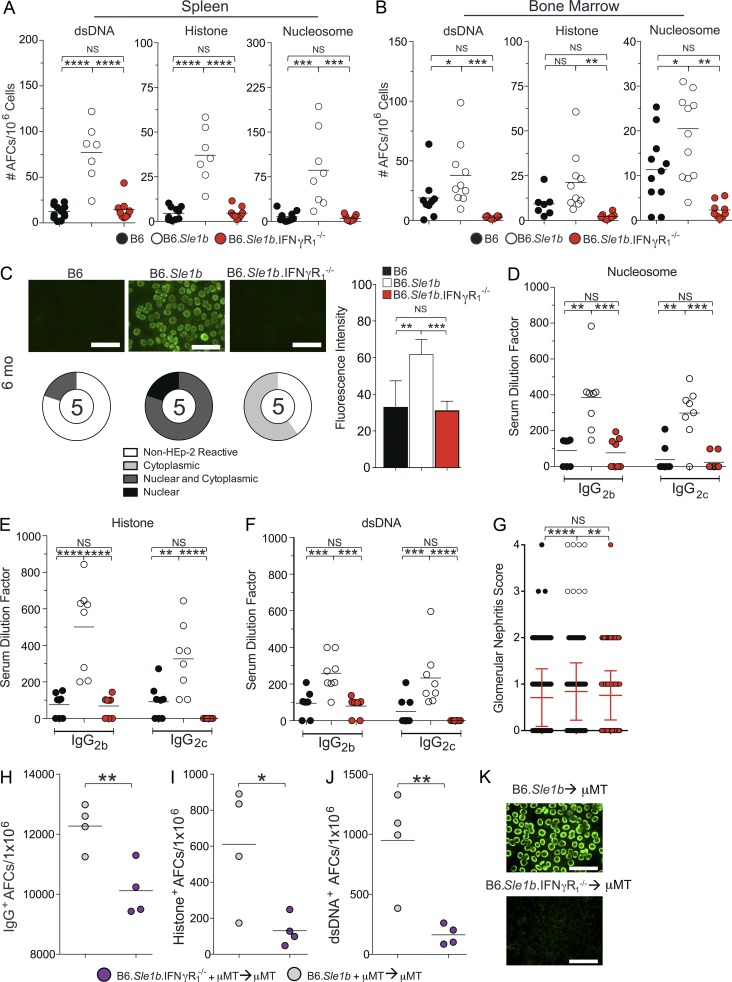
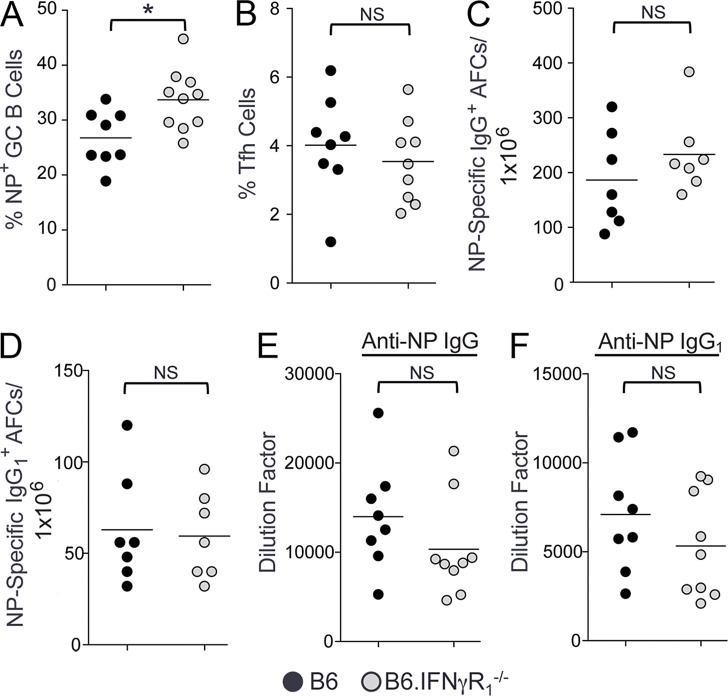
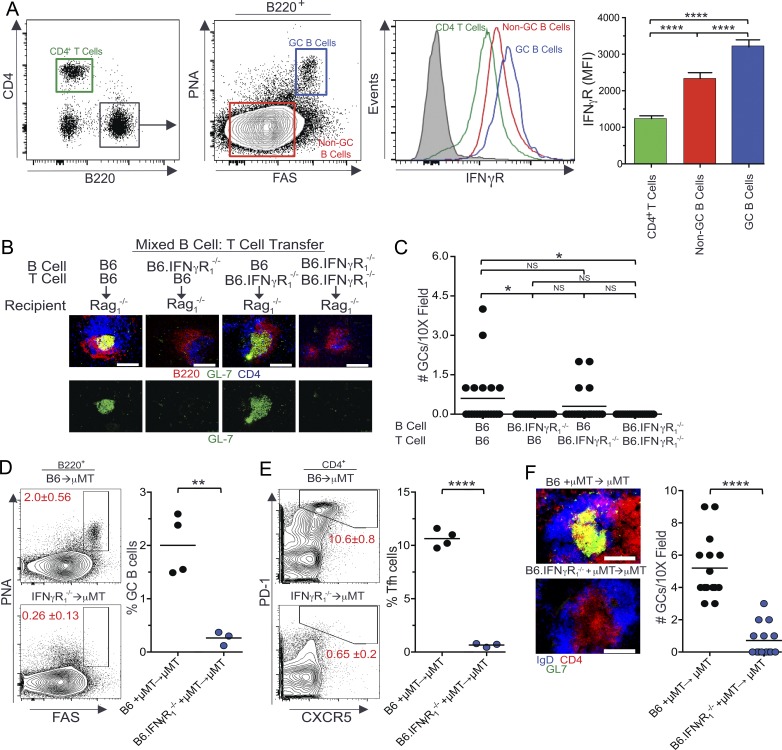
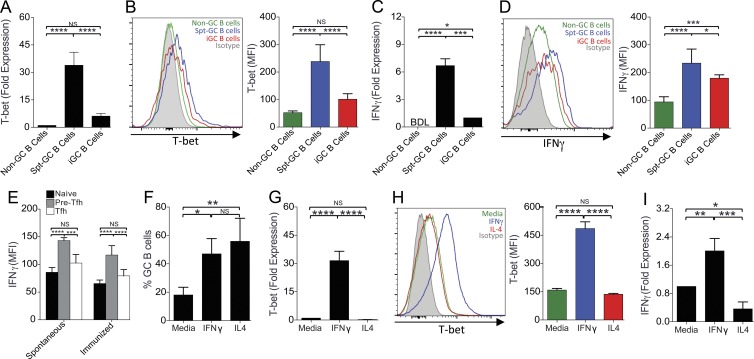
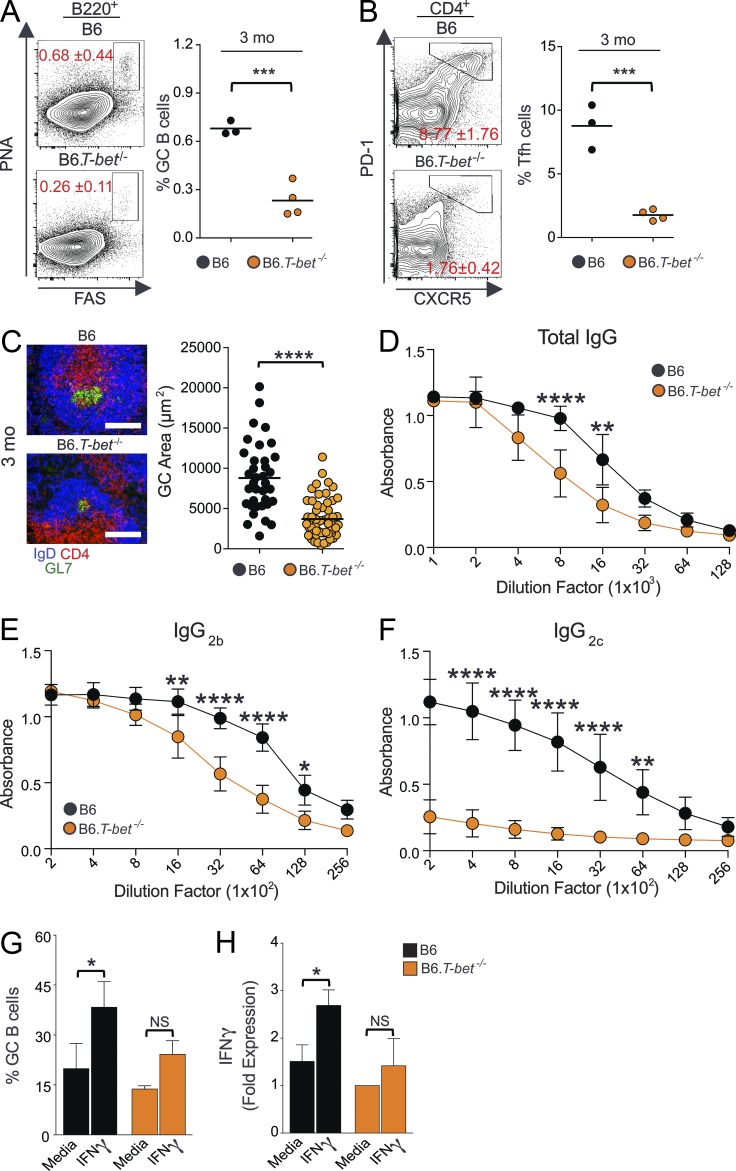
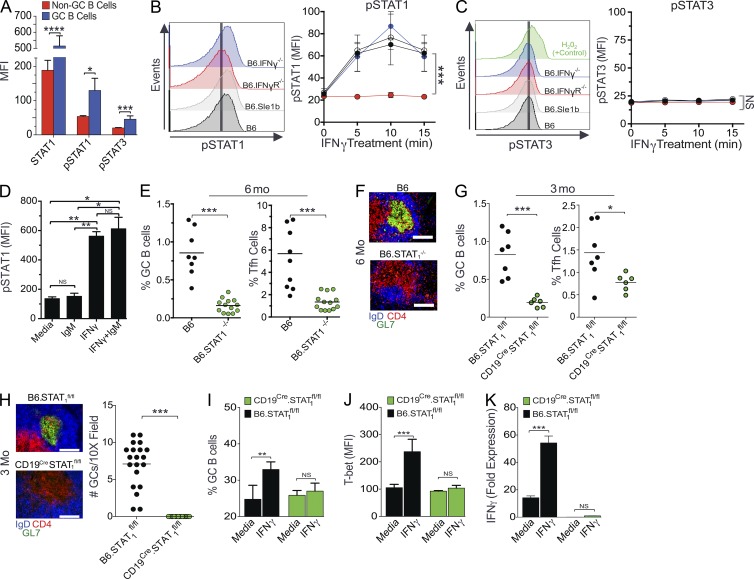
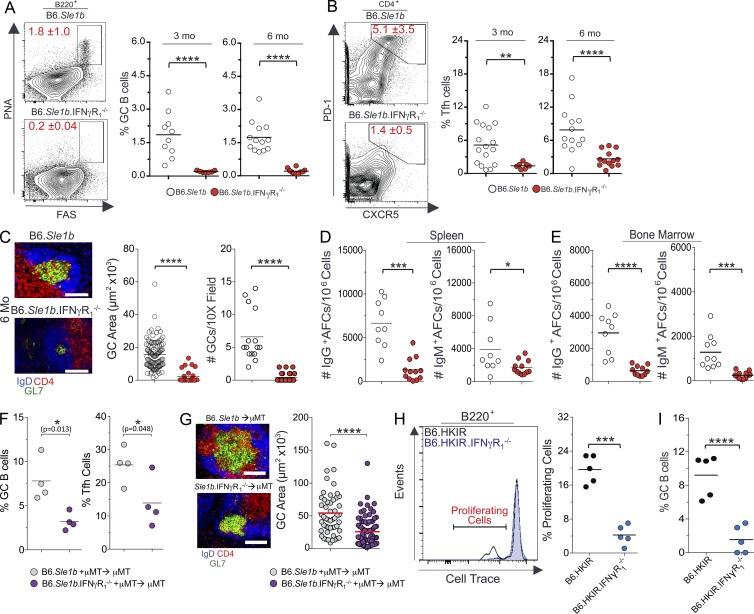
Spontaneously developed germinal centers (GCs [Spt-GCs]) harbor autoreactive B cells that generate somatically mutated and class-switched pathogenic autoantibodies (auto-Abs) to promote autoimmunity. However, the mechanisms that regulate Spt-GC development are not clear. In this study, we report that B cell-intrinsic IFN-γ receptor (IFN-γR) and STAT1 signaling are required for Spt-GC and follicular T helper cell (Tfh cell) development. We further demonstrate that IFN-γR and STAT1 signaling control Spt-GC and Tfh cell formation by driving T-bet expression and IFN-γ production by B cells. Global or B cell-specific IFN-γR deficiency in autoimmune B6.Sle1b mice leads to significantly reduced Spt-GC and Tfh cell responses, resulting in diminished antinuclear Ab reactivity and IgG2c and IgG2b auto-Ab titers compared with B6.Sle1b mice. Additionally, we observed that the proliferation and differentiation of DNA-reactive B cells into a GC B cell phenotype require B cell-intrinsic IFN-γR signaling, suggesting that IFN-γR signaling regulates GC B cell tolerance to nuclear self-antigens. The IFN-γR deficiency, however, does not affect GC, Tfh cell, or Ab responses against T cell-dependent foreign antigens, indicating that IFN-γR signaling regulates autoimmune, but not the foreign antigen-driven, GC and Tfh cell responses. Together, our data define a novel B cell-intrinsic IFN-γR signaling pathway specific to Spt-GC development and autoimmunity. This novel pathway can be targeted for future pharmacological intervention to treat systemic lupus erythematosus.
自发形成的生发中心(Spt-GCs)中存在自身反应性B细胞,这些细胞会产生体细胞突变和类别转换的致病性自身抗体(自身抗体),从而促进自身免疫。然而,调节Spt-GC发育的机制尚不清楚。在本研究中,我们报告B细胞内在的干扰素-γ受体(IFN-γR)和信号转导及转录激活因子1(STAT1)信号对于Spt-GC和滤泡辅助性T细胞(Tfh细胞)的发育是必需的。我们进一步证明,IFN-γR和STAT1信号通过驱动B细胞表达T-bet和产生IFN-γ来控制Spt-GC和Tfh细胞的形成。与B6.Sle1b小鼠相比,自身免疫性B6.Sle1b小鼠中全身或B细胞特异性IFN-γR缺陷导致Spt-GC和Tfh细胞反应显著降低,从而使抗核抗体反应性以及IgG2c和IgG2b自身抗体滴度降低。此外,我们观察到DNA反应性B细胞增殖并分化为GC B细胞表型需要B细胞内在的IFN-γR信号,这表明IFN-γR信号调节GC B细胞对核自身抗原的耐受性。然而,IFN-γR缺陷并不影响针对T细胞依赖性外来抗原的GC、Tfh细胞或抗体反应,这表明IFN-γR信号调节自身免疫性而非外来抗原驱动的GC和Tfh细胞反应。总之,我们的数据定义了一条新的B细胞内在IFN-γR信号通路,该通路特异性地参与Spt-GC发育和自身免疫。这条新通路可作为未来药物干预的靶点,用于治疗系统性红斑狼疮。