Alves Mikael, Lemire Astrid, Decré Dominique, Margetis Dimitri, Bigé Naïke, Pichereau Claire, Ait-Oufella Hafid, Baudel Jean-Luc, Offenstadt Georges, Guidet Bertrand, Barbut Frédéric, Maury Eric
Service de Réanimation Médicale, Hôpital Saint-Antoine, Assistance Publique-Hôpitaux de Paris, 184 rue du Faubourg Saint-Antoine, 75012, Paris, France.
Service de Microbiologie, Hôpital Saint-Antoine, Assistance Publique-Hôpitaux de Paris, 184 rue du Faubourg Saint-Antoine, 75012, Paris, France.
BMC Infect Dis. 2016 Apr 13;16:147. doi: 10.1186/s12879-016-1489-z.
In intensive care unit (ICU), infection and colonization by resistant Gram-negative bacteria increase costs, length of stay and mortality. Extended-spectrum beta-lactamase--producing Enterobacteriaceae (ESBL-E) is a group of pathogens increasingly encountered in ICU setting. Conditions that promote ESBL-E acquisition are not completely understood. The increasing incidence of infections related to ESBL-E and the unsolved issues related to ESBL-E cross-transmission, prompted us to assess the rates of referred and acquired cases of ESBL-E in ICU and to assess patient-to-patient cross-transmission of ESBL-E using a multimodal microbiological analysis.
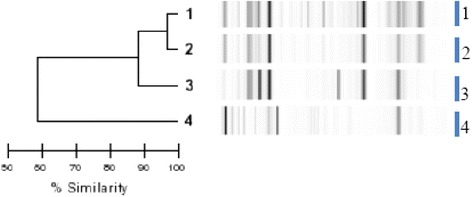
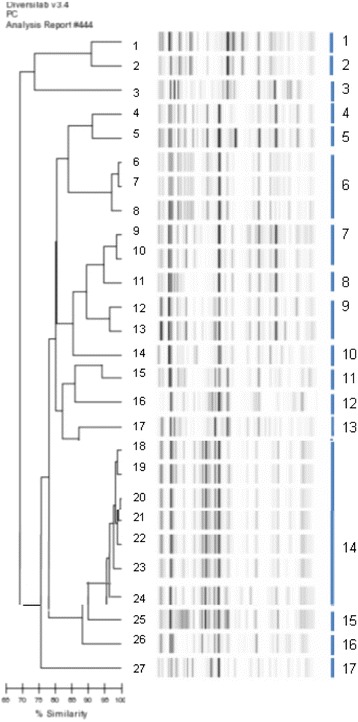
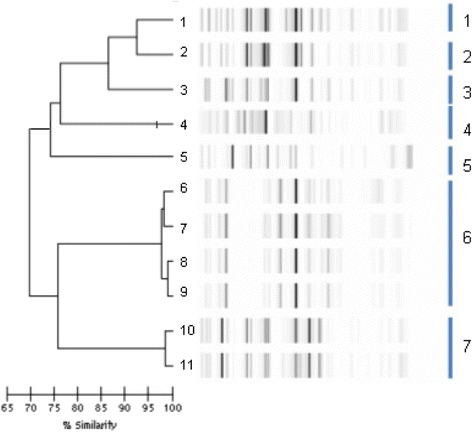
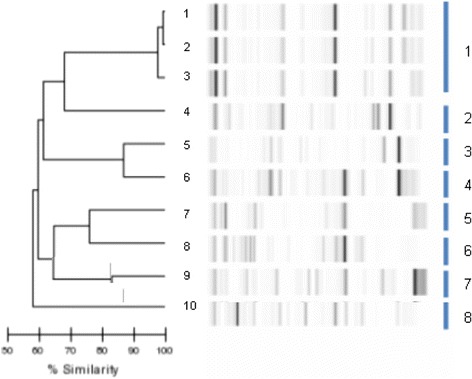
During a 5-month period, all patients admitted to a medical ICU were tested for ESBL-E carriage. A rectal swab was performed at admission and then twice a week until discharge or death. ESBL-E strains were analyzed according to antibiotic susceptibility pattern, rep-PCR (repetitive-element Polymerase chain reaction) chromosomal analysis, and plasmid PCR (Polymerase chain reaction) analysis of ESBL genes. Patient-to-patient transmission was deemed likely when 2 identical strains were found in 2 patients hospitalized simultaneously in the ICU.
Among the 309 patients assessed for ESBL-E carriage on admission, 25 were found to carry ESBL-E (importation rate: 8%). During follow-up, acquisition was observed among 19 of them (acquisition rate: 6.5%). Using the multimodal microbiological approach, we found only one case of likely patient-to-patient ESBL-E transmission.
In unselected ICU patients, we found rather low rates of ESBL-E referred and acquired cases. Only 5% of acquisitions appeared to be related to patient-to-patient transmission. These data highlight the importance of jointly analyzing phenotypic profile and molecular data to discriminate strains of ESBL-E.
在重症监护病房(ICU),耐革兰氏阴性菌的感染和定植会增加成本、住院时间和死亡率。产超广谱β-内酰胺酶肠杆菌科细菌(ESBL-E)是在ICU环境中越来越常见的一类病原体。促进ESBL-E获得的条件尚未完全明确。与ESBL-E相关感染的发病率不断上升以及与ESBL-E交叉传播相关的未解决问题,促使我们评估ICU中ESBL-E转诊和获得病例的发生率,并使用多模式微生物学分析评估ESBL-E在患者之间的交叉传播。
在5个月期间,对入住内科ICU的所有患者进行ESBL-E携带检测。入院时进行直肠拭子检查,然后每周两次,直至出院或死亡。根据抗生素敏感性模式、rep-PCR(重复元件聚合酶链反应)染色体分析以及ESBL基因的质粒PCR(聚合酶链反应)分析对ESBL-E菌株进行分析。当在ICU同时住院的两名患者中发现2株相同菌株时,则认为可能发生了患者之间的传播。
在入院时评估ESBL-E携带情况的309例患者中,有25例被发现携带ESBL-E(引入率:8%)。在随访期间,其中19例出现了获得情况(获得率:6.5%)。使用多模式微生物学方法,我们仅发现1例可能的ESBL-E患者之间传播病例。
在未经过筛选的ICU患者中,我们发现ESBL-E转诊和获得病例的发生率相当低。只有5%的获得情况似乎与患者之间的传播有关。这些数据突出了联合分析表型特征和分子数据以鉴别ESBL-E菌株的重要性。