Birkeland Andrew C, Yanik Megan, Tillman Brittny N, Scott Megan V, Foltin Susan K, Mann Jacqueline E, Michmerhuizen Nicole L, Ludwig Megan L, Sandelski Morgan M, Komarck Christine M, Carey Thomas E, Prince Mark E P, Bradford Carol R, McHugh Jonathan B, Spector Matthew E, Brenner J Chad
Department of Otolaryngology-Head and Neck Surgery, University of Michigan Medical School, Ann Arbor.
medical student, University of Michigan Medical School, Ann Arbor.
JAMA Otolaryngol Head Neck Surg. 2016 Jun 1;142(6):559-67. doi: 10.1001/jamaoto.2016.0335.
ERBB2 (formerly HER2) is an important drug target in breast cancer, where anti-ERBB2 therapy has been shown to lead to improvements in disease recurrence and overall survival. ERBB2 status in head and neck squamous cell carcinoma (HNSCC) has not been well studied. Identification of ERBB2-positive tumors and characterization of response to ERBB2 therapy could lead to targeted treatment options in HNSCC.
To identify ERBB2 aberrations in HNSCCs and investigate the potential for ERBB2-targeted therapy in HNSCCs.
DESIGN, SETTING, AND PARTICIPANTS: A retrospective case series of patients with laryngeal (42 tumor specimens) and oral cavity (94 tumor specimens) SCC enrolled in the University of Michigan Head and Neck Specialized Program of Research Excellence was conducted. Publicly available sequencing data (The Cancer Genome Atlas), as well as data from other studies, were reviewed to identify additional mutations and overexpression in ERBB2 in HNSCC. Established HNSCC cell lines were used for follow-up in vitro analysis. The study was conducted from October 1, 2014, to August 30, 2015.
With the use of targeted, amplicon-based sequencing with the Oncomine Cancer Panel, the copy number and mutation status of commonly altered genes in HNSCCs were assessed. Immunohistochemical staining was performed on tissue microarrays of HNSCCs to assess the expression of ERBB2. Western blotting for HNSCC cell line ERBB2 expression and cell survival assays after treatment with ERBB2 inhibitors were performed.
The prevalence of ERBB2 genetic aberrations and ERBB2 overexpression in laryngeal and oral cavity SCCs, prevalence of ERBB2 aberrations in HNSCC in The Cancer Genome Atlas, ERBB2 protein expression in HNSCC cell lines, and response of HNSCC cell lines to targeted ERBB2 inhibitors.
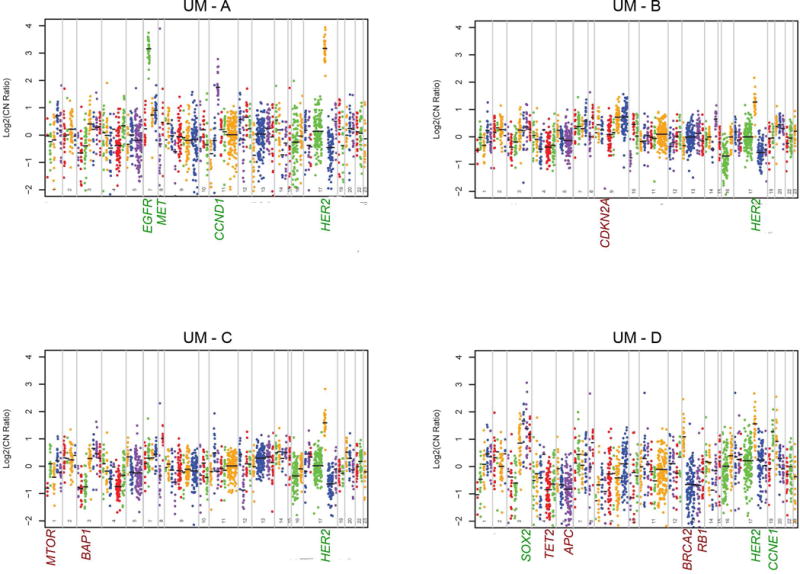
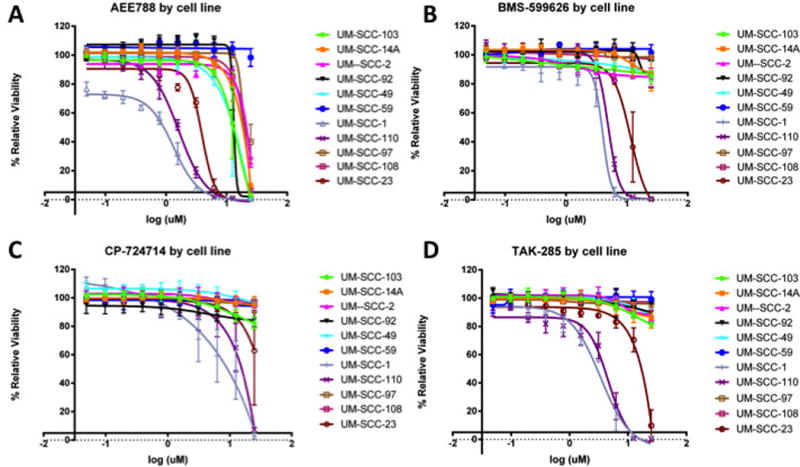
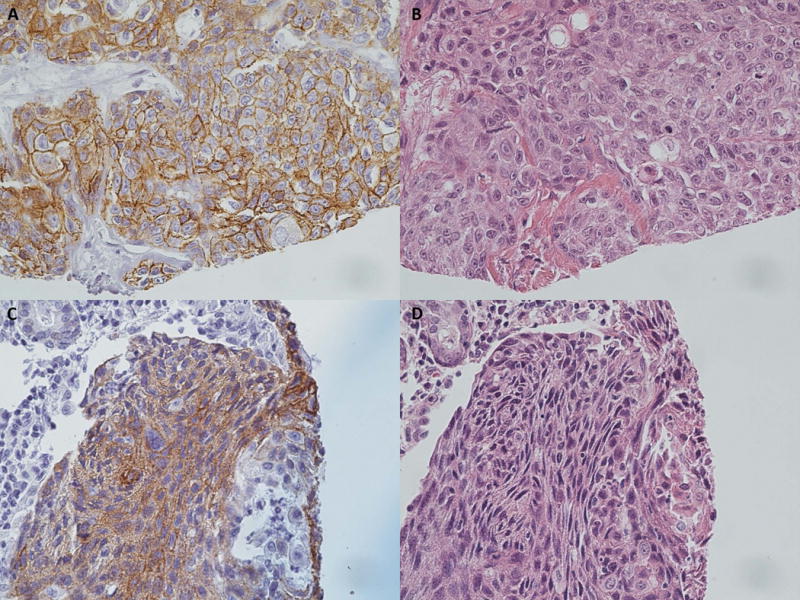
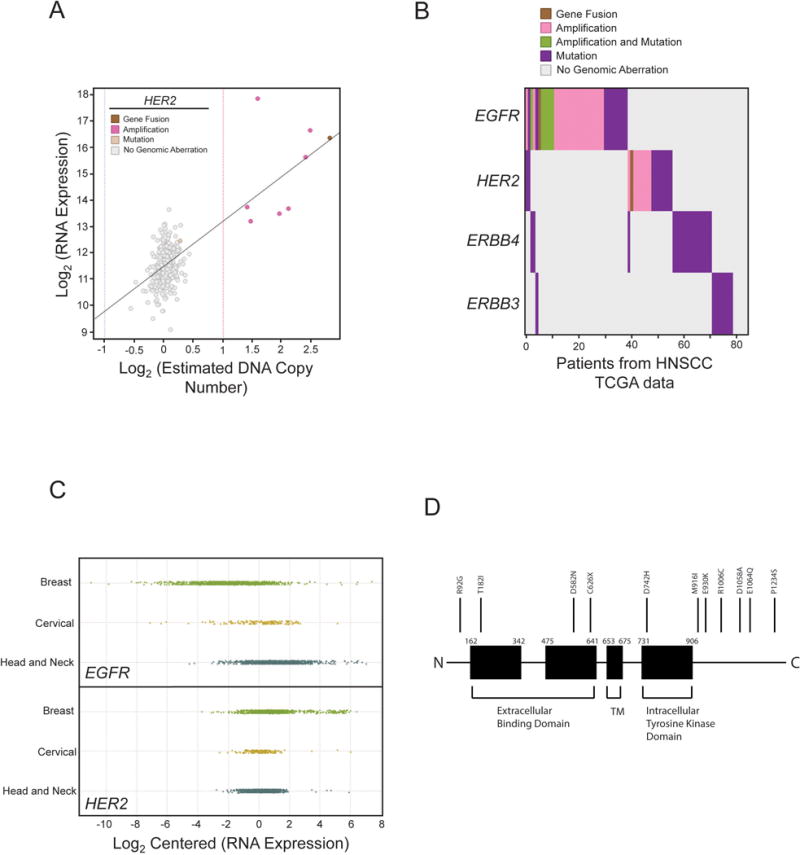
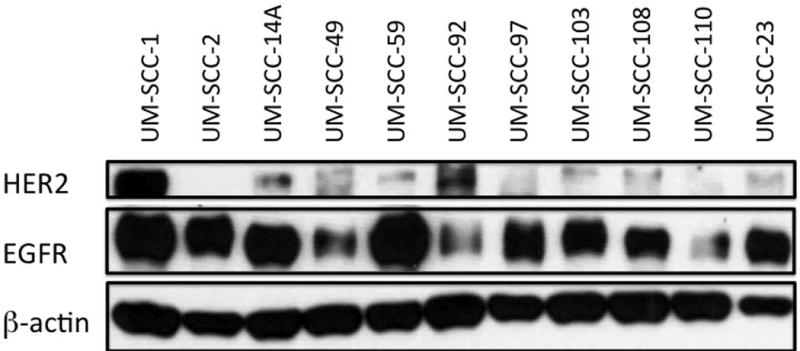
Of the 42 laryngeal SCC samples screened by targeted sequencing, 4 (10%) were positive for ERBB2 amplification. Two of these samples showed ERBB2 overexpression on immunohistochemistry. Two of the 94 oral cavity SCC samples (2%) were positive for ERBB2 on immunohistochemistry. Analysis of 288 patients from publicly available HNSCC sequencing data revealed 9 amplifications (3%) in ERBB2. Protein expression was variable across HNSCC cell lines, and a subset of these cell lines showed responsiveness to anti-ERBB2 therapy.
ERBB2 aberrations were identified in a subset of HNSCCs. These tumors may be responsive to targeted therapy against ERBB2. Screening for ERBB2 aberrations and applying targeted therapy in ERBB2-positive patients may be useful in personalized therapy trials, particularly in patients who are refractory to current treatment paradigms.
ERBB2(以前称为HER2)是乳腺癌中的一个重要药物靶点,抗ERBB2治疗已被证明可改善疾病复发率和总生存率。头颈部鳞状细胞癌(HNSCC)中的ERBB2状态尚未得到充分研究。识别ERBB2阳性肿瘤并表征对ERBB2治疗的反应可能会为HNSCC带来靶向治疗选择。
识别HNSCC中的ERBB2畸变,并研究HNSCC中ERBB2靶向治疗的潜力。
设计、设置和参与者:对密歇根大学头颈部卓越研究专项计划中登记的喉癌(42个肿瘤标本)和口腔癌(94个肿瘤标本)患者进行了一项回顾性病例系列研究。对公开可用的测序数据(癌症基因组图谱)以及其他研究的数据进行了审查,以识别HNSCC中ERBB2的其他突变和过表达情况。使用已建立的HNSCC细胞系进行后续体外分析。该研究于2014年10月1日至2015年8月30日进行。
使用基于扩增子的靶向测序技术和Oncomine癌症检测板,评估HNSCC中常见改变基因的拷贝数和突变状态。对HNSCC组织微阵列进行免疫组织化学染色,以评估ERBB2的表达。对HNSCC细胞系进行ERBB2表达的蛋白质印迹分析以及用ERBB2抑制剂处理后的细胞存活分析。
喉癌和口腔癌SCC中ERBB2基因畸变和ERBB2过表达的发生率、癌症基因组图谱中HNSCC中ERBB2畸变的发生率、HNSCC细胞系中ERBB2蛋白表达以及HNSCC细胞系对靶向ERBB2抑制剂的反应。
在通过靶向测序筛选的42个喉癌SCC样本中,4个(10%)ERBB2扩增呈阳性。其中两个样本在免疫组织化学上显示ERBB2过表达。94个口腔癌SCC样本中有两个(2%)在免疫组织化学上ERBB2呈阳性。对来自公开可用的HNSCC测序数据的288名患者的分析显示,ERBB2中有9个扩增(3%)。HNSCC细胞系中的蛋白质表达各不相同,其中一部分细胞系显示出对抗ERBB2治疗有反应。
在一部分HNSCC中发现了ERBB2畸变。这些肿瘤可能对针对ERBB2的靶向治疗有反应。筛查ERBB2畸变并对ERBB2阳性患者应用靶向治疗可能在个性化治疗试验中有用,特别是对于那些对当前治疗模式难治的患者。