Salvoza Noel C, Klinzing David C, Gopez-Cervantes Juliet, Baclig Michael O
Research and Biotechnology, St. Luke's Medical Center, 279 E. Rodriguez Sr. Blvd., 1112 Quezon City, Philippines.
Liver Disease and Transplant Center, St. Luke's Medical Center, 279 E. Rodriguez Sr. Blvd., 1112 Quezon City, Philippines.
PLoS One. 2016 Apr 14;11(4):e0153497. doi: 10.1371/journal.pone.0153497. eCollection 2016.
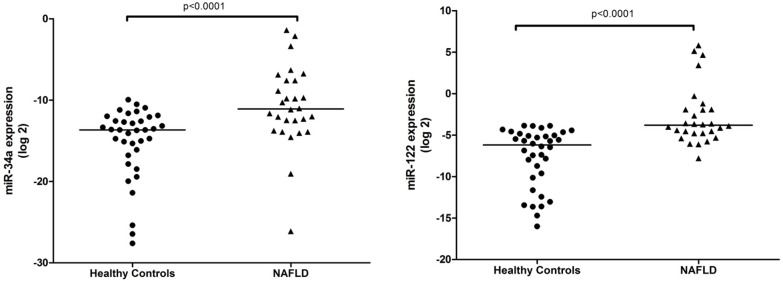
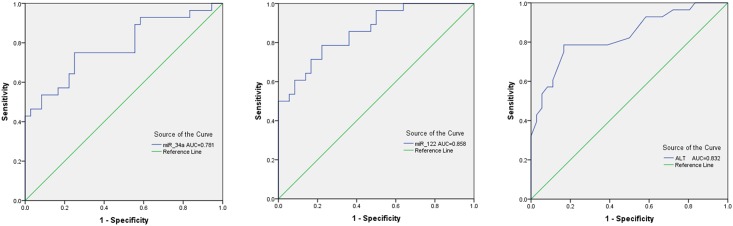
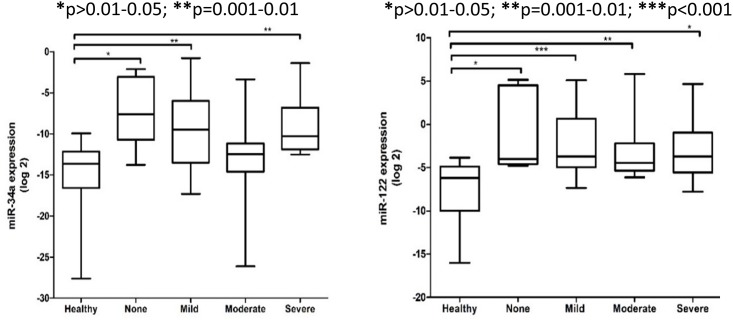
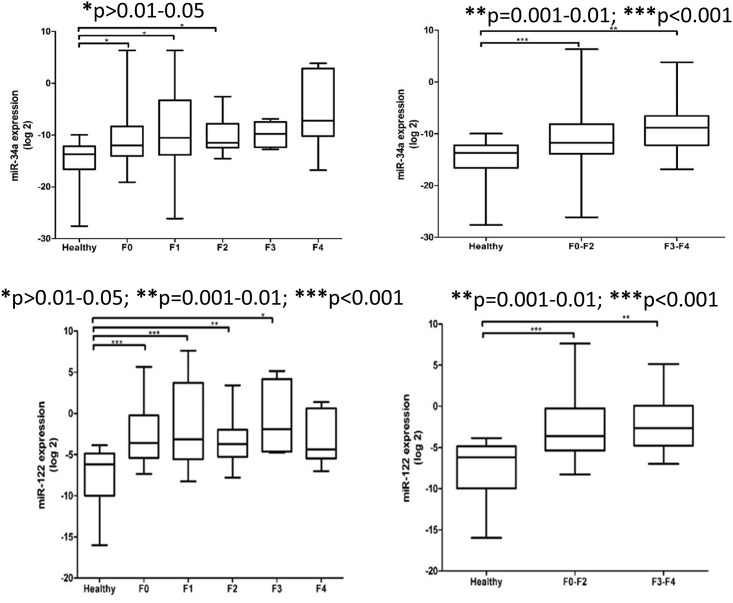
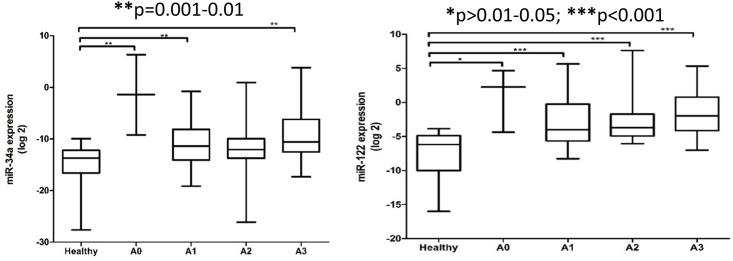
Non-alcoholic fatty liver disease (NAFLD) covers a spectrum of diseases from simple steatosis to non-alcoholic steatohepatitis, with approximately 20% risk of progressing to fibrosis and cirrhosis. The aim of this study was to compare the relative expression levels of circulating miR-21, miR-34a, miR-122, miR-125b and miR-375 between healthy controls and NAFLD patients, and to assess the feasibility of microRNAs as potential biomarkers for NAFLD. A cross-sectional study was conducted to evaluate circulating serum miRNAs as potential diagnostic markers for NAFLD. Twenty-eight clinically diagnosed and histologically-confirmed NAFLD patients, as well as 36 healthy controls were enrolled in this study. The relative expression of serum microRNAs were calculated using the comparative cycle threshold with spiked-in C. elegans miR-39 as exogenous internal control. Serum levels of miR-34a and miR-122 were significantly higher in NAFLD patients than in healthy controls (P = <0.0001). Positive correlations were observed between serum miR-34a with very low density lipoprotein cholesterol (VLDL-C) and triglyceride levels. However, the expression levels of miR-34a and miR-122 did not correlate with the histological features of NAFLD. Interestingly, receiver operating characteristic (ROC) curve analysis revealed that miR-34a and miR-122 are potential markers for discriminating NAFLD patients from healthy controls with an area under the curve (AUC) values of 0.781 and 0.858, respectively. Serum levels of miR-34a and miR-122 were found to be significantly higher among NAFLD patients, and were positively correlated with VLDL-C and triglyceride levels. Thus, circulating miR-34a and miR-122 can be used as potential biomarkers for discriminating NAFLD patients from healthy controls. Larger cohorts are required to validate the utility of miR-34a and miR-122 in monitoring liver injury.
非酒精性脂肪性肝病(NAFLD)涵盖了从单纯性脂肪变性到非酒精性脂肪性肝炎的一系列疾病,约有20%的风险会进展为纤维化和肝硬化。本研究的目的是比较健康对照者和NAFLD患者循环中miR-21、miR-34a、miR-122、miR-125b和miR-375的相对表达水平,并评估微小RNA作为NAFLD潜在生物标志物的可行性。进行了一项横断面研究,以评估循环血清微小RNA作为NAFLD潜在诊断标志物的情况。本研究纳入了28例临床诊断且经组织学证实的NAFLD患者以及36例健康对照者。使用比较循环阈值并以添加的秀丽隐杆线虫miR-39作为外源性内对照来计算血清微小RNA的相对表达。NAFLD患者血清中miR-34a和miR-122的水平显著高于健康对照者(P = <0.0001)。观察到血清miR-34a与极低密度脂蛋白胆固醇(VLDL-C)和甘油三酯水平之间呈正相关。然而,miR-34a和miR-122的表达水平与NAFLD的组织学特征无关。有趣的是,受试者工作特征(ROC)曲线分析显示,miR-34a和miR-122是区分NAFLD患者与健康对照者的潜在标志物,曲线下面积(AUC)值分别为0.781和0.858。发现NAFLD患者中miR-34a和miR-122的血清水平显著更高,且与VLDL-C和甘油三酯水平呈正相关。因此,循环miR-34a和miR-122可作为区分NAFLD患者与健康对照者的潜在生物标志物。需要更大规模的队列来验证miR-34a和miR-122在监测肝损伤中的效用。