Fouquet Grégory, Debuysscher Véronique, Ouled-Haddou Hakim, Eugenio Mélanie Simoes, Demey Baptiste, Singh Amrathlal Rabbind, Ossart Christèle, Al Bagami Mohammed, Regimbeau Jean-Marc, Nguyen-Khac Eric, Naassila Mickael, Marcq Ingrid, Bouhlal Hicham
INSERM-ERi 24 (GRAP) Centre Universitaire de Recherche en Santé CURS, Université de Picardie Jules Verne, Cellulaire Centre Hospitalier Universitaire Sud, Amiens, France.
EA 4666 LNPC, Centre Universitaire de Recherche en Santé CURS, CAP-Santé (FED 4231) Cellulaire Centre Hospitalier Universitaire Sud, Amiens, France.
Oncotarget. 2016 May 31;7(22):32493-503. doi: 10.18632/oncotarget.8679.
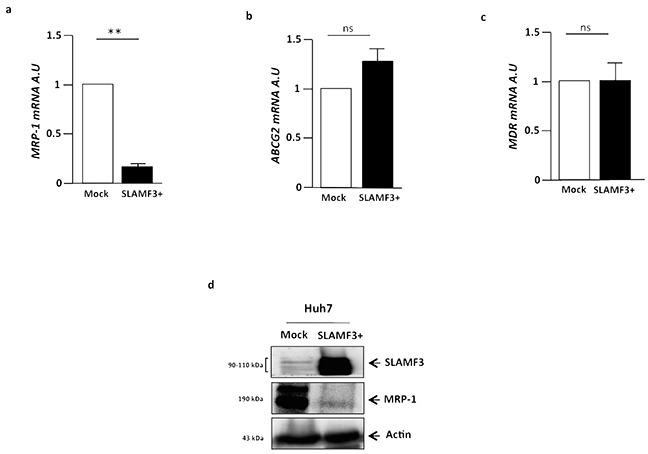
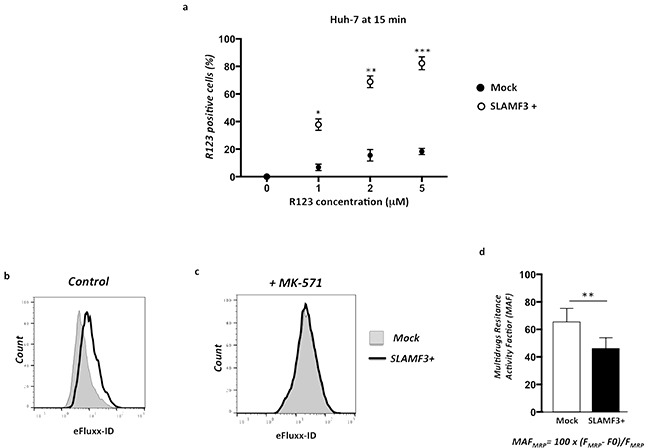
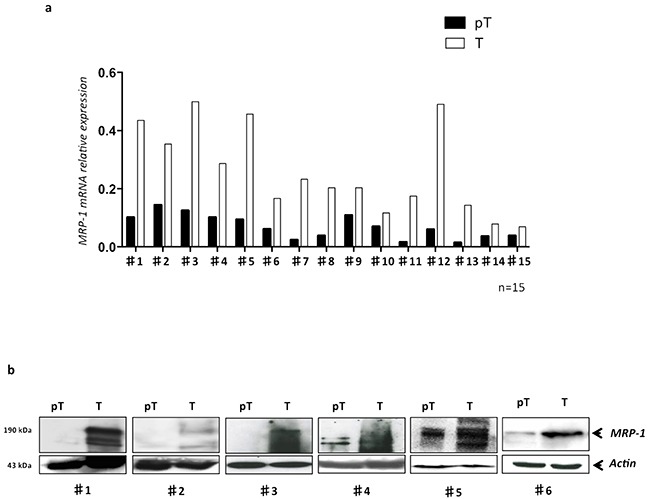
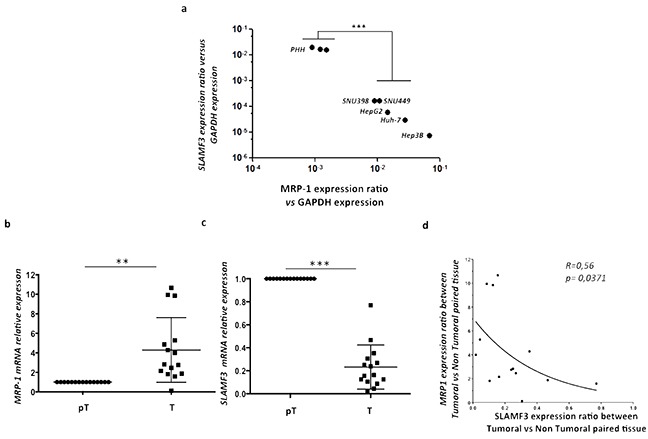
Multidrug resistance MDR proteins (MRPs) are members of the C family of a group of proteins named ATP binding cassette (ABC) transporters. MRPs can transport drugs including anticancer drugs, nucleoside analogs, antimetabolites and tyrosine kinase inhibitors. Drugs used in HCC therapy, such as tyrosine kinase inhibitor sorafenib, are substrates of uptake and/or efflux transporters. Variable expression of MRPs at the plasma membrane of tumor cells may contribute to drug resistance and subsequent clinical response. Recently, we reported that the hepatocyte SLAMF3 expression (Signaling Lymphocytic Activation Molecule Family member 3) was reduced in tumor cells from hepatocellular carcinoma (HCC) compared to its high expression in adjacent tissues. In the present study, we make a strong correlation between induced SLAMF3 overexpression and the specific loss of MRP-1 expression and its functionalities as a drugs resistance transporter. No changes were observed on expression of ABCG2 and MDR. More importantly, we highlight a strong inverse correlation between MRP-1 and SLAMF3 expression in patients with HCC. We propose that the SLAMF3 overexpression in cancerous cells could represent a potential therapeutic strategy to improve the drugs sensibility of resistant cells and thus control the therapeutic failure in HCC patients.
多药耐药性MDR蛋白(MRPs)是一组名为ATP结合盒(ABC)转运蛋白的C家族成员。MRPs可以转运包括抗癌药物、核苷类似物、抗代谢物和酪氨酸激酶抑制剂在内的药物。肝癌治疗中使用的药物,如酪氨酸激酶抑制剂索拉非尼,是摄取和/或外排转运蛋白的底物。肿瘤细胞质膜上MRPs的可变表达可能导致耐药性及后续临床反应。最近,我们报道,与相邻组织中高表达相比,肝细胞信号淋巴细胞激活分子家族成员3(SLAMF3)在肝癌(HCC)肿瘤细胞中的表达降低。在本研究中,我们发现诱导的SLAMF3过表达与MRP - 1表达及其作为耐药转运蛋白功能的特异性丧失之间存在强烈关联。ABCG2和MDR的表达未观察到变化。更重要的是,我们强调了肝癌患者中MRP - 1与SLAMF3表达之间存在强烈的负相关。我们提出癌细胞中SLAMF3的过表达可能代表一种潜在的治疗策略,以提高耐药细胞对药物的敏感性,从而控制肝癌患者的治疗失败。