Liu Jie, Hao Zhenyu, Ma Lili, Ji Yurui, Bartlam Mark, Wang Yingying
Key Laboratory of Pollution Processes and Environmental Criteria (Ministry of Education), College of Environmental Science and Engineering, Nankai University, Tianjin, China.
State Environmental Protection Key Laboratory of Microorganism Application and Risk Control, Graduate School at Shenzhen, Tsinghua University, Shenzhen, Guangdong, China.
PLoS One. 2016 Apr 15;11(4):e0153678. doi: 10.1371/journal.pone.0153678. eCollection 2016.
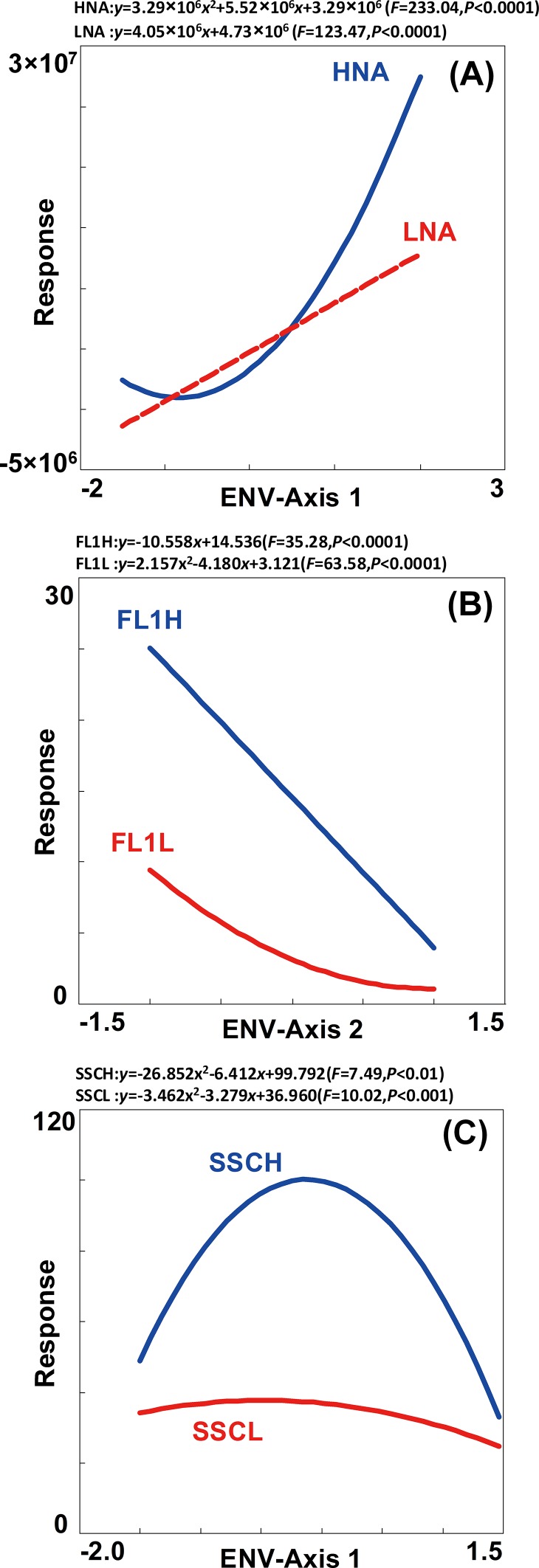
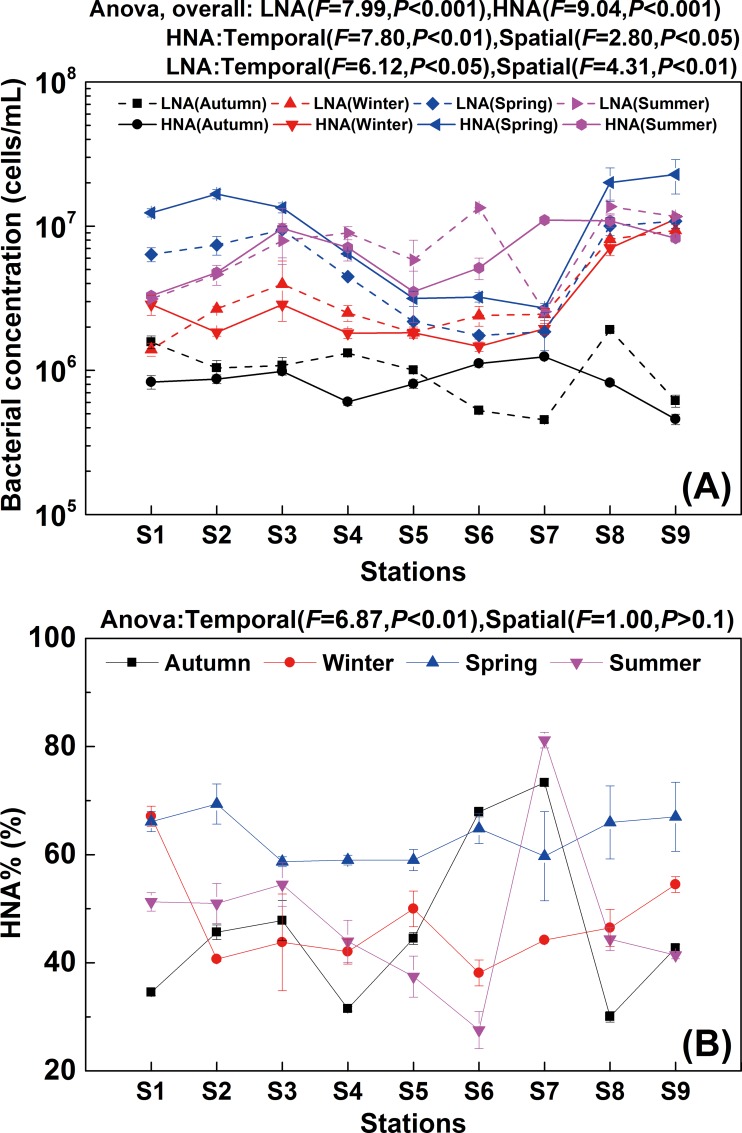
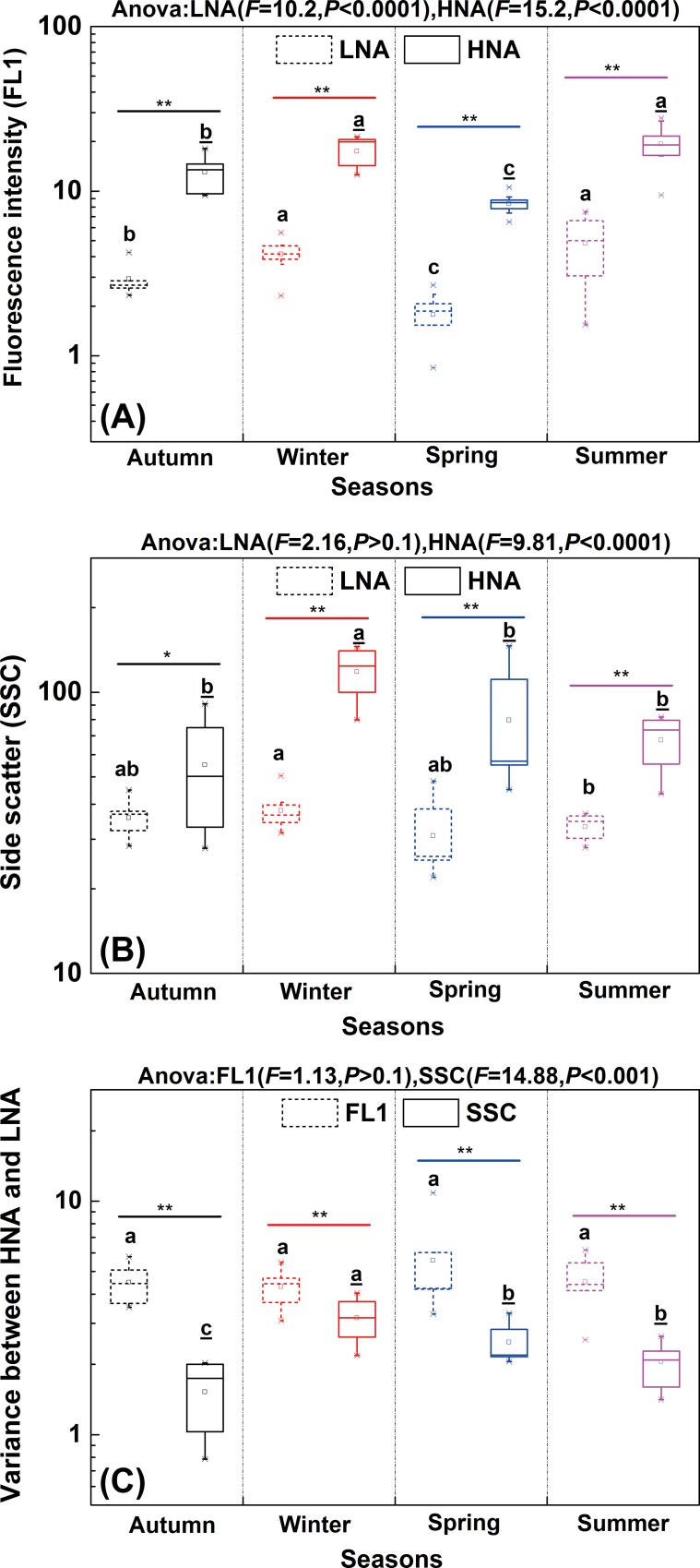
Bacteria with high nucleic acid (HNA) and low nucleic acid (LNA) content are commonly observed in aquatic environments. To date, limited knowledge is available on their temporal and spatial variations in freshwater environments. Here an investigation of HNA and LNA bacterial abundance and their flow cytometric characteristics was conducted in an exorheic river (Haihe River, Northern China) over a one year period covering September (autumn) 2011, December (winter) 2011, April (spring) 2012, and July (summer) 2012. The results showed that LNA and HNA bacteria contributed similarly to the total bacterial abundance on both the spatial and temporal scale. The variability of HNA on abundance, fluorescence intensity (FL1) and side scatter (SSC) were more sensitive to environmental factors than that of LNA bacteria. Meanwhile, the relative distance of SSC between HNA and LNA was more variable than that of FL1. Multivariate analysis further demonstrated that the influence of geographical distance (reflected by the salinity gradient along river to ocean) and temporal changes (as temperature variation due to seasonal succession) on the patterns of LNA and HNA were stronger than the effects of nutrient conditions. Furthermore, the results demonstrated that the distribution of LNA and HNA bacteria, including the abundance, FL1 and SSC, was controlled by different variables. The results suggested that LNA and HNA bacteria might play different ecological roles in the exorheic river.
在水生环境中普遍存在高核酸(HNA)细菌和低核酸(LNA)细菌。迄今为止,关于它们在淡水环境中的时空变化的了解有限。在此,对一条外流河(中国北方的海河)进行了为期一年的调查,涵盖2011年9月(秋季)、2011年12月(冬季)、2012年4月(春季)和2012年7月(夏季),研究了HNA和LNA细菌的丰度及其流式细胞术特征。结果表明,在空间和时间尺度上,LNA和HNA细菌对总细菌丰度的贡献相似。与LNA细菌相比,HNA在丰度、荧光强度(FL1)和侧向散射(SSC)方面的变异性对环境因素更为敏感。同时,HNA和LNA之间SSC的相对距离比FL1的相对距离变化更大。多变量分析进一步表明,地理距离(由沿河流向海洋的盐度梯度反映)和时间变化(由于季节演替导致的温度变化)对LNA和HNA模式的影响比对营养条件的影响更强。此外,结果表明,LNA和HNA细菌的分布,包括丰度、FL1和SSC,受不同变量的控制。结果表明,LNA和HNA细菌在外流河中可能发挥不同的生态作用。